
Why Parasites and Weight Changes Create Confusion
Many people notice changes in their body that do not match their diet or lifestyle. Clothes feel tighter, the stomach looks swollen, and the scale moves up slightly. This often leads to a simple question: is it real weight gain or just bloating? In that moment, some begin to wonder, can parasites cause weight gain, or is that idea misunderstood?
Parasites are commonly linked to stomach problems, but their effects go beyond short-term discomfort. They can influence digestion, inflammation, and how the body responds to food. This makes it difficult to tell whether the change is true weight gain or temporary swelling caused by digestive stress.
How Parasites Affect the Digestive System
Parasites live in the digestive system and depend on the body for nutrients. As they grow and multiply, they can irritate the lining of the intestine. This irritation often slows digestion and increases gas and fluid retention. These effects can cause bloating that feels like weight gain, especially around the abdomen.
Parasites can also interfere with the way the body absorbs nutrients. When nutrients are not absorbed properly, the body may respond by increasing hunger signals. Over time, this can lead to overeating. This is one reason why people ask if parasites cause weight gain, even if they have not changed their eating habits.
Bloating Versus True Weight Gain
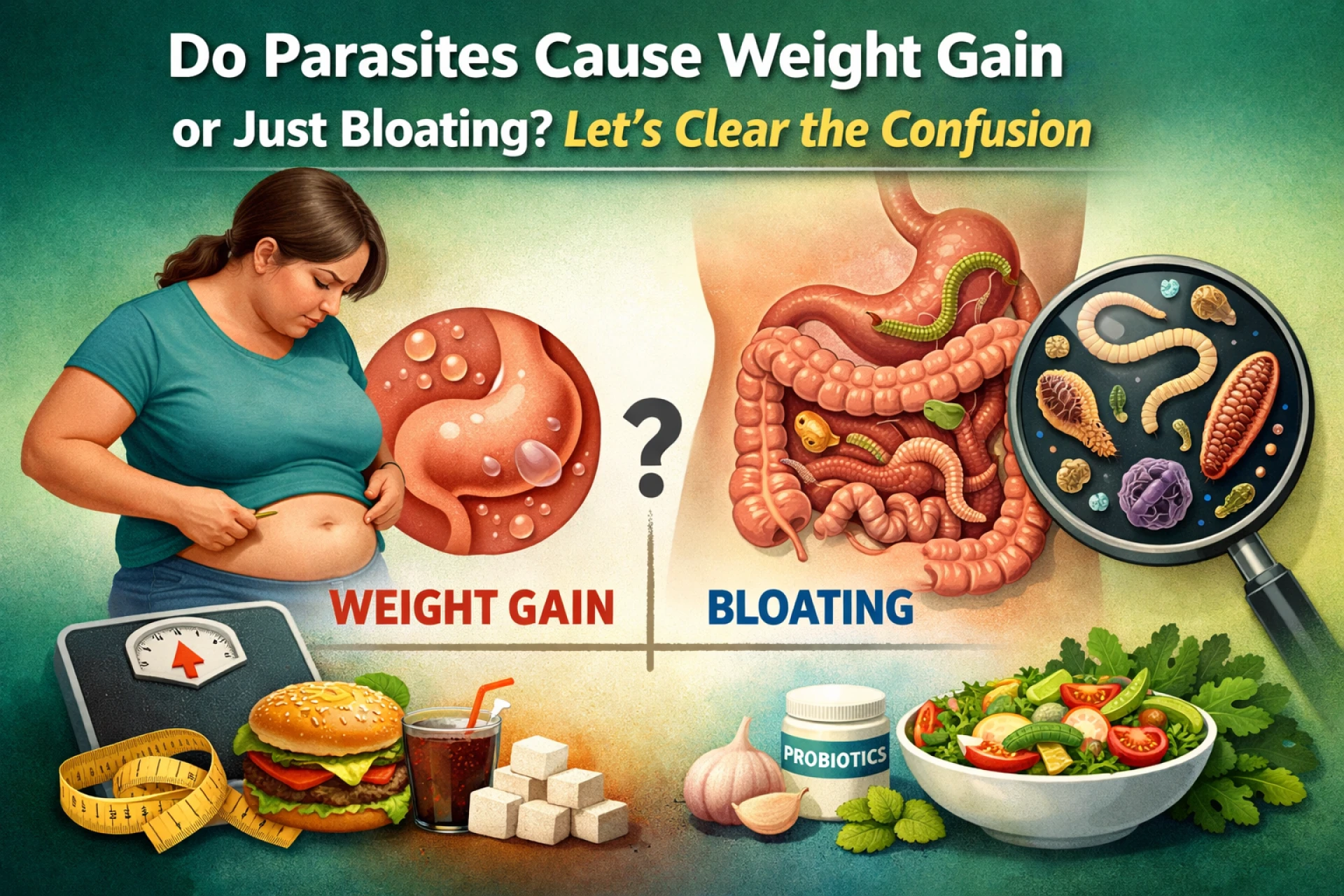
Bloating occurs when gas or fluid accumulates in the digestive tract. It comes and goes often, and changes throughout the day. Parasites often cause this type of swelling, especially after meals. This type of change in weight is usually temporary and can improve as digestion improves.
Real weight gain is different. This means an increase in body fat over time. Parasites can also contribute, although this happens more slowly. Chronic inflammation caused by parasites can affect hormones that regulate metabolism and fat storage. When this balance changes, the body can start to store more fat than normal. This makes the question of whether parasites can cause weight gain more relevant than many are aware of.
The Role of Inflammation and Hormones
When parasites cause irritation in the gut, the immune system is activated. This ongoing immune response creates inflammation in the body. Inflammation affects hormones such as insulin and cortisol, which play a role in weight regulation.
If insulin is not working properly, the body may store more fat instead of using energy efficiently. Elevated cortisol levels can also encourage fat storage, especially during prolonged stress. This process helps explain why some people notice gradual changes and begin to question whether parasites are causing weight gain, rather than immediate or extreme weight changes.
Why Many People Assume It’s Only Bloating
One reason for the confusion on this topic is that parasite symptoms often resemble common digestive problems. It's easy to dismiss bloating, constipation, fatigue and discomfort as stress or food sensitivities. When symptoms come and go, people rarely think of infection as a cause.
Because parasite-related weight change occurs gradually, aging or metabolism are often to blame. This delay prevents people from finding out if parasites that can cause weight gain apply to their condition. When questions arise, symptoms may be present for months.
When to Look Deeper
If bloating appears frequently and weight changes are persistent, it's time to look past the superficial causes. Fatigue, cravings or indigestion along with irregular bowel habits can indicate a deep bowel problem. Parasites do not always cause serious illness, but low-level infections can still affect the body's function.
Testing and appropriate evaluation can help determine if parasites are playing a role. Addressing the root cause often improves digestion and overall balance.
Supporting Gut Health After Infection
Once the parasites are treated, the intestine needs time to heal. A balanced diet of whole foods, adequate fiber and proper hydration aids healing. Reducing sugar intake can also help, as excess sugar can worsen imbalances in the gut. As digestion improves, bloating often subsides and metabolism can return to normal.
This recovery phase helps clarify whether the problem was temporary swelling or actual weight gain. Many people find that when their gut health improves, the body starts to feel more stable.
Final Thoughts
So, can parasites cause weight gain, or is it just inflammation? The answer is that it can be both. Parasites often cause bloating through gas and fluid retention, but they can also contribute to actual weight gain by disrupting digestion, hormones and inflammation.
When people ask, do parasites cause weight gain, they are usually searching for clarity after other explanations fail. Understanding the difference between bloating and true weight gain helps clear confusion and points toward better solutions. By paying attention to gut health and symptoms, it becomes easier to restore balance and feel better over time.
Sign in to leave a comment.