

Namibia’s vast landscapes, from the towering dunes of Sossusvlei to the wildlife-rich plains of Etosha, have always been a favorite for South African travelers. While South Africans enjoy visa-exempt status for short stays, the introduction of the Namibia eVisa system has streamlined the process for those requiring specific authorizations or longer stays. In this post, we break down everything you need to know about the Namibia eVisa for South African Citizens.

Do South African Citizens Need a Visa for Namibia?
For most South African passport holders traveling for general tourism or visiting family, Namibia remains visa-exempt for up to 90 days per calendar year. However, if you are traveling for specific business purposes, medical reasons, or if you have already exhausted your 90-day exemption, the eVisa is your primary gateway. It provides a legal, pre-approved digital authorization that prevents any "teething problems" at the border.
Can I Re-enter Namibia Immediately? (The 2-Month Gap Rule)
A common question for frequent travelers is whether they can "reset" their 90-day stay by simply crossing the border and returning. While there is no official "2-month gap" written in stone for every traveler, immigration officials often look for a significant break between stays to ensure you aren't living in the country on a tourist authorization. If you plan to return shortly after a long stay, having a pre-approved eVisa is the best way to demonstrate your legitimate travel intent.
Is the Namibia Online Application System Secure?
In an era of digital fraud, security is paramount. Official authorized services use bank-level encryption to protect your personal data and passport details. When you apply through a trusted platform, your information is sent directly to the Namibia Immigration system via secure, government-approved channels.
Which Namibia eVisa Type is Right for My Trip?
One size doesn't fit all when it comes to travel. The Namibian online system offers several categories tailored to your specific needs:
- Tourism eVisa: For sightseeing and leisure.
- Business-Conference-Meeting eVisa: For those attending corporate events, seminars, or exploring business opportunities.
- Visiting Friends-Relatives (VFR) eVisa: Perfect for those staying with loved ones.
- Transit-Stopover eVisa: Necessary if you are passing through Namibia to another destination.
- Medical eVisa: For travelers seeking healthcare services within Namibia.
How Long Can I Stay with a Namibia eVisa?
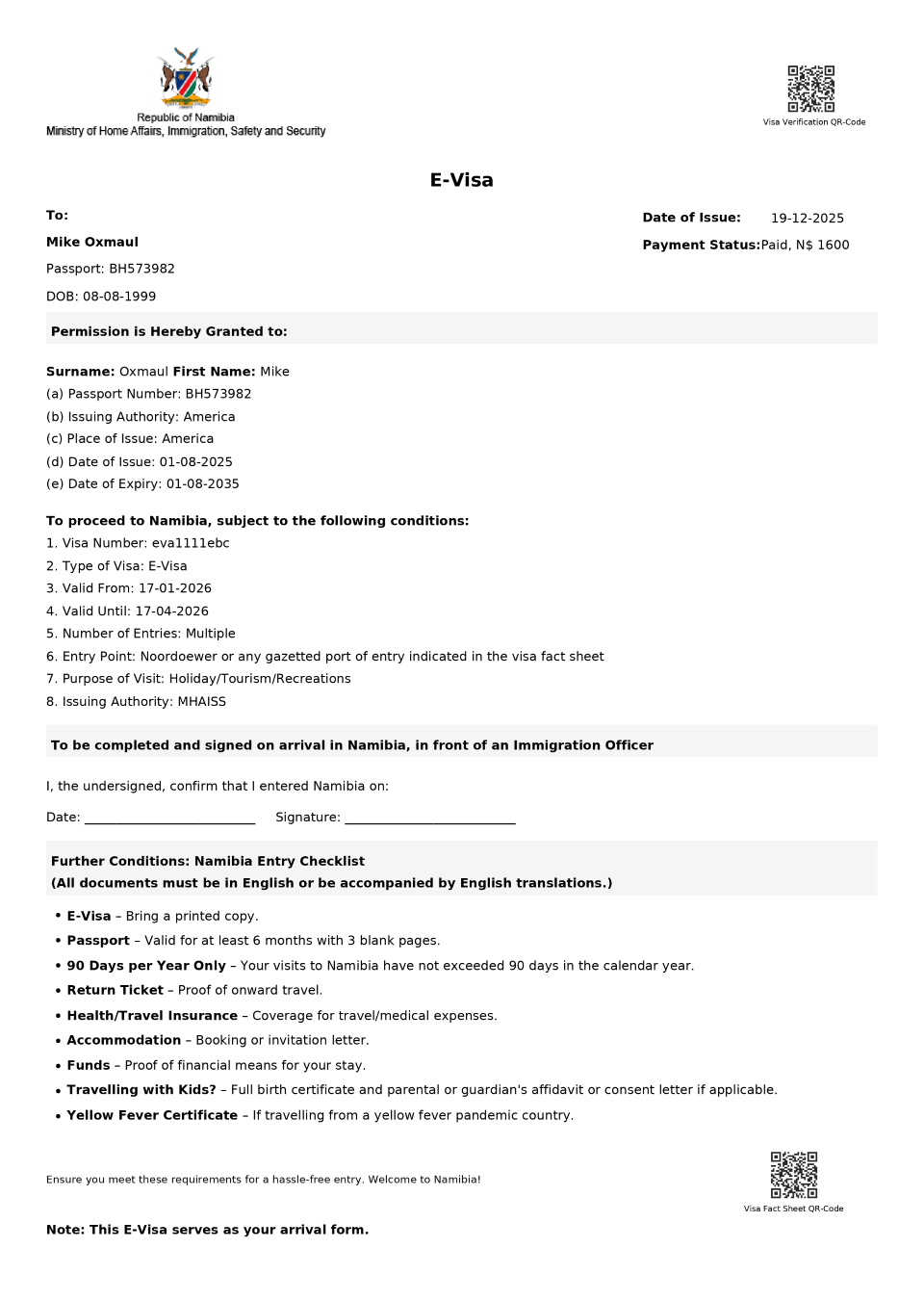
All standard Namibia eVisas—whether for tourism, business, or medical reasons—typically come with a Multiple Entry allowance. They are valid for a total stay of 90 days, within a 90-day validity window. This flexibility is vital for South Africans who may need to move back and forth between the two countries for business or family commitments.
What Documents are Required to Apply Online For Namibia eVisa?
To ensure a successful application, you’ll need to have your digital paperwork ready. The core Namibia eVisa requirements include:
- Valid Passport: A scanned copy of your passport bio-data page (valid for at least 6 months).
- Recent Photograph: A passport-sized color photo with a white background.
- Proof of Accommodation: Hotel bookings or an invitation letter from your host.
- Travel Itinerary: A brief outline of your planned dates and locations.
- Supporting Docs: Depending on the type (e.g., a letter from a Namibian company for business or a medical letter for health-related visits).
How Fast Can I Get My Namibia eVisa?
Speed is often the most critical factor for travelers. The online system offers three distinct tiers of processing to suit your timeline:
- Standard Processing: 1 - 2 Business Days (Ideal for planned trips).
- Rush Processing: 6 - 12 Hours (For those in a bit of a hurry).
- Super Rush Processing: 1 Hour (The "emergency" option for last-minute travelers).
How Much Does the Namibia Online Visa Cost?
The total Namibia visa cost is transparently calculated based on three components:
- Government Visa Fee: The mandatory fee set by Namibian Immigration.
- Service Fee: Covers the digital handling, document verification, and 24/7 support.
- Optional Rush Fee: Only added if you select the "Rush" or "Super Rush" speed tiers.
Can I Apply for My Namibia eVisa via Mobile Phone?
Yes! Modern eVisa platforms are designed to be mobile-friendly. You can snap a photo of your passport and your face using your smartphone and upload them directly to the application form. This allows South Africans to apply even while on the road or at the airport.
What if My Namibia Business Trip Exceeds 90 Days?
The eVisa is strictly for short-term stays. If your business requirements in Namibia involve long-term work, audits, or technical training that exceeds the 90-day limit, you must apply for a specific Work Permit or a different class of visa through the Ministry of Home Affairs.
Do I Need a Transit Visa for a Quick Stopover?
If you are a South African citizen transiting through Hosea Kutako International Airport to a third country (like Germany or Ethiopia) and you do not leave the transit area, you generally do not need a visa. However, if your layover requires you to clear immigration to stay in a hotel overnight, the Transit-Stopover eVisa is required.
Where Can I Get Help with My Namibia eVisa Application?
One of the biggest advantages of the online system is the availability of support. Unlike traditional embassy applications where you might wait days for a reply, online services provide 24/7 assistance. Whether it's a question about document formats or a status update, help is always just a click away.
How Does Dual Nationality Affect My Namibia Travel?

If you hold dual nationality (e.g., South African and British), you must be careful. South African law requires you to enter and exit South Africa on your South African passport. For Namibia, it is usually best to use the passport that offers the most favorable entry terms (usually the SA one), but ensure that your eVisa application matches the passport you present at the Namibian border.
Where Can I Buy a Local SIM Card in Namibia?
Staying connected is easy. You can purchase a local SIM card (MTC is the largest provider) at Hosea Kutako International Airport upon arrival or at any "MTC Mobile Home" in Windhoek. You will need to present your passport for mandatory SIM registration.
Should I Choose an eSIM or a Physical SIM for Namibia?
For modern travelers, an eSIM is often the superior choice. It allows you to activate a data plan before you even land, avoiding the queues at the airport kiosks. However, if your phone is an older model or you need a local number for voice calls, a physical SIM remains a reliable fallback.
What is the Difference Between Digital Arrival Cards and eVisas?
It’s easy to confuse these two. An eVisa is a legal permit that grants you entry into the country for a specific purpose. A Digital Arrival Card is simply an electronic version of the paper form you used to fill out on the plane. While Namibia is digitizing its processes, remember that an arrival card does not replace the need for a visa if you aren't exempt.
Why is Agent Customer Support Better Than the Government Site?
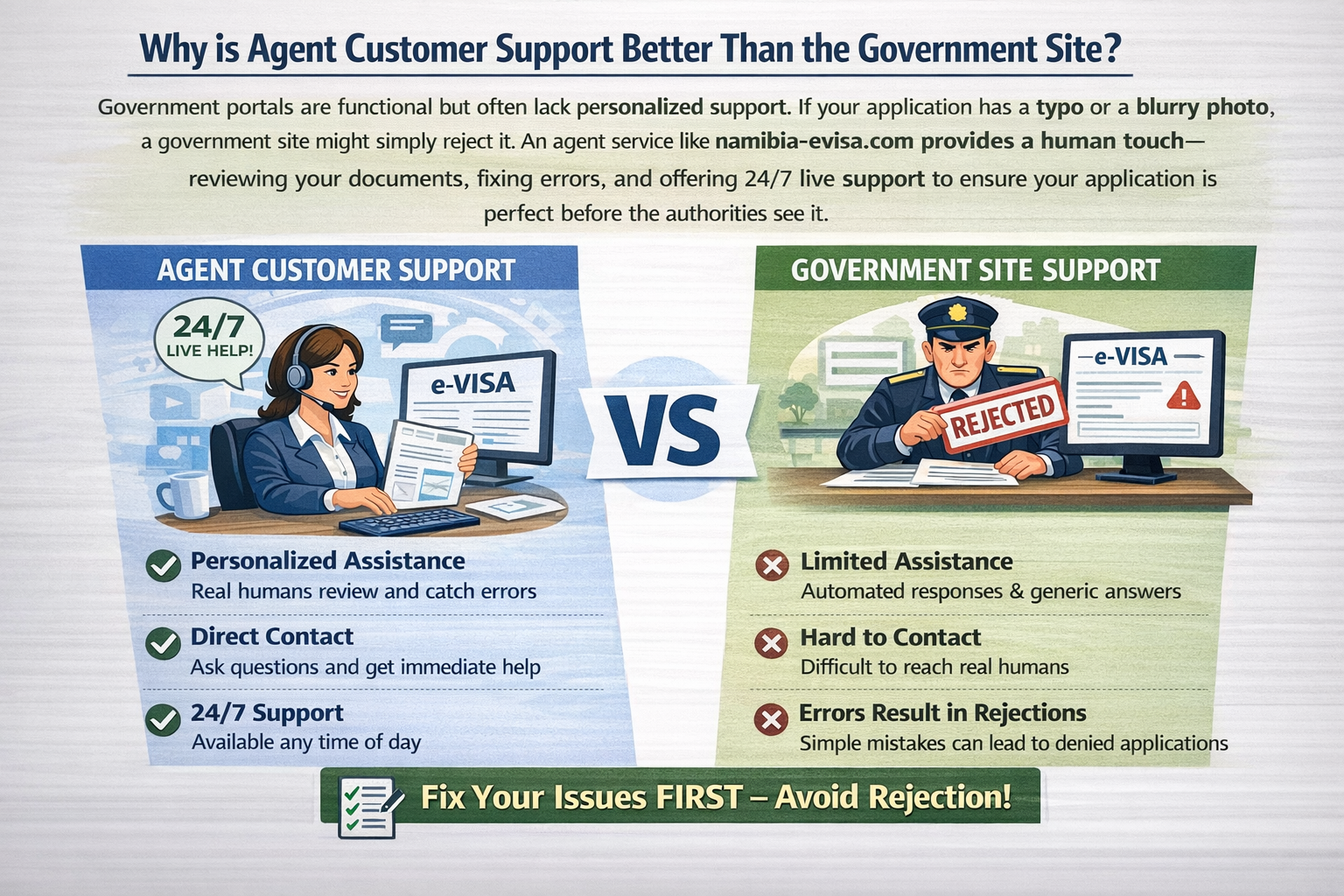
Government portals are functional but often lack personalized support. If your application has a typo or a blurry photo, a government site might simply reject it. An agent service like namibia-evisa.com provides a human touch—reviewing your documents, fixing errors, and offering 24/7 live support to ensure your application is perfect before the authorities see it.
What Bank Balance is Needed for Financial Credibility?
When applying for a visa, you must prove you can support yourself. Generally, providing 3 to 6 months of bank statements is standard. While there is no "magic number," your balance should reflect enough funds to cover your accommodation and daily expenses (roughly $50–$100 per day) for the duration of your stay.
Are There Any Sustainable Travel Taxes in Namibia?
Namibia is a leader in conservation. While there isn't a single "sustainability tax" at the airport, most National Park entry fees (like Etosha or Sossusvlei) include a conservation levy. These funds go directly toward protecting the wildlife and landscapes you've come to see.
What Currency is Used and Can I Use South African Rand?
The official currency is the Namibian Dollar (NAD), which is pegged 1:1 with the South African Rand (ZAR). The great news for South Africans is that the Rand is widely accepted as legal tender throughout Namibia. However, you will often receive your change in Namibian Dollars, so try to spend those before heading back home!
Sign in to leave a comment.