

A cannabis package can display several dates without making their differences immediately clear. One may describe production, another laboratory testing, and another expiration. After opening the container, you introduce a separate detail: how the product has been handled at home.
So, does cannabis expire?
Cannabis products can deteriorate over time, and printed expiration dates deserve attention. However, there is no single shelf-life rule that applies equally to dried flower, infused food, oils, and topical products.
For adults in Mt Pleasant, the useful starting point is the specific package: what it contains, what its dates describe, and which storage instructions apply.
What Does “Expired” Mean for Cannabis?
Expiration, freshness, and safety are related concepts, but they answer different questions.
Freshness concerns a product’s condition and characteristics. Safety concerns potential hazards. An expiration date communicates a defined endpoint for the product under the applicable requirements and conditions.
A product should not be treated as acceptable simply because it still looks familiar after that date.
Michigan’s rules specifically require edible marijuana products to carry an expiration date marking when they are no longer fit for consumption. The rules also prohibit marijuana businesses from selling or transferring products after their printed expiration date. These are regulatory requirements for businesses, rather than a method for consumers to calculate extra time at home.
For a household decision, do not invent a grace period beyond the printed expiration date. If its meaning or format is unclear, ask for clarification.
Read the Words Beside Each Date

Several dates can appear on one package because they record different events.
| Date or record | What it generally describes | What it does not establish |
|---|---|---|
| Harvest date | When plant material was harvested | When a finished product was packaged |
| Production date | When the identified product was made | Its complete storage history |
| Packaging date | When it entered the identified packaging | That its contents were produced that day |
| Testing date | When the identified sample underwent analysis | A new expiration period |
| Expiration date | The product’s stated expiration endpoint | That improper storage before then is harmless |
| Opening date | When you first opened the container | An extension of the printed expiration date |
Read the accompanying wording rather than choosing the most recent date.
For example, a later packaging date does not necessarily mean that the underlying plant material was harvested recently. Likewise, a laboratory date should not be substituted for an expiration date.
If a package uses an unexplained code, ask the manufacturer to decode it instead of assuming it represents a calendar date.
Why There Is No Universal Cannabis Shelf Life
A general statement such as “cannabis lasts one year” leaves out important details.
Which product? In what packaging? Opened or unopened? Stored under which conditions? Is the statement about cannabinoid stability, food quality, or safety?
Research examining herbal cannabis and resin over four years found that storage time, temperature, and light exposure affected THC and CBN measurements. That supports the importance of storage conditions. It does not establish a universal household expiration period for every cannabis product.
A controlled study also cannot reconstruct what happened to an individual package in a cupboard or vehicle.
Use general research to understand why conditions matter. Use the manufacturer’s instructions and the actual label to assess the item in front of you.
Different Product Formats Need Different Questions
A storage instruction for dried flower should not automatically become an instruction for an infused beverage, oil, or cream.
The following questions help identify what needs checking:
| Product format | Questions to ask |
|---|---|
| Flower and pre-rolls | What storage conditions are specified? Has moisture entered the package? |
| Edibles and beverages | What expiration and after-opening instructions apply? |
| Oils and tinctures | Does the manufacturer specify temperature, light protection, or handling instructions? |
| Concentrates | Are there product-specific storage requirements? |
| Topicals | What directions apply to the formulation and its container? |
| Cartridges and devices | Are there separate instructions for the contents and the hardware? |
These questions do not assign a shelf life to any category. They help avoid transferring advice between products with different ingredients and packaging.
Shelf-Stable Does Not Mean Indefinitely Stable
An edible product may resemble an ordinary pantry food, but its own instructions still matter.
Michigan’s edible-product rules require the finished product to be shelf-stable and prohibit production of an edible that requires time and temperature control for safety. Shelf stability does not eliminate the expiration requirement or establish unlimited life after opening.
Read any after-opening directions separately.
Do not assume that every edible needs refrigeration. Equally, do not ignore a specific instruction because another product from the same brand was stored differently.
If the label and another source appear to disagree, ask which directions apply to the exact product and package.
Check the Storage Location Against the Instructions
“Stored at home” describes a place, rather than a set of conditions.
A package beside a sunny window, near a heat source, or in a damp area may experience conditions different from those intended by its manufacturer.
Check:
- Does the label specify a temperature range?
- Does it require protection from light or moisture?
- Must the original container remain tightly closed?
- Are there separate directions after opening?
- Has the product experienced conditions outside those instructions?
Avoid improvising refrigeration, freezing, or moisture-control methods simply because they appear in a general online guide.
If you know that storage instructions were not followed, explain what happened when seeking advice. The printed date alone cannot resolve that question.
Appearance and Smell Cannot Prove Safety
An unexpected change can be a reason to stop and investigate. The absence of a change is not proof that a product is safe.
For food, the FDA warns that harmful contamination can be present even when an item does not look, smell, or taste spoiled. That principle is relevant when assessing cannabis edibles: a normal appearance does not override expiration dates or handling instructions.
Do not taste a questionable edible to test it.
For other formats, avoid diagnosing unfamiliar discoloration, deposits, or texture changes from photographs alone. Some changes need a manufacturer’s explanation; others may indicate a problem.
If you suspect mold, contamination, leakage, or damaged packaging, pause use and seek appropriate guidance. Do not attempt to restore a questionable product through heating, drying, or mixing.
Opening the Package Does Not Reset the Clock
The opening date is useful information to record, especially when a label gives after-opening instructions.
However, it does not replace the printed expiration date.
A simple note can help:
“Opened October 27; original label retained.”
Keep that note separate from the manufacturer’s printed information so the two cannot be confused.
If the label says to follow a particular timeframe after opening, also consider the existing expiration date. Do not assume that opening a package shortly before expiration grants the full after-opening period beyond it.
Ask the manufacturer when the relationship between those instructions is unclear.
Keep the Label and Store Products Securely
Original packaging preserves identification, warnings, dates, and closure instructions.
Avoid transferring products into ordinary food containers or unmarked jars. Doing so can separate the contents from the information needed to investigate a question.
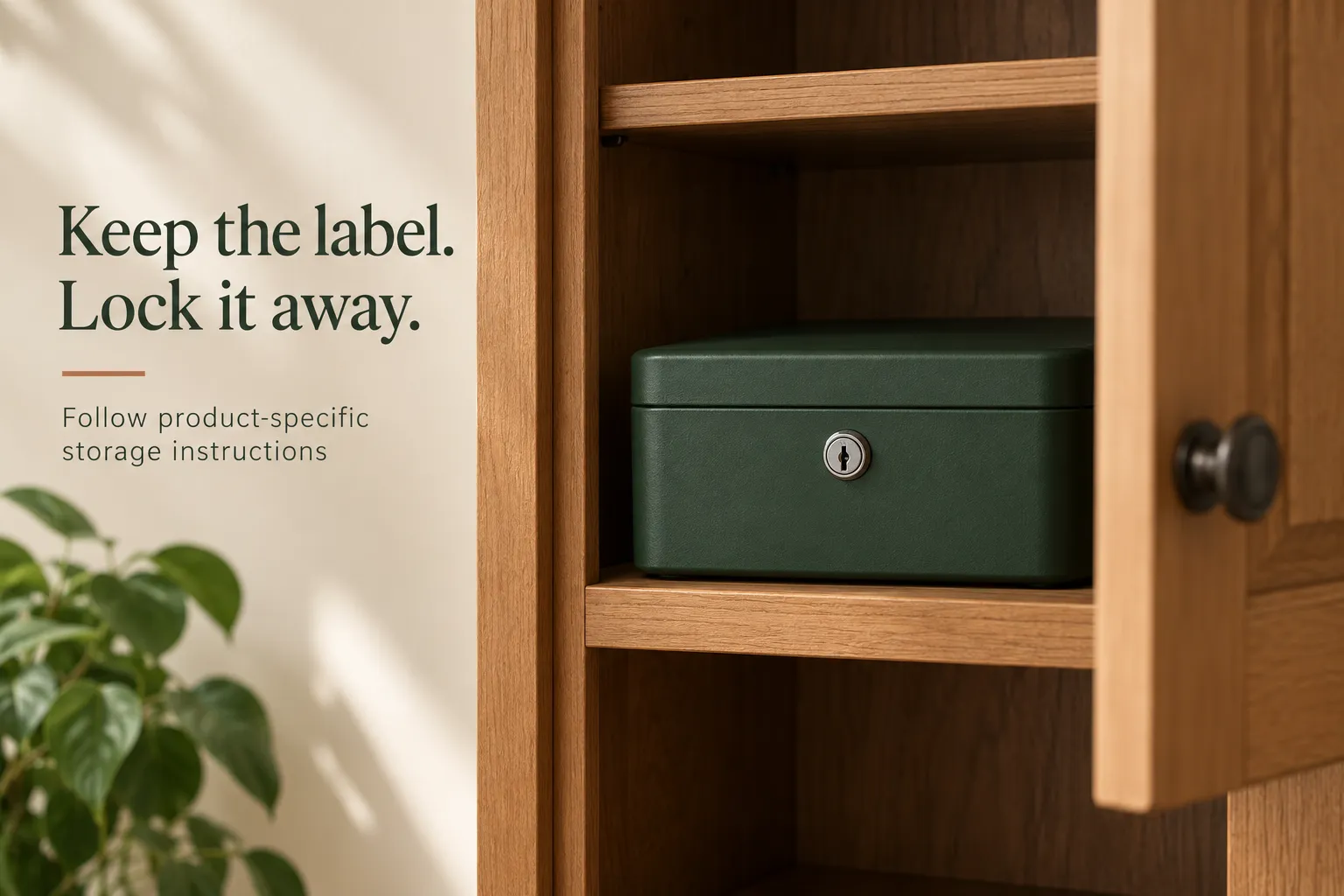
Health Canada recommends keeping cannabis in its original packaging, locked away, and out of sight and reach of children and pets. It also advises separating edibles from ordinary food and drinks. These are general prevention practices; Canadian product rules should not be assumed to apply in Michigan.
A storage arrangement should address both the manufacturer’s conditions and restricted access.
Ask About Unclear Dates Before Guessing
A useful question includes the product name, visible identifiers, exact date wording, and relevant storage history.
For a purchase from JARS, contact the JARS Cannabis Mt Pleasant team with your package details. The official location page publishes contact information for the East Pickard Street store.
For example:
“My package shows a production date and another date marked EXP. I opened it recently, but I cannot find after-opening instructions. Can you help me confirm the manufacturer’s directions for this item?”
If the concern involves exposure to heat, moisture, or a damaged closure, mention that too.
A retailer may need to consult the manufacturer. Ask what is confirmed and what still requires an answer.
A Practical Freshness and Storage Checklist
Before relying on a cannabis product’s date:
- Identify what each printed date describes.
- Locate the expiration date and storage directions.
- Check for instructions that apply after opening.
- Consider whether those conditions were maintained.
- Keep the original label and package identifiers.
- Treat unexpected changes or damaged packaging as reasons to pause.
- Ask about unclear information rather than assigning extra shelf life.
- Keep the product securely inaccessible while resolving the question.
Understanding cannabis freshness starts with reading the package accurately. A recent-looking date, familiar smell, or unopened lid cannot answer every question about condition and storage history.
This article provides general educational information, not medical or legal advice. Follow current product instructions and seek clarification from the manufacturer or retailer when dates, storage conditions, or product condition are uncertain.



















Sign in to leave a comment.