Does Every Floor Need the Same Cleaning Routine?


A polished marble floor, a textured tile surface, and a ceramic kitchen floor may all be part of the same home, but they do not necessarily have the same cleaning requirements.
Different flooring materials have different finishes, moisture tolerances, and maintenance needs. Using one cleaning method everywhere without considering these differences may affect the appearance of your floors over time.
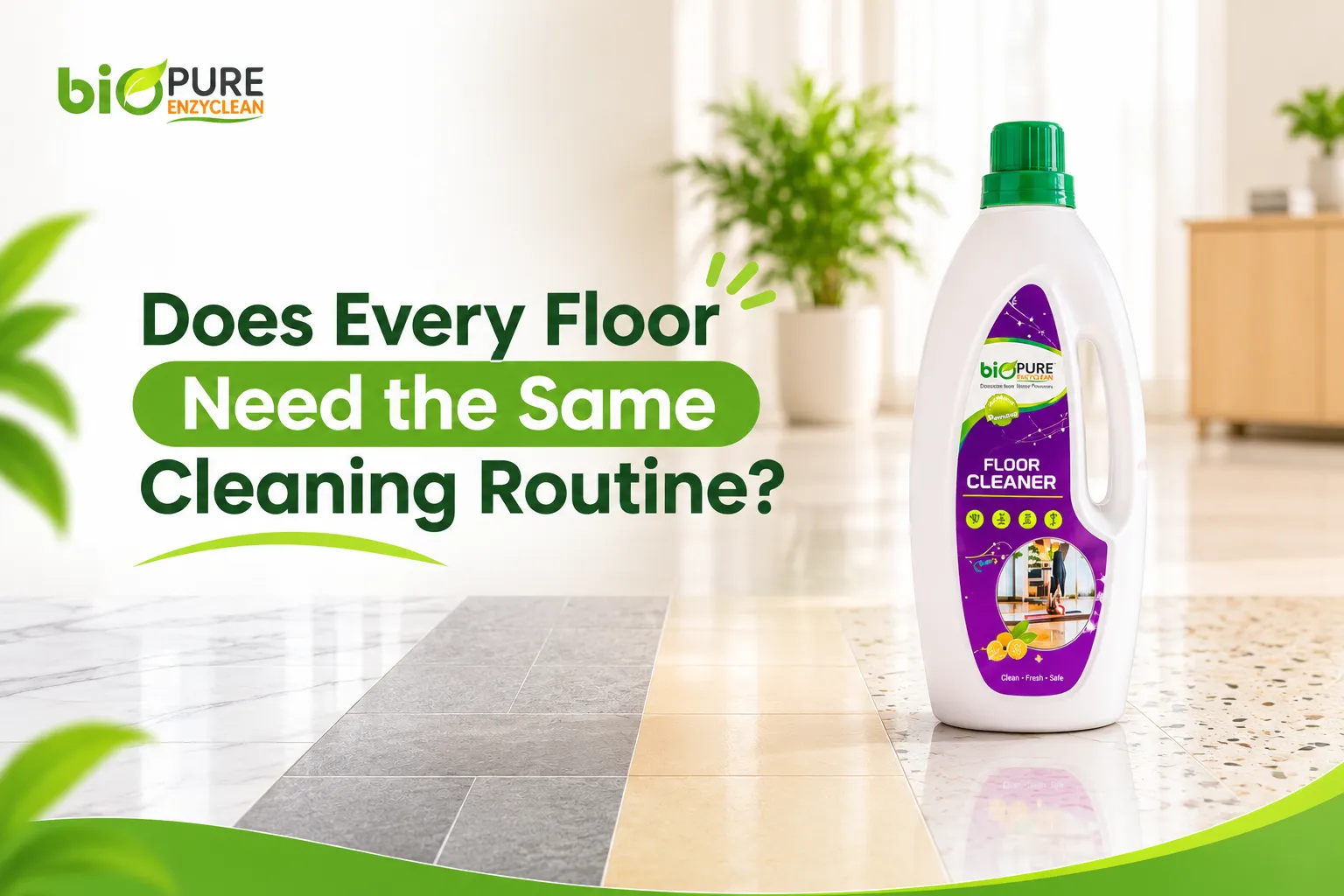
This is why choosing an organic floor cleaner should involve more than looking at the product label. Understanding your flooring material is equally important.
1. Ceramic and Vitrified Tiles Need Consistent Maintenance
Ceramic and vitrified tiles are commonly used in kitchens, bathrooms, living rooms, and corridors.
Although these surfaces are generally convenient to maintain, they can still collect dust, food spills, and everyday footprints.
For routine cleaning:
- Sweep or vacuum before mopping.
- Use a suitable diluted cleaning solution.
- Pay attention to grout lines and corners.
- Remove spills before they dry.
An appropriately diluted organic floor cleaner can be incorporated into regular maintenance, provided the product is suitable for the particular tile and finish.
2. Marble Floors Require Careful Product Selection
Marble is a natural stone and needs more consideration when choosing cleaning products.
Some cleaning ingredients, particularly acidic substances, can react with calcium carbonate in marble and damage its finish. Therefore, a product being described as natural or organic does not automatically make it suitable for every marble surface.
Check the formulation and manufacturer recommendations before using an organic floor cleaner on marble.
Use a soft mop, avoid abrasive scrubbing, and do not leave excessive water on the surface. If the marble has a protective sealant, consider its maintenance requirements as well.
3 Granite floors need care for their surface.
Granite is commonly used because of its durability, but its maintenance requirements can depend on the stone's finish and whether it has been sealed.
Routine cleaning should focus on removing loose dirt before mopping. Avoid abrasive tools that could affect the polished surface.
It is also important to use a cleaning product that is compatible with the stone and any protective treatment.
When introducing an organic floor cleaner into your routine, test it on a small, inconspicuous area if you are unsure about compatibility.
4. Porcelain Floors Can Have Different Cleaning Needs
Porcelain tiles are available in polished, matte, and textured finishes.
Polished porcelain may show streaks or water marks more easily, while textured surfaces can hold dirt in their grooves.
A clean microfibre mop can help with everyday maintenance. Use the recommended quantity of cleaning product and avoid leaving excessive moisture behind.
The cleaning method should also account for the grout, which may need separate attention depending on its condition.
5. Mosaic and Terrazzo Floors Need Surface-Specific Care
Mosaic and terrazzo flooring can contain different materials and finishes. Their cleaning requirements depend on their composition and any protective coating.
Before choosing a cleaning product, check whether the floor has been sealed and whether the formulation is suitable for that surface.
Regular dust removal, prompt spill cleaning, and controlled moisture during mopping can help maintain these floors.
What Should You Check Before Choosing a Floor Cleaner?
Regardless of the flooring material, a few product details deserve attention:
- Ingredients: Look for clear information about the formulation.
- Surface compatibility: Confirm that the product is suitable for your flooring.
- Dilution: Follow the recommended quantity rather than estimating.
- Application: Understand whether the product requires rinsing or a particular contact time.
- Usage instructions: Follow the manufacturer's directions for routine cleaning and stubborn stains.
An organic floor cleaner should be selected according to these practical considerations, rather than its marketing claims alone.
Exploring BioPure's Approach to Floor Cleaning
BioPure's floor cleaner uses an eco-enzyme formulation derived from fermented fruit peels, including lemon, orange, pineapple, and sweet lime. It also contains fruit-based surfactants and water softeners.
For regular cleaning, BioPure recommends 15–20 ml in half a bucket of water. Its product information lists ceramic, vitrified, granite, marble, mosaic, porcelain, and terrazzo among the suitable surfaces.
For tougher stains, the product instructions recommend applying the concentrate directly to the affected area and rinsing after 2–3 minutes.
Before using the product, check its compatibility with your particular flooring finish. You can find further details about BioPure's organic floor cleaner.
Give Your Floors the Care They Need
Not every floor requires the same cleaning technique. Understanding the material, choosing compatible products, and following the correct application method can help you maintain different surfaces more effectively.
With a suitable organic floor cleaner and a consistent maintenance routine, you can care for your floors without relying on one cleaning approach for every room.






Sign in to leave a comment.