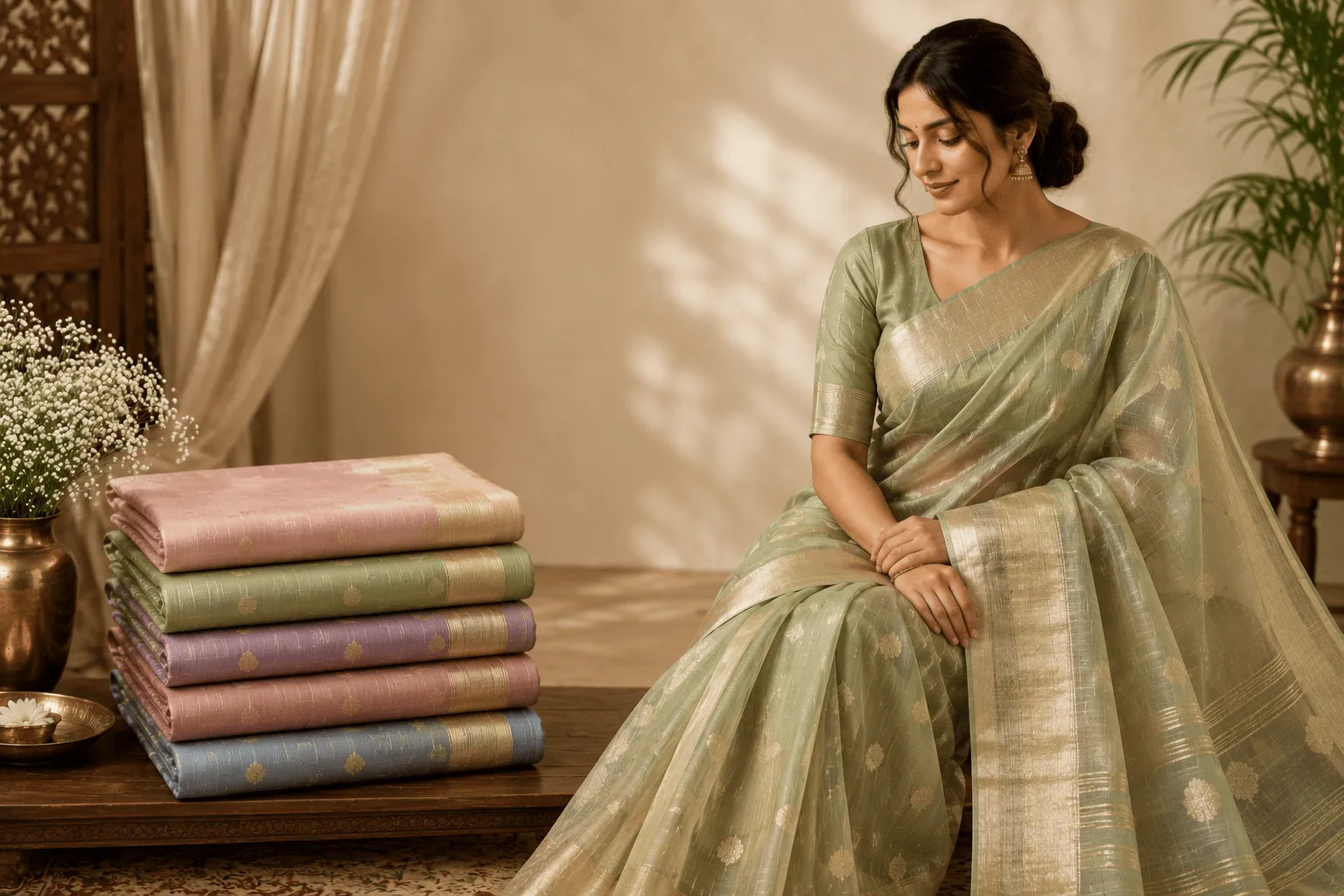

A "pure" Chanderi saree should mean handwoven fabric made from pure cotton, pure silk, or a traditional silk-cotton blend on a handloom in the Chanderi region of Madhya Pradesh — with its signature sheer, lightweight texture and fine buttis (motifs). But the word "pure" is used loosely in the market, often on powerloom or blended synthetic sarees that only look similar. Before you buy, check the fabric's transparency, weight, and weave — not just the label.
Chanderi is one of the most imitated handloom fabrics in India, largely because its lightweight, glossy texture is relatively easy to mimic with synthetic yarns. If you're about to buy a "pure" Chanderi saree, here's what actually separates the real thing from a convincing copy.
What Does "Pure Chanderi Saree" Actually Mean?
Quick answer: A genuine pure Chanderi saree is handwoven in the Chanderi cluster using traditional techniques, in one of three authentic material types: pure cotton, cotton-silk (the most common traditional blend), or pure silk (tussar or Katan silk).
Chanderi sarees are known for:
- A sheer, translucent texture that lets light pass through slightly
- A soft golden sheen, traditionally from the silk content in the weft
- Fine, hand-woven buttis (small motifs) scattered across the body
- Zari borders and pallus, often in gold or silver-toned thread
- A lightweight drape that holds its shape without feeling stiff
The GI (Geographical Indication) tag for Chanderi covers sarees handwoven in Chanderi, Ashoknagar district, Madhya Pradesh, using recognized traditional techniques and materials.
Why "Pure" on the Label Doesn't Guarantee Purity
Quick answer: "Pure Chanderi" is not a legally regulated claim on most retail tags, so sellers can use it loosely to describe synthetic or powerloom sarees that merely resemble the traditional weave, without the fabric actually meeting handloom or fiber-content standards.
This happens for a simple reason: genuine handloom Chanderi, especially silk or silk-cotton varieties, takes a skilled weaver days to complete a single saree. A powerloom version with polyester or art-silk yarn can be produced in a fraction of the time, then sold under the same "pure Chanderi" language because most buyers have no easy way to verify it at the point of sale.
How to Tell Real Chanderi From a Powerloom or Synthetic Copy
- Transparency check: Hold the fabric up to light. Genuine cotton or silk-cotton Chanderi has a fine, even sheerness. Synthetic versions often look either too opaque or unevenly glassy.
- The rub test: Gently rub the fabric between your fingers. Real Chanderi silk-cotton has a slightly cool, smooth-but-textured feel. Polyester blends tend to feel warmer and more slippery.
- Weight and drape: Authentic Chanderi is remarkably light for its visual richness. If a saree feels heavy or stiff despite looking sheer, it's likely a blended or synthetic imitation.
- Zari check: Traditional zari has a slightly muted, warm metallic tone. Machine-made "zari-look" thread used in imitations often looks brighter, more uniform, and slightly plasticky.
- Ask about the weaving cluster. A genuine seller can name Chanderi town or the specific weaver group. Vague answers are a warning sign.
Pure Handloom Chanderi vs. Powerloom/Synthetic "Chanderi-Style" Saree
| Feature | Pure Handloom Chanderi | Powerloom / Synthetic Version |
| Fiber content | Cotton, silk-cotton, or pure silk | Often polyester or art-silk blends |
| Production method | Handwoven, days per saree | Machine-woven, hours per saree |
| Texture | Sheer, light, slightly textured | Often glossy, uneven sheerness |
| Zari tone | Warm, muted metallic | Bright, uniform, plasticky |
| Drape | Light, holds shape naturally | Can feel stiff or overly slippery |
| GI tag eligibility | Yes, if from Chanderi cluster | No |
| Price basis | Weaver's time, skill, material cost | Fabric and machine production cost |
How to Buy a Genuinely Pure Chanderi Saree
- Confirm the fiber type upfront — ask specifically whether it's cotton, silk-cotton, or pure silk, not just "pure Chanderi."
- Do the light and rub test before finalizing, not after unwrapping it at home.
- Ask where it was woven. A real answer names Chanderi town or a specific weaver cooperative.
- Check for GI tag documentation or certification, where available — legitimate handloom sellers are usually able to provide this.
- Buy from sources with weaver traceability rather than unmarked general sarees stalls or unverified online listings.
Why Indeloom Is a Reliable Source for Pure Chanderi Sarees
Indeloom sources Chanderi sarees directly from handloom weavers in the Chanderi region, rather than through untraceable resellers. This means:
- Verified fiber content — every saree listed as pure cotton, silk-cotton, or silk is checked before it's sold as such
- Direct weaver sourcing — pricing reflects the actual weaving time and skill involved, not inflated reseller margins
- Traceable origin — buyers can know their saree came from a genuine Chanderi handloom source
- Quality checks before dispatch — sarees are inspected for weave consistency, zari quality, and finishing
This removes the guesswork buyers usually face when a label simply says "pure" without anything to back it up.
Caring for a Pure Chanderi Saree
- Dry clean is recommended, especially for silk and silk-cotton Chanderi, to preserve the zari and sheen
- If hand washing cotton Chanderi, use cold water and mild detergent, and avoid wringing
- Dry in shade, away from direct sunlight, to protect the zari from tarnishing
- Store folded in breathable cotton cloth, refolding periodically to avoid permanent crease lines
- Avoid direct ironing on zari work; iron on reverse or use a cloth barrier
FAQs
What is the difference between pure Chanderi silk and pure Chanderi cotton?
Chanderi silk uses silk yarn (often in the weft) for a glossier sheen and richer drape, while Chanderi cotton is lighter, more breathable, and generally more suited to everyday or warm-weather wear. Silk-cotton is the most traditional and common combination.
How can I check if a Chanderi saree is pure before buying it online?
Ask the seller directly about fiber content, weaving cluster, and whether the saree is handloom or powerloom. Reliable sellers with weaver traceability can answer specifically; request close-up photos of the weave and zari if in-person testing isn't possible.
Is a more expensive Chanderi saree always more "pure"?
Not necessarily. Price can reflect motif complexity, zari quantity, and silk content, but it isn't a guaranteed indicator of purity on its own — imitation sarees are often priced close to genuine ones specifically to appear equally authentic.
Does GI certification guarantee a Chanderi saree is handwoven?
The Chanderi GI tag is specifically meant to protect sarees woven in the Chanderi region using traditional techniques, so genuine GI-backed pieces should be handloom. Always verify the specific certification or documentation provided by the seller.
Can pure Chanderi sarees be machine washed?
It's not recommended, particularly for silk or silk-cotton varieties, since machine washing can damage the delicate weave and zari. Dry cleaning or careful hand washing is the safer option.
Buy Chanderi With Confidence, Not Guesswork
A "pure" label alone isn't proof — but a few simple checks, and buying from a source with real weaver traceability, can save you from paying handloom prices for a synthetic copy.
Explore Indeloom's collection of verified, handloom-sourced pure Chanderi sarees and shop knowing exactly what you're getting.






























Sign in to leave a comment.