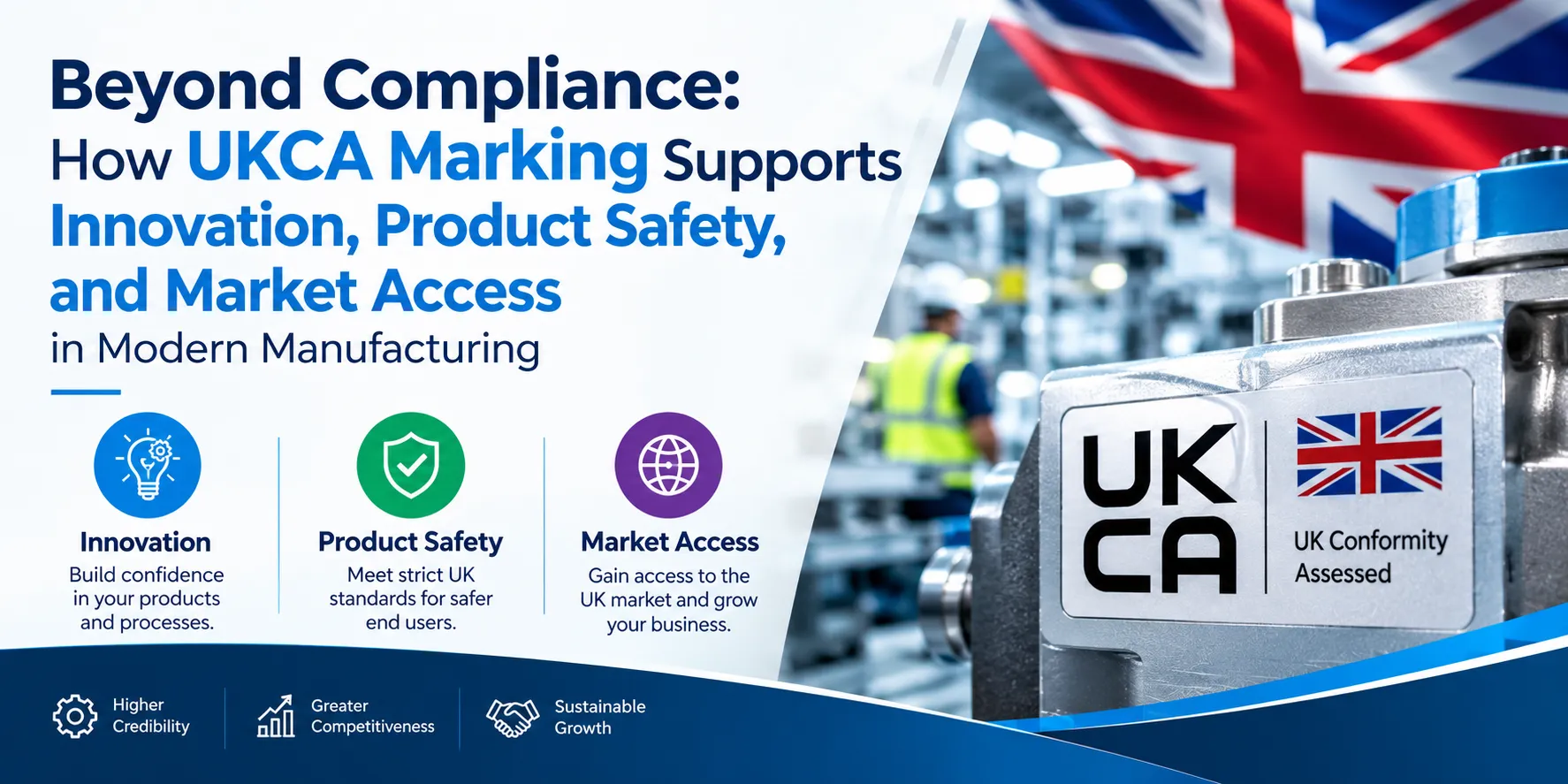

Manufacturing has undergone a remarkable transformation over the past decade. Traditional production lines are rapidly being replaced by smart factories, automated machinery, connected devices, artificial intelligence (AI), robotics, and data-driven decision-making. Today's manufacturers are expected to deliver innovative, high-quality products while meeting growing customer expectations for safety, sustainability, and regulatory compliance.
Whether producing industrial machinery, electrical equipment, medical devices, construction products, or consumer electronics, businesses are no longer judged solely on product performance. Customers, distributors, regulators, and business partners also expect products to demonstrate compliance with applicable safety and legal requirements before entering the market.
As global supply chains become increasingly interconnected and product technologies more sophisticated, manufacturers face greater responsibility for ensuring that every product placed on the market is safe, reliable, and fit for its intended purpose. Product conformity has therefore become an essential part of modern manufacturing rather than a final administrative step before product launch.
This is where UKCA Marking plays an important role. For many regulated products sold in Great Britain, UKCA Marking demonstrates that products comply with relevant UK legislation and have undergone the appropriate conformity assessment procedures. More importantly, it supports manufacturers in bringing innovative products to market while maintaining high standards of safety, quality, and regulatory compliance.
UKCA Marking Across Different Industries
The importance of UKCA Marking extends across numerous industries that manufacture or supply regulated products within Great Britain. As products become more technologically advanced and customer expectations continue to rise, demonstrating conformity with applicable regulations has become an essential part of responsible manufacturing.
Electrical and Electronic Equipment
Manufacturers of electrical appliances, consumer electronics, industrial control panels, lighting systems, and electronic accessories must ensure that their products comply with relevant UK safety requirements before they are placed on the market. UKCA Marking helps demonstrate that these products have undergone the appropriate conformity assessment procedures, giving distributors and consumers greater confidence in product safety.
Machinery and Industrial Equipment
Modern manufacturing relies heavily on automated machinery, robotics, and intelligent production systems. These machines often incorporate advanced software, sensors, and electrical components that require careful evaluation throughout the product development process. UKCA Marking supports manufacturers by demonstrating that machinery has been assessed against applicable UK regulations, helping businesses improve workplace safety while reducing operational risks.
Medical Devices and Healthcare Equipment
Healthcare technologies continue to advance through digital diagnostics, patient monitoring systems, laboratory instruments, and connected medical devices. Product safety is critical in healthcare, where equipment reliability directly influences patient care and clinical outcomes. Manufacturers supplying regulated healthcare products to the Great Britain market must understand the applicable conformity assessment requirements to support safe and reliable healthcare delivery.
Construction Products
Construction materials, structural components, fire protection systems, and building equipment play an important role in infrastructure safety. Product conformity helps ensure that these materials perform as intended under specified conditions, supporting safer buildings and long-term structural reliability.
Renewable Energy Technologies
The transition towards renewable energy has accelerated demand for solar panels, battery storage systems, charging infrastructure, electrical distribution equipment, and wind energy components. Manufacturers operating in this rapidly growing sector increasingly recognize that product compliance supports both safety and long-term investment confidence.
Personal Protective Equipment (PPE)
Protective clothing, helmets, gloves, eye protection, respiratory equipment, and other personal protective products help safeguard workers across manufacturing, construction, healthcare, and industrial environments. UKCA Marking supports confidence that regulated PPE has been assessed against applicable safety requirements before reaching users.
Business Benefits Beyond Regulatory Compliance
Many organizations initially view UKCA Marking as a legal requirement for selling products in Great Britain. However, businesses that integrate compliance into their manufacturing strategy often experience broader commercial advantages.
Building Customer Confidence
Customers increasingly consider product safety and reliability when selecting suppliers. Products that demonstrate conformity with applicable regulatory requirements often strengthen customer confidence because they provide assurance that safety and performance have been independently assessed where required.
Supporting Business Reputation
Reputation remains one of an organization's most valuable assets. A consistent commitment to product quality and compliance demonstrates professionalism, responsible manufacturing practices, and long-term dedication to customer safety. This reputation can strengthen relationships with distributors, retailers, and business partners.
Improving Operational Efficiency
Integrating compliance activities during product design and development helps organizations identify potential issues earlier in the manufacturing process. Early planning often reduces costly design modifications, production delays, product recalls, and corrective actions after products reach the market.
Strengthening Risk Management
Product conformity assessment encourages manufacturers to evaluate technical risks systematically throughout the product lifecycle. Identifying hazards during product development enables organizations to implement preventive controls before products enter commercial distribution, reducing both financial and operational risks.
Supporting Continuous Improvement
Organizations that regularly review product performance, customer feedback, manufacturing processes, and regulatory requirements often develop stronger quality management systems. Continuous improvement not only supports compliance but also encourages innovation, operational excellence, and long-term business growth.
Supporting Market Access in Great Britain
Expanding into new markets requires more than manufacturing high-quality products. Businesses must also understand the regulatory expectations of each destination market.
For manufacturers supplying regulated products to Great Britain, UKCA Marking serves as an important element of market access. Demonstrating conformity with applicable UK legislation helps businesses place products on the market while supporting confidence among regulators, distributors, retailers, and customers.
Planning compliance activities early offers several advantages. Manufacturers can identify applicable regulations during product development, prepare technical documentation, schedule conformity assessment activities, and avoid unnecessary delays before product launch. This proactive approach contributes to smoother supply chain operations and more predictable market entry.
Organizations that integrate regulatory planning into their export strategy are often better prepared to respond to changing market requirements while maintaining uninterrupted business operations.
Common Compliance Challenges Manufacturers Face
Although UKCA Marking supports safer products and improved market access, manufacturers frequently encounter practical challenges during the conformity assessment process.
Understanding Applicable Regulations
Different products are subject to different UK regulations. Determining which legislation applies to a specific product can be challenging, particularly for manufacturers producing multiple product categories or introducing innovative technologies.
Preparing Technical Documentation
Technical documentation forms an essential part of product conformity assessment. Incomplete specifications, outdated drawings, missing test reports, or insufficient risk assessments may delay the assessment process and require additional revisions before products can be placed on the market.
Managing Product Design Changes
Manufacturing is a dynamic process, and product designs often change during development or after commercial release. Even relatively small modifications may affect conformity requirements, making ongoing compliance management an important responsibility.
Coordinating Global Supply Chains
Many products incorporate components sourced from multiple countries. Manufacturers must ensure that suppliers maintain consistent quality while providing the documentation needed to demonstrate product conformity throughout the supply chain.
Keeping Pace with Regulatory Developments
Regulatory requirements continue to evolve alongside technological innovation. Manufacturers benefit from monitoring legislative updates, reviewing internal compliance procedures, and maintaining regular communication with conformity assessment specialists to ensure products remain aligned with current requirements.
Rather than viewing these challenges as barriers, forward-thinking organizations treat them as opportunities to strengthen product development, improve quality management, and enhance long-term competitiveness. By integrating UKCA Marking into strategic business planning, manufacturers create safer products, support innovation, and position themselves for sustainable success in an increasingly regulated global marketplace.
The Future of UKCA Marking in a Digital Manufacturing Landscape
Manufacturing is entering a new phase where innovation is driven by digital transformation, artificial intelligence (AI), automation, and connected technologies. Products are becoming smarter, supply chains are becoming more integrated, and customer expectations continue to evolve. As these changes reshape the manufacturing sector, regulatory compliance will play an increasingly important role in ensuring that innovation is introduced responsibly.
UKCA Marking is expected to remain an important component of product conformity for regulated products placed on the Great Britain market. Rather than serving only as evidence of regulatory compliance, it is likely to become more closely integrated with digital product development, quality assurance, and lifecycle management.
Manufacturers are increasingly adopting digital engineering, simulation technologies, and predictive analytics to identify design issues before products reach production. These technologies support better decision-making while helping organizations manage compliance activities more efficiently throughout product development.
Sustainability and Responsible Manufacturing
Sustainability has become a strategic priority across global manufacturing industries. Governments, investors, customers, and business partners increasingly expect manufacturers to reduce environmental impacts while maintaining high standards of product quality and safety.
Although UKCA Marking primarily demonstrates compliance with applicable UK product regulations, it also complements broader sustainability initiatives by encouraging structured product development, documented conformity assessment, and improved quality management practices.
Organizations investing in sustainable manufacturing often focus on:
- Improving energy efficiency
- Reducing production waste
- Selecting environmentally responsible materials
- Extending product life cycles
- Supporting product reliability and durability
- Strengthening responsible supply chain management
When quality, safety, and sustainability are considered together, manufacturers are better positioned to meet changing market expectations while supporting long-term business resilience.
Smart Manufacturing and Digital Product Compliance
Industry 4.0 continues to transform manufacturing through connected machines, intelligent automation, cloud computing, artificial intelligence, and real-time production monitoring.
Smart factories generate large volumes of operational data that support predictive maintenance, process optimization, quality improvement, and more efficient resource utilization. Digital technologies also improve product traceability, allowing manufacturers to monitor components, production activities, and quality records throughout the product lifecycle.
As manufacturing becomes increasingly digital, compliance management is evolving alongside it. Digital documentation systems, electronic technical files, automated quality inspections, and integrated compliance software help manufacturers manage regulatory requirements more effectively while reducing administrative complexity.
By integrating UKCA Marking requirements into digital manufacturing systems, organizations can improve collaboration between engineering, production, quality assurance, and regulatory teams. This integrated approach supports faster product development while maintaining confidence in product conformity and safety.
Looking Ahead
Future manufacturing success will depend on balancing innovation with responsibility. Organizations introducing new technologies must continue to prioritize product safety, regulatory compliance, operational excellence, and customer confidence.
Businesses that treat compliance as a strategic business function rather than a final regulatory requirement are often better prepared to respond to changing legislation, emerging technologies, and evolving customer expectations.
By embedding product conformity into innovation, manufacturers can reduce risks, strengthen competitiveness, improve product quality, and create greater value for customers throughout the product lifecycle.
Conclusion
Modern manufacturing is no longer defined solely by production capacity or technological innovation. It is increasingly measured by an organization's ability to deliver safe, reliable, and compliant products that meet customer expectations and regulatory requirements.
UKCA Marking supports this objective by providing manufacturers with a structured approach to demonstrating conformity with applicable UK regulations for regulated products placed on the Great Britain market. Beyond regulatory compliance, it contributes to stronger product safety, improved customer confidence, better risk management, and smoother market access.
As manufacturing continues to embrace digital transformation, automation, and sustainable production practices, organizations that integrate compliance into every stage of product development will be better positioned to adapt to future challenges. Rather than viewing UKCA Marking as a regulatory obligation, forward-thinking manufacturers increasingly recognize it as part of a broader commitment to innovation, operational excellence, and responsible manufacturing.























Sign in to leave a comment.