

Preparing for a driving test in the UK requires more than basic vehicle control. Learners must understand how to apply rules consistently while adapting to real road conditions. Many struggle not because they lack skill, but because they are unsure how rules apply in different situations. A structured approach that combines rule awareness with practical experience can make preparation more effective. By focusing on both elements together, learners can build confidence, improve consistency, and approach the test with a clearer understanding of what is expected.
Understanding the UK Driving Test Structure
The UK driving test is designed to evaluate a learner’s ability to drive safely, independently, and consistently. It is not only about performing individual actions correctly but also about maintaining overall control and awareness throughout the drive.
The test typically includes:
- An eyesight check to confirm visual capability
- ‘Show me, tell me’ questions to assess vehicle knowledge
- General driving ability across different road types
- An independent driving section to evaluate decision-making
Learners can better prepare if they comprehend this structure. It allows them to focus on each element individually while maintaining a balanced approach to the test as a whole.
Why Test Rules Are Just as Important as Driving Skills
Driving skills alone are not enough to pass the test. Learners must demonstrate that they can follow road rules consistently and apply them in real-time situations.
Many mistakes occur not because learners do not know the rules, but because they fail to apply them correctly under pressure. This includes missing observations, incorrect positioning, or poor judgment at junctions.

Consistency is key. Examiners assess how reliably a learner follows rules throughout the drive. A strong understanding of rules, combined with the ability to apply them naturally, significantly improves the chances of success.
What is a Driving Test Route App and How Does It Work?
A route-based practice tool is designed to help learners practise on roads similar to those used during real driving tests. It provides structured guidance, allowing users to experience realistic road conditions before the actual test.
These apps typically include:
- Predefined test routes based on local areas
- Guidance on road layouts and common challenges
- Opportunities for repeated practice
By using a driving test route app, learners can move beyond general practice and focus on targeted preparation. This makes learning more organised and relevant to real test conditions.
Essential UK Driving Test Rules Every Learner Should Know
Observation and Mirror Checks
Regular observation is essential for safe driving. Learners must check mirrors frequently and remain aware of their surroundings at all times. This is especially important when approaching junctions, changing lanes, or reacting to other road users.
Speed Awareness and Control
Speed must be adjusted according to road type and traffic conditions. Driving too fast or too slowly can both lead to faults. Maintaining a steady and appropriate speed shows good judgment.
Lane Discipline and Positioning
Correct positioning ensures safety and clarity for other road users. Learners must stay within their lane and position the vehicle correctly when turning or navigating roundabouts.
Junction and Roundabout Rules
Junctions require careful observation and timely decision-making. Giving way correctly and choosing safe gaps are essential skills assessed during the test.
Sign Awareness and Road Markings
Road signs and markings provide important guidance. Learners must recognise and respond to them quickly to demonstrate awareness and control.
How a Driving Test Route App Helps Reinforce These Rules
Understanding rules is only part of preparation; applying them in real driving situations is what truly matters. A driving test route app helps bridge this gap by placing learners in realistic scenarios where rules must be followed consistently.
Practising on familiar routes allows learners to apply rules repeatedly in context. This repetition helps turn knowledge into a habit, making responses more natural and less forced. It also improves awareness, as learners begin to anticipate situations rather than react to them.
Practising Smarter: Combining Routes with Test Rules
Effective preparation involves more than simply driving frequently. It requires a structured approach that combines route familiarity with rule application.
By practising on known routes, learners can focus on specific skills while applying rules in a realistic setting. This method improves both understanding and execution.
A balanced approach includes:
- Repeating routes to build familiarity
- Applying rules consistently during each drive
- Identifying and improving weak areas
This structured practice leads to more reliable performance and better overall readiness.
Common Mistakes Learners Make Despite Knowing the Rules
Many learners understand the rules but struggle to apply them consistently during the test. This often results from a lack of structured practice or unfamiliarity with specific road conditions.
Common mistakes include:
- Weak or delayed observation
- Incorrect lane positioning
- Hesitation at junctions
- Inconsistent speed control
These issues highlight the importance of practising in realistic conditions. When learners repeatedly encounter similar situations, they become more confident and consistent in their responses.
Preparing for Independent Driving with Route-Based Practice
Independent driving assesses a learner’s ability to follow directions and make decisions without constant guidance. This requires confidence, awareness, and the ability to remain focused.
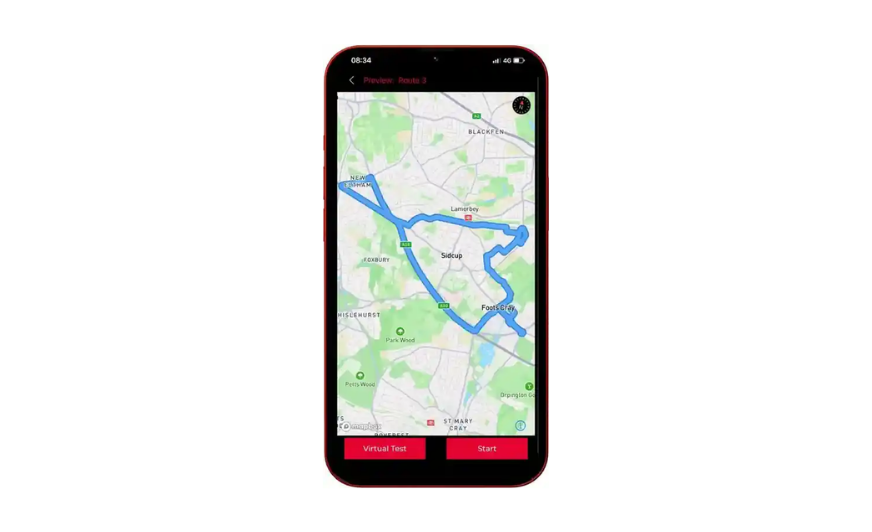
Route-based practice helps simulate this experience. By following predefined routes, learners become more comfortable navigating independently and responding to instructions.
This preparation improves decision-making and reduces uncertainty, making it easier to handle this section of the test with confidence.
Benefits of Using a Route-Based Preparation Approach
A route-based approach offers several advantages that improve overall test readiness:
- Greater familiarity with local road conditions
- Improved anticipation of potential hazards
- More consistent application of driving rules
- Increased confidence through repeated exposure
Additionally, learners can download driving test routes for free, making it easier to practise regularly and maintain consistent progress.
Tips to Maximise the Use of a Driving Test App
To get the most out of route-based preparation, learners should adopt a focused and consistent approach:
- Practise regularly across different routes
- Pay attention to areas where mistakes occur
- Combine app-based practice with professional guidance
- Simulate test conditions by avoiding unnecessary interruptions
- Download driving test routes for free to expand your practice coverage
Following these steps ensures that practice remains effective and aligned with test expectations.
Conclusion
Successful test preparation depends on combining knowledge with consistent practice. Understanding the rules is essential, but applying them confidently in real driving situations is what truly makes a difference. A structured approach helps learners develop better awareness, improve decision-making, and reduce uncertainty. By practising in a more organised way, learners can build the confidence needed to perform consistently. Platforms like Test Routes support this process by offering a practical way to prepare, helping learners feel more ready and in control when approaching their driving test.


























Sign in to leave a comment.