What Should Cashiers Verify When One Payment Appears in Two Collection Channels?

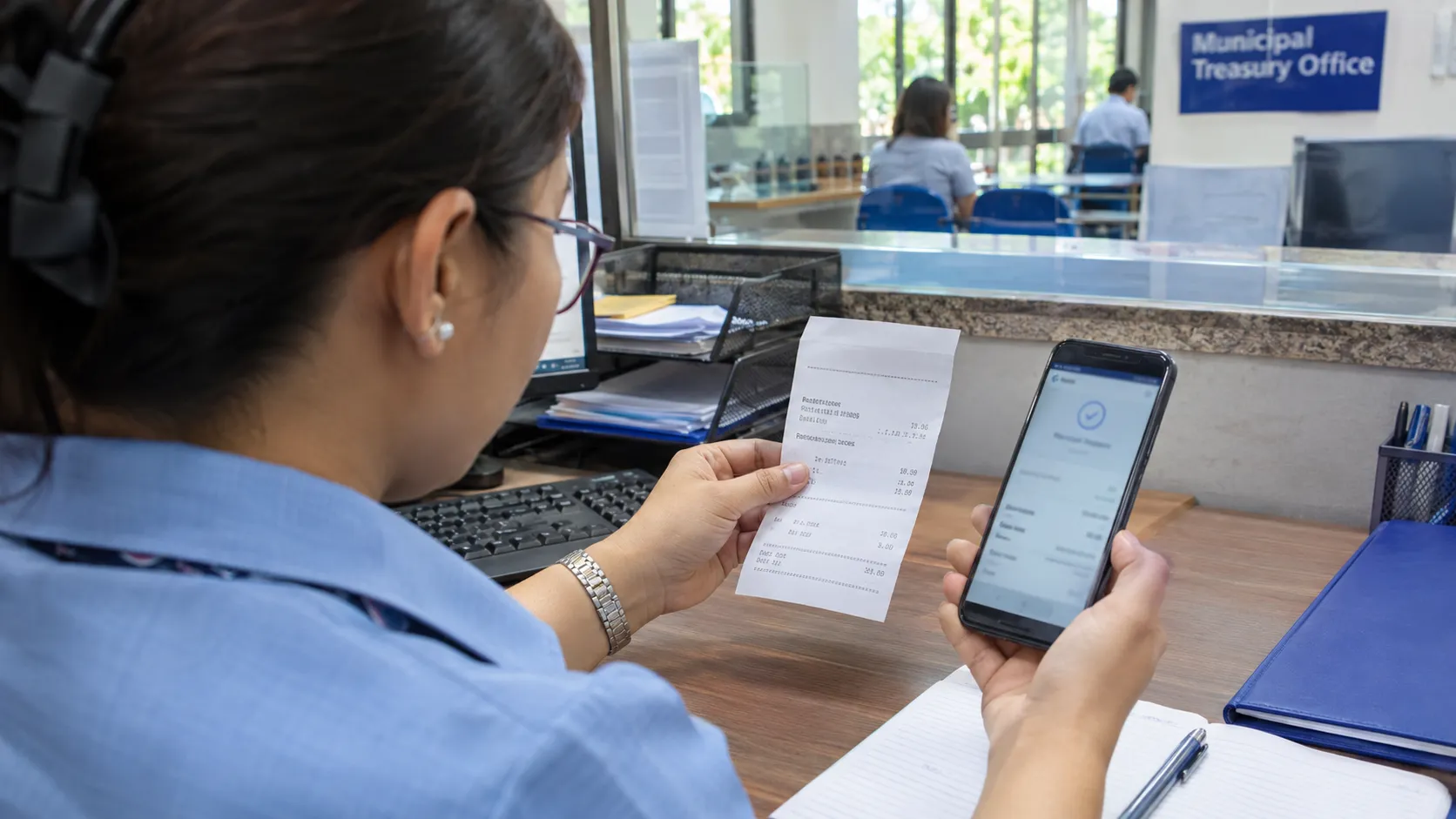
When a payer appears in both online and counter collection records, an LGU cashier should compare the underlying assessment, payment references, receipts, amounts, and confirmed transaction statuses before treating the entries as duplicate collections. The same name and amount in two systems do not establish that money was collected twice.
One entry may reflect the actual payment while the other records an attempted transaction, an acknowledgment, or a subsequent encoding of the same collection. If the local government uses a connected records platform, the GoLGU ERP System describes centralized information and traceability as general capabilities. Whether a particular deployment connects payment channels or matches collections automatically must be confirmed separately.
Key Takeaways
Match each channel's payment evidence to the original assessment and distinguish a successful collection from an attempted payment or a second record of the same transaction. Assess an authorized electronic acknowledgment under the collection arrangement the LGU actually used. Preserve the original entries, record any unresolved difference, and refer adjustments to personnel with the proper authority.
Why can one payment appear in two collection channels?
A repeated payer name can result from more than one event. The online channel may record an attempted payment, a confirmed collection, or a payment acknowledgment. The counter record may document cash actually accepted, an inquiry, or information entered from an earlier electronic transaction. These are different events, even when the payer and amount match.
Cashiers should first establish what each record claims happened. A screen displaying “submitted” or “processing” does not necessarily establish collection. Conversely, a valid acknowledgment issued through an authorized collection arrangement must not be dismissed merely because the corresponding remittance has not yet appeared in a bank report.
The review therefore focuses on the identity and status of each transaction, not simply on matching names. Similar entries may eventually prove to be two collections, one collection reflected twice, or a discrepancy that still needs external confirmation.
Which identifiers should cashiers compare?
An assessment reference connects the payment to the government obligation. Other numbers may identify the transaction attempt, the provider's acknowledgment, the electronic official receipt or the counter receipt. Staff need to understand what each number represents before treating two numbers as evidence of two payments.
Useful points of comparison include:
- Assessment or order-of-payment reference: Which fee or obligation did the person intend to pay?
- Online transaction identifier: Which specific gateway or intermediary transaction generated the electronic record?
- Acknowledgment or receipt number: Which document, if any, acknowledges actual collection?
- Counter collection evidence: Was money accepted at the counter, and what receipt and cashier record support it?
- Amount, date, time, and status: Are the details consistent, and do the sources indicate completed, pending, failed, or reversed activity?
- Deposit or remittance evidence: What subsequent record, when applicable to the collection arrangement, supports the movement of funds?
COA Circular No. 2013-007 distinguishes an electronic official receipt number from the transaction number generated by a system. A billing reference may also remain unchanged when a person attempts to settle the same assessment again. That is why a matching assessment number alone cannot resolve the question.
What does an online payment acknowledgment establish?
The answer depends on the government entity's authorized electronic collection arrangement. COA Circular No. 2021-014 addresses the Collect-Aggregate-Remit (CAR) and Self-Collect and Credit (SCC) schemes. Their acknowledgment and reporting arrangements are not identical.
Under the CAR scheme, the circular provides for an electronic acknowledgment receipt issued by an authorized intermediary. The circular recognizes that acknowledgment, when issued under the covered arrangement, binds the government entity to the collection. A cashier should not disregard it merely because the intermediary's remittance is still being processed.
Under the SCC scheme, the circular addresses electronic official receipts and the particular evidence needed for collections credited to the government account. The cashier should establish which scheme and records apply before classifying a portal notification as proof of payment.
A payment-request reference, a screenshot of an unfinished checkout, and a valid collection acknowledgment can look similar to a busy receiving office. Their evidentiary significance differs. Staff should verify the record through the authorized source instead of assuming every displayed reference means that the payer has paid.
How should the online and counter records be reconciled?
Start with the obligation and follow the evidence for each channel separately. Treasury personnel can compare the assessed fee against the electronic acknowledgment, counter receipt, collection reports and available intermediary or bank confirmation. Uncertain entries should remain identifiable while the responsible office checks their status.
Hypothetical municipal example: A resident owes a ₱1,350 fee for a business-permit-related transaction. The online system displays an acknowledgment associated with that assessment. A counter collection record also appears for ₱1,350 under the same payer.
If the counter record merely reproduces details of the authorized online collection, the two records may describe one payment. If the cashier separately received cash and issued a counter receipt, the evidence may instead indicate two actual collections. If the online entry is only a payment attempt, the counter transaction may be the sole completed collection. The documents and confirmed transaction statuses, rather than the matching names, determine which situation is supported.
COA Circular No. 2021-014, Section 5.2.5, requires daily reconciliation of electronic collections with their remittances or deposits and resolution of discrepancies. That requirement should be applied within its stated scope. Comparing the online and counter entries is a related operational check, not a claim that the circular prescribes one universal duplicate-payment worksheet for every LGU.
What if both channels appear to have collected money?
Two apparently successful entries require review before anyone changes a receipt, removes a posting or promises a refund. Cashiers should preserve the original identifiers and evidence, establish whether both amounts were actually received, and identify any effect on the payer's outstanding obligation.
An unresolved difference may require confirmation from the electronic intermediary, the authorized counter collecting officer, the Treasury unit, or the office responsible for the assessment. Staff should record what has been confirmed and what remains pending so that a later reviewer can reconstruct the decision.
A duplicated receipt number is a different problem from a duplicated payment. For guidance on receipt-number sequence exceptions, see the separate discussion of skipped or duplicated official receipt numbers. Neither issue, by itself, authorizes an informal deletion or cancellation.
If a second collection is established, any refund, correction, receipt treatment, or accounting adjustment must follow the applicable government rules and the LGU's approved authority assignments. The evidence identifies the problem; the authorized process determines the remedy.
Who should document and authorize the resulting action?
The cashier who notices the overlap should preserve the two source records and report the concern through the LGU's established collection procedure. Treasury personnel may need to confirm receipt and deposit information, while Accounting may need to review how any recorded amounts are treated. The office responsible for the underlying fee can clarify the assessment and whether it has been settled. Exact duties depend on authorized local arrangements.
A practical exception record can identify the assessment, both collection channels, original transaction and receipt identifiers, source documents, confirmed statuses, unresolved questions, and the official who authorized the next action. This is a recommended way to make a review reproducible, not a prescribed nationwide form.
Reliable payment review also depends on whether the LGU's actual system can retain source references and show relevant changes without obscuring earlier records. LGUs evaluating those requirements can request a GoLGU consultation to confirm the capabilities of a proposed configuration.
Frequently Asked Questions
Does the same payer name mean an LGU received a duplicate payment?
No. A payer's name, assessment, or payment amount can appear in multiple records without showing that two collections occurred. Verify each record's status and original evidence before classifying it.
Which reference numbers help distinguish online and counter collections?
Compare the assessment or order-of-payment number, the electronic transaction identifier, the applicable acknowledgment or electronic receipt number, and the counter receipt number. Their purposes differ, so matching or different numbers must be interpreted alongside the source records.
Is a payment gateway reference sufficient proof of collection?
Not always. A reference may identify an attempt or an accepted payment, depending on the provider and the authorized collection arrangement. Verify the transaction status and the acknowledgment required under the applicable process.
Can a cashier immediately cancel one of two matching receipts?
No automatic cancellation follows from matching details. The cashier should preserve both records, report the discrepancy, and follow the authorized procedure for any correction or cancellation.
What if both payment channels actually collected money?
Treat the apparent overcollection as a matter requiring verified evidence and an authorized decision. Do not assume an automatic refund, reversal, or ledger adjustment. The applicable collection and accounting procedures determine the next action.
Who should resolve an apparent duplicate before records are changed?
The concern should be handled through the LGU's approved Treasury and related review assignments. The authorized officers must examine collection evidence and determine any further action, with Accounting or the source office involved when their records or responsibilities are affected.
References
- Commission on Audit. COA Circular No. 2021-014, Guidelines on the Use of Electronic Collection and Electronic Payment for Government Transactions, December 22, 2021. Particularly Sections 5.1.3, 5.2.2, 5.2.3, 5.2.4, and 5.2.5.
- Commission on Audit. COA Circular No. 2013-007, Guidelines for the Use of Electronic Official Receipts, September 18, 2013. Particularly Section 3.3 on electronic receipt information.
Disclaimer
The correct handling of payment acknowledgments, receipt exceptions, duplicate collections, refunds, and accounting adjustments depends on the collection scheme, supporting evidence, applicable COA requirements, and the LGU's authorized procedures. This material is general operational guidance, not an instruction to alter an official transaction or evidence that any particular GoLGU deployment includes automatic cross-channel payment matching.


Sign in to leave a comment.