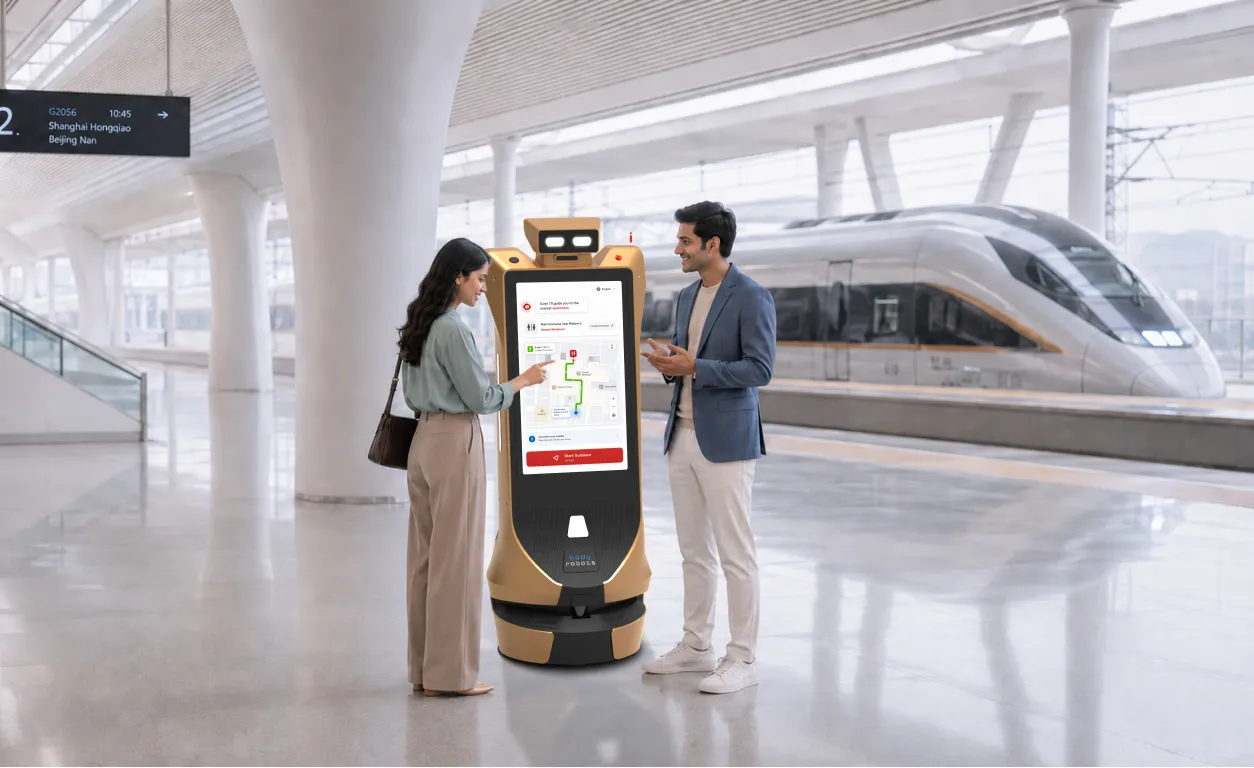

Railway stations bring together thousands of passengers with different destinations, languages, schedules, and travel needs. People move between entrances, ticket counters, waiting halls, platforms, food outlets, retail stores, help desks, and exits, often under significant time pressure.
This creates two major communication challenges. Passengers need clear directions, while brands and station retailers need better ways to reach travellers across a large and constantly changing environment.
A wayfinding robot can support both needs. It can carry directional messages through selected station areas while also displaying relevant advertising, retail promotions, tourism information, and public communication.
Odigo can be positioned as a mobile communication platform for railway environments. Rather than keeping every message limited to fixed signs or digital screens, the robot can bring useful information closer to passengers at different stages of their journey.
Key Takeaways
A wayfinding robot can support passenger navigation across suitable railway station areas.
An autonomous wayfinding robot can display directional, informational, and promotional content through planned station routes.
Advertising and navigation can work together when the information remains clear and useful.
Odigo can support retail promotions, tourism campaigns, food offers, public information, and station activations.
The robot should complement official signage, station staff, help desks, and passenger information systems.
Successful deployment depends on route planning, relevant content, operating schedules, and clear communication goals.
Why Railway Station Navigation Remains Challenging
Railway stations are not simple buildings with one entrance and one waiting area. Large stations may contain several platforms, bridges, tunnels, ticketing zones, waiting halls, retail sections, food outlets, parking connections, and transport links.
Passengers may face challenges such as:
- Finding the correct platform
- Locating ticket counters
- Identifying the nearest waiting area
- Finding washrooms or help desks
- Reaching food outlets
- Locating exits
- Understanding platform changes
- Finding local transport
- Navigating unfamiliar station layouts
- Managing limited time before departure
Static signs remain essential, but passengers may not notice every sign or may be standing in an area where the required information is not immediately visible.
A mobile communication platform can provide an additional layer of assistance by carrying simple directional messages into areas where passengers are already waiting or moving.
What Is a Wayfinding Robot?
A wayfinding robot is a mobile robotic platform that supports navigation and location-based communication within large public or commercial environments.
Inside railway stations, the robot may display directions toward:
- Platforms
- Ticket counters
- Waiting halls
- Help desks
- Food courts
- Retail outlets
- Washrooms
- Exit gates
- Parking areas
- Local transport points
A wayfinding robot should not replace official station signs or employees. It should support the existing communication system by making selected information more visible and easier to access.
The robot can also carry commercial messages when those promotions are relevant to the passenger’s location or immediate journey.
How an Autonomous Wayfinding Robot Works
An autonomous wayfinding robot follows planned operating routes through suitable station areas. Station teams can define where the robot should move, when it should operate, and which content should appear during each route.
A deployment may include:
- A defined operating zone
- Approved movement paths
- Directional content
- Retail or sponsor messages
- Public information
- Campaign schedules
- Staff supervision
- Performance measurement
The content can change according to the area.
Near the entrance, the robot may display ticketing and platform guidance. In a waiting hall, it may promote food outlets, travel services, or tourism information. Near arrival areas, it may show directions toward exits, taxis, buses, or local services.
This makes the robot more relevant than a platform that repeats the same message across every station zone.
Mapping the Passenger Journey
The strongest wayfinding strategy begins by understanding the passenger journey.
Stage 1 Entering the Station
When passengers enter, they need immediate orientation. They may want to locate ticketing areas, platform access, enquiry counters, or waiting halls.
A robot operating in suitable entrance zones can display:
- Ticket counter directions
- Platform access guidance
- Waiting hall locations
- Help desk information
- Security entry instructions
- Food outlet directions
The message should be brief because passengers at this stage are usually moving quickly.
Stage 2 Moving Toward the Platform
After ticketing or entry, passengers need to reach the correct boarding area. Large stations may include bridges, underground passages, elevators, or long corridors.
A wayfinding robot can support directional communication toward:
- Platform access points
- Foot overbridges
- Elevators
- Escalators
- Waiting areas
- Drinking water points
- Passenger assistance counters
The robot should reinforce existing station signage rather than introduce a separate navigation system that could confuse travellers.
Stage 3 Waiting Before Departure
Waiting time creates an opportunity for both useful information and relevant advertising.
Passengers may be interested in:
- Food and beverage options
- Bookstores
- Convenience stores
- Charging services
- Travel applications
- Hotel offers
- Tourism information
- Local transport
- Entertainment content
A mobile robot can circulate through approved waiting zones and display messages related to services available nearby.
Stage 4 Arriving at the Destination
Arriving passengers often need to find exits, local transport, parking areas, hotels, or nearby attractions.
A robot in arrival zones can display:
- Exit directions
- Taxi information
- Bus connections
- Parking guidance
- Hotel promotions
- Tourism campaigns
- Local travel services
- City information
This makes the robot useful even after the train journey has ended.
Combining Navigation with Advertising
Navigation and advertising can work together when the commercial content is connected to a real passenger need.
For example:
- A message directing passengers toward the food area can highlight a restaurant offer.
- A message near arrivals can promote a local taxi or hotel service.
- A platform guidance message can include a nearby convenience store promotion.
- A waiting hall message can highlight a travel application or charging service.
The advertising should never make the directional information difficult to understand. Navigation needs to remain clear, accurate, and visually separate from promotional content.
This balance protects passenger trust while creating commercial value.
Advertising Robot for Railway Stations
An advertising robot for railway stations can carry promotional content across selected station areas instead of remaining fixed in one media location.
Possible advertising categories include:
- Food and beverage
- Tourism
- Hotels
- Transportation
- Financial services
- Travel insurance
- Mobile applications
- Retail stores
- Consumer products
- Entertainment platforms
- Public campaigns
The robot can support different messages according to passenger location and time of day.
Morning routes may highlight breakfast offers. Afternoon campaigns may promote retail stores or travel services. Evening campaigns may focus on meals, local transport, and hotel options.
This creates a more contextual advertising approach.
Railway Station Activation Robot
A railway station activation robot can support temporary or recurring campaigns that need stronger physical visibility.
Suitable activations may include:
- Product launches
- Tourism promotions
- Festival campaigns
- Travel app launches
- Public awareness drives
- Retail promotions
- Food brand campaigns
- Sponsor activations
- New service announcements
- Local business promotions
The robot can act as a moving campaign touchpoint within approved areas.
For example, a tourism board may use the robot to promote nearby attractions to arriving passengers. A food brand may run a meal offer near waiting zones. A digital platform may encourage passengers to scan a QR code and download an application.
How Odigo Can Support Railway Station Communication
Odigo Built by Kody Robots can support railway station communication through mobile advertising, directional messaging, promotional campaigns, and passenger engagement.
The robot can be used to:
- Display simple navigation prompts
- Promote station retailers
- Support tourism communication
- Highlight food and beverage offers
- Carry public awareness messages
- Promote digital services
- Support brand activations
- Encourage QR-based actions
- Share event or seasonal content
The strongest deployment begins with a specific communication objective. The robot should not display unrelated content without a clear reason.
A campaign may focus on helping passengers discover nearby services, improving navigation, increasing store visits, or generating digital engagement.
Wayfinding Robot for Railway Stations
A wayfinding robot for railway stations can support communication across large transit spaces where passengers need fast and visible information.
Useful applications may include:
- Directional support in waiting areas
- Platform access reminders
- Exit guidance
- Retail discovery
- Food outlet navigation
- Help desk promotion
- Local transport directions
- Arrival-zone communication
The robot should operate only within suitable station zones and follow a clear content hierarchy.
Essential passenger guidance should appear first. Commercial content can follow without reducing readability.
Benefits for Railway Station Operators
Additional passenger communication
The robot gives station teams another way to display useful information across selected zones.
Improved service discovery
Passengers can learn about food outlets, retail stores, help desks, and other station services.
Flexible content delivery
Messages can change according to location, time, campaign, and passenger flow.
New advertising opportunities
Station operators can introduce mobile campaign packages for brands and retailers.
Better event communication
The robot can support festival periods, station events, public campaigns, and temporary activations.
Modern station experience
A mobile communication robot can contribute to a more technology-enabled public environment.
Benefits for Advertisers
Movement across station areas
Campaign content can reach passengers beyond one fixed display location.
Contextual advertising
Messages can reflect where passengers are and what they may need.
Clear digital actions
Campaigns can direct passengers toward QR codes, applications, offers, or store locations.
Better retail visibility
Stores located away from the main passenger route can receive additional promotion.
Memorable campaign format
A useful moving platform may create stronger campaign recall than familiar static media.
Flexible campaign planning
Brands can run short activations, seasonal campaigns, or recurring promotions.
Benefits for Passengers
Passengers gain value when the robot provides useful and relevant communication.
Potential benefits include:
- Faster service discovery
- Easier station navigation
- Better access to food and retail information
- Useful local transport guidance
- Relevant tourism content
- Improved waiting experiences
- Clearer promotional offers
The robot should reduce information friction rather than add visual noise.
Designing Effective Robot Content
Use short messages
Passengers may see the robot for only a few seconds. Messages should be understood quickly.
Separate navigation and advertising
Directional information should remain clearly different from promotional content.
Use large typography
Readable text is essential in busy public spaces.
Focus on one action
A campaign should ask passengers to complete one clear next step.
Match content to location
Arrival-zone content should differ from platform or waiting-hall communication.
Consider language needs
Content should reflect the languages commonly used by passengers at the station.
Keep campaigns current
Outdated offers or directions can reduce trust and campaign performance.
Measuring Campaign and Navigation Performance
Station operators and advertisers can evaluate the robot through practical indicators.
Possible measurements include:
- QR code scans
- Retail visits
- Offer redemptions
- Application downloads
- Passenger interactions
- Direction requests
- Tourism enquiries
- Campaign participation
- Advertiser renewals
- Passenger feedback
Navigation performance may also be reviewed through staff observations and common passenger questions.
The purpose of measurement is to understand whether the robot is helping passengers and creating meaningful advertising value.
Planning a Railway Station Robot Deployment
Define the communication goal
Decide whether the robot will focus on navigation, advertising, service discovery, or a combination.
Identify suitable station zones
Select areas where passengers need information and where the robot can operate effectively.
Create route-specific content
Messages should change according to the robot’s location.
Coordinate with station teams
Operations, security, retail, and advertising teams should understand the deployment plan.
Train responsible employees
Staff should know how to manage content, supervise routes, and respond to issues.
Start with a focused pilot
A limited deployment makes it easier to measure passenger response and improve the model.
Review and refine
Routes, timing, content, and campaign offers can be adjusted based on results.
Why Kody Robots Fits Railway Station Automation
Kody Robots, a robotics company in India, focuses on autonomous robotic solutions for commercial and public environments.
Odigo can support railway station operators, advertisers, retailers, and campaign organizers that want to introduce mobile communication into transit spaces.
The robot creates the strongest value when navigation, advertising, and passenger engagement are connected to clearly defined routes and objectives.
Frequently Asked Questions
What is a wayfinding robot?
A wayfinding robot is a mobile system that displays directional information and helps people locate services, destinations, or facilities within large environments.
How can a wayfinding robot help railway passengers?
It can support existing signs by displaying directions toward platforms, ticket counters, waiting halls, exits, food areas, and passenger services.
What is an autonomous wayfinding robot?
An autonomous wayfinding robot moves through planned routes while carrying navigation, information, or promotional content.
Can the robot display advertising?
Yes. The robot can carry approved advertising content, provided promotional messages do not reduce the clarity of important passenger information.
What is a railway station activation robot?
It is a mobile robotic platform used for temporary or recurring campaigns such as product launches, tourism promotions, public awareness drives, and retail activations.
Does a wayfinding robot replace station staff?
No. Station employees, official signs, help desks, and passenger information systems remain essential. The robot provides an additional communication channel.
The Future of Railway Station Wayfinding
Railway station communication will increasingly combine physical signs, digital information systems, mobile platforms, and interactive technology.
Future station environments may connect robots with:
- Passenger information systems
- Ticketing applications
- Digital signage
- Retail media platforms
- Tourism services
- Public communication systems
- Station maps
- Campaign analytics
- Local transport information
A wayfinding robot can become part of this connected system by bringing information closer to passengers as they move through the station.
Conclusion
A wayfinding robot can help railway stations improve passenger communication, service discovery, navigation, and mobile advertising.
Odigo can support directions, retail campaigns, tourism promotions, food offers, public communication, and brand activations across suitable station areas.
The strongest deployments will keep navigation clear, advertising relevant, and campaign actions simple. The robot should work alongside station employees, official signs, help desks, and digital information systems.
For railway operators and brands looking to create more useful transit experiences, an autonomous wayfinding and advertising robot offers a practical new communication channel.



























Sign in to leave a comment.