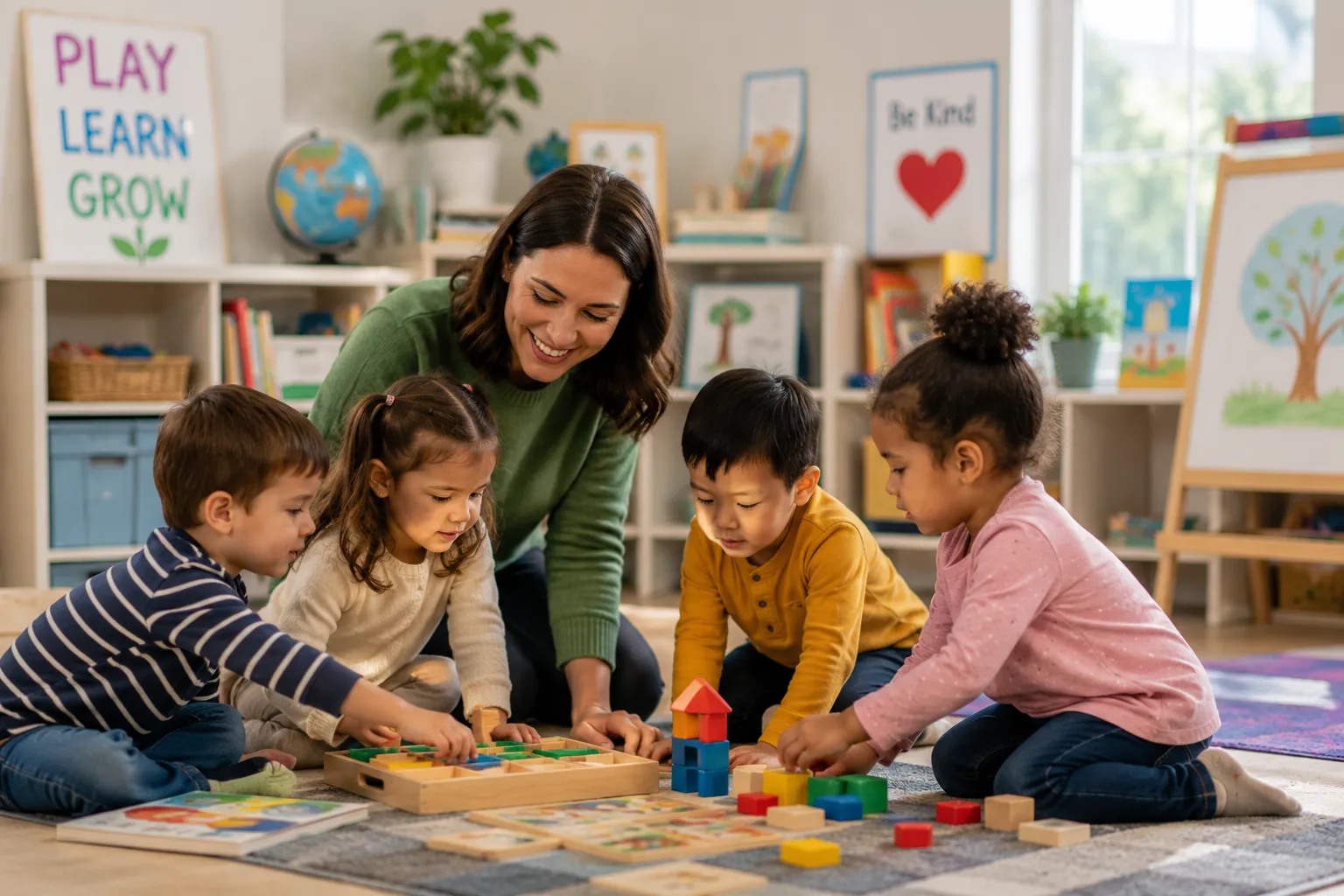

Early learning childcare plays an important role in supporting children during their formative years. A high-quality early learning environment gives children opportunities to explore, play, communicate, build relationships, and develop essential skills in a safe and nurturing setting.
For parents choosing an early childhood program, it is important to look beyond basic childcare. The right environment should combine responsive care with meaningful learning experiences that encourage curiosity, confidence, independence, and social development.
👶 What Is Early Learning Childcare?
Early learning childcare combines daily care with age-appropriate educational experiences designed to support children's overall development.
🌟 Key Areas of Early Learning
- 🧠 Cognitive and thinking skills
- 🗣️ Language and communication
- ❤️ Emotional development
- 🤝 Social skills
- 🏃 Physical development
- 🎨 Creativity and imagination
- 🧩 Problem-solving abilities
- 🙋 Independence and confidence
- 📚 Early literacy and numeracy
Children learn naturally through play, exploration, conversation, movement, and hands-on experiences. A well-planned childcare program uses these everyday opportunities to make learning enjoyable and meaningful.
🏡 Why Choose Quality Early Learning Childcare?
The early years provide children with valuable opportunities to develop skills that can support future learning. A positive childcare environment can help children become more confident when interacting with others, trying new activities, and expressing their ideas.
💡 Benefits Can Include:
- 🌱 Encouraging curiosity
- 🗣️ Developing communication skills
- 🤝 Building friendships
- 🧠 Supporting early thinking skills
- 🎨 Encouraging creativity
- 🙋 Developing independence
- ❤️ Supporting emotional confidence
- 🏃 Promoting physical activity
A nurturing environment can also help children become comfortable with routines and group activities before moving into later stages of education.
🎨 Learning Through Play
Play is a central part of quality early learning. Children can develop important skills while participating in activities that are enjoyable and appropriate for their age.
🧸 Common Early Learning Activities
- 🎨 Painting and drawing
- 📚 Storytelling and reading
- 🎵 Singing and music
- 🧩 Puzzles and matching games
- 🧱 Building and construction
- 🧸 Imaginative and role play
- 🌿 Nature exploration
- 💧 Sensory activities
- 🏃 Outdoor games
- ✂️ Creative projects
- 🔢 Counting activities
- 🔤 Letter and sound activities
Play-based learning gives children opportunities to experiment, make choices, solve simple problems, and develop new skills through practical experiences.
🧠 Supporting Cognitive Development
Early learning childcare can introduce children to concepts that encourage observation, reasoning, memory, and problem-solving.
🔍 Learning Experiences May Include:
- 🔢 Recognising numbers and patterns
- 🔤 Exploring letters and sounds
- 🧩 Completing puzzles
- 🧱 Building structures
- 🎨 Sorting colours and shapes
- 🌿 Exploring nature and science
- 📖 Listening to stories
- 🗣️ Discussing everyday experiences
These activities can encourage children to ask questions and become active participants in their learning.
🗣️ Developing Communication and Language
Communication is an important part of early childhood development. Children learn language by listening, talking, asking questions, singing, storytelling, and interacting with educators and other children.
💬 Childcare Programs Can Encourage:
- 👂 Listening skills
- 🗣️ Vocabulary development
- 📖 Story comprehension
- ❓ Asking and answering questions
- 🎵 Rhymes and songs
- 👥 Group conversations
- 😊 Expressing feelings and ideas
Educators can support language development by speaking with children regularly and creating opportunities for meaningful conversations.
🤝 Building Social and Emotional Skills
Early learning environments give children opportunities to interact with people outside their immediate family. These experiences can help children understand cooperation, communication, sharing, patience, and empathy.
❤️ Social Skills Children Can Practise
- 👋 Making friends
- 🤝 Sharing and cooperating
- 👂 Listening to others
- 🗣️ Expressing emotions
- 🙋 Asking for help
- 🧩 Working together
- 🕊️ Managing simple disagreements
- 💕 Showing kindness and empathy
Positive relationships with educators can also help children feel secure and supported as they become more independent.
🏃 Physical Development and Outdoor Play
Physical activity is another important part of early learning childcare. Children need opportunities to move, explore, and develop coordination.
🌳 Outdoor Activities May Include:
- 🏃 Running and movement games
- ⚽ Ball activities
- 🧗 Age-appropriate climbing
- 🌿 Nature exploration
- 🚶 Walking and discovery activities
- 🪣 Sand and water play
- 🎯 Coordination games
Indoor activities such as drawing, building, cutting, and manipulating learning materials can also support fine motor development.
🌈 Encouraging Independence
High-quality childcare can help children develop independence through simple everyday responsibilities.
🙋 Children May Learn to:
- 🧸 Put toys away
- 🧼 Practise personal hygiene
- 🥄 Manage simple eating routines
- 👕 Develop dressing skills
- 🧹 Help organise their environment
- 🎒 Look after personal belongings
- 🪴 Participate in simple classroom responsibilities
These activities can help children understand routines and develop confidence in completing tasks independently.
👩🏫 The Role of Early Childhood Educators
Educators have an important role in creating a positive early learning environment. They observe children's interests, provide appropriate activities, encourage participation, and offer support when children face challenges.
🌟 Effective Educators Can:
- 👀 Observe individual development
- 🧠 Plan age-appropriate activities
- ❤️ Build positive relationships
- 🗣️ Encourage communication
- 🎨 Support creativity
- 🙋 Promote independence
- 🤝 Encourage cooperation
- 📈 Monitor developmental progress
A caring educator can make children feel comfortable while encouraging them to explore new ideas and experiences.
🛡️ Safety and Wellbeing
Safety should always be a priority when selecting early learning childcare.
✅ Parents Should Consider:
- 🔐 Secure entrances and exits
- 👀 Appropriate supervision
- 🧼 Clean and hygienic facilities
- 🧸 Safe toys and equipment
- 🌳 Secure outdoor areas
- 🚨 Emergency procedures
- 👩🏫 Staff qualifications and training
- 🏠 Child-friendly learning spaces
A safe environment allows children to explore and participate confidently while giving parents greater peace of mind.
👨👩👧 Partnering With Parents
Strong communication between educators and families can support children's development. Parents should receive appropriate updates about their child's experiences, interests, progress, and daily routines.
💬 Parent Communication May Include:
- 📚 Learning activities
- 😊 Social development
- 🍎 Meals and snacks
- 😴 Rest routines
- 🎨 Creative projects
- 📈 Developmental milestones
- 📝 Important centre updates
Working together allows parents and educators to provide consistent support for children.
🌟 Choosing the Right Early Learning Childcare
When comparing early learning childcare options, parents should consider the complete experience rather than focusing on one feature.
🔎 Important Factors Include:
- 👩🏫 Educator qualifications
- 🏡 Learning environment
- 🛡️ Safety procedures
- 📚 Educational approach
- 🎨 Daily activities
- 🌳 Outdoor opportunities
- 🕐 Operating hours
- 💬 Parent communication
- 👶 Individual child needs
- ❤️ Overall atmosphere
Visiting a childcare centre can help parents understand how educators interact with children and whether the environment feels welcoming and supportive.
🌱 Building a Positive Foundation for the Future
Quality early learning childcare gives children opportunities to learn, explore, play, and develop important life skills. Through positive relationships, hands-on activities, creative experiences, outdoor play, and age-appropriate learning, children can build confidence and curiosity.
The right early learning environment should make children feel safe, valued, and encouraged to discover the world around them. By carefully considering educators, activities, facilities, safety, and learning approaches, families can choose a childcare experience that supports their child's development and creates a positive foundation for future learning. 🌈✨


























Sign in to leave a comment.