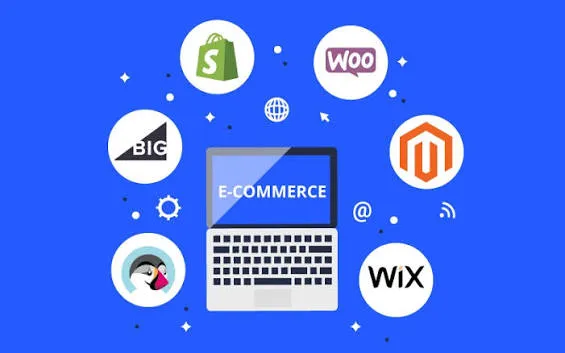

Enterprise businesses need more than a basic online store. They require scalable technology, strong security, flexible integrations, advanced analytics and reliable performance to manage thousands of products and customers. In 2026, choosing the right enterprise ecommerce platform can help businesses streamline operations and create better shopping experiences across multiple channels. There are several options worth consider from global platforms to solutions designed for large and growing brands. A eCommerce Company can also help businesses evaluate their requirements, customize ecommerce solutions, and build a platform that supports long-term growth.
eCommerce Platforms for 2026
Discover the top 6 enterprise eCommerce platforms for 2026 that can help businesses thrive and succeed in the competitive online marketplace.
1. Shopify Plus
Shopify Plus is designed for high-growth and enterprise-level brands that need a scalable ecommerce solution. It provides advanced tools for managing multiple stores, international selling, automation, and high-volume sales.
Its user-friendly interface makes it easier for teams to manage products, orders, promotions, and content. Shopify Plus also supports integrations with various third-party business systems, making it suitable for brands with complex ecommerce requirements.
2. Adobe Commerce
Adobe Commerce is a powerful option for enterprises that require extensive customization and flexibility. It offers advanced catalog management, customer segmentation, personalized shopping experiences, and support for multiple brands and websites.
Businesses with dedicated technical teams can customize the platform according to their specific workflows. Its strong integration capabilities also make it useful for companies connecting ecommerce operations with CRM, ERP, payment, and marketing systems.
3. BigCommerce Enterprise
BigCommerce Enterprise focuses on scalability, flexibility, and B2B as well as B2C ecommerce. The platform supports large product catalogs, multiple sales channels, advanced APIs, and various payment integrations.
Its headless commerce capabilities can also help businesses create customized frontend experiences while maintaining ecommerce functionality in the backend. This makes it an attractive choice for organizations planning a flexible digital commerce strategy.
4. Salesforce Commerce Cloud
Salesforce Commerce Cloud is a strong choice for businesses already using the Salesforce ecosystem. It combines ecommerce capabilities with customer data and marketing technologies, helping brands create more personalized customer journeys.
Enterprises can use the platform to manage online shopping experiences while connecting ecommerce activities with broader customer relationship and marketing strategies.
5. SAP Commerce Cloud
SAP Commerce Cloud is built for large organizations with complex commerce operations. It is particularly suitable for businesses that require extensive integration with enterprise resource planning, customer management, and other business systems.
The platform supports B2B and B2C commerce and can manage complex product catalogs, pricing structures, customer accounts, and order processes. Its enterprise-focused capabilities make it suitable for organizations with sophisticated operational requirements.
6. WooCommerce
WooCommerce is an open-source ecommerce solution built for WordPress. While it can serve smaller businesses, it can also be customized for larger organizations with the right hosting infrastructure, development resources, and integrations.
Its extensive ecosystem of plugins and extensions provides flexibility for businesses that want greater control over their website functionality. However, enterprises should carefully plan security, hosting, performance, and maintenance requirements.
Managing Enterprise Ecommerce Operations
When selecting a platform is only one part of building a successful online business. Its product updates, inventory management, content, orders, customer support, analytics, and marketplace operations also require continuous attention.
An ecommerce management services can help businesses handle routine ecommerce activities while maintaining consistent product information, website content, and operational processes across digital channels.
Marketplace Expansion for Enterprise Brands
Many enterprises sell through marketplaces alongside their own websites. Managing multiple marketplace accounts can become challenging as product catalogs and order volumes grow.
An amazon account management service can help sellers manage listings, product information, account operations, and marketplace-related activities more efficiently.
A dedicated flipkart account service can support listing management, catalog updates, and ongoing marketplace operations for businesses selling on other major marketplaces.
While Brands targeting social commerce and fast-growing Indian marketplaces can also benefit from a Meesho account management service to manage product catalogs and marketplace activities more effectively.
How to Choose the Right Platform
The ideal enterprise ecommerce platform depends on your business size, budget, product catalog, technical resources, sales channels, and future expansion plans. When consider scalability, security, customization, integrations, mobile experience, analytics and total ownership costs before making a decision.
The businesses should also evaluate whether they need B2B features, international selling, headless commerce, multiple storefronts or advanced automation.
Conclusion
The best enterprise ecommerce platform for 2026 depends on your organization's specific goals and technical requirements. Shopify Plus, Adobe Commerce, BigCommerce Enterprise, Salesforce Commerce Cloud, SAP Commerce Cloud, and WooCommerce each offer different strengths. Careful evaluation can help you select a solution that supports both current operations and future growth. Novel Web Solution can help businesses build and optimize a scalable digital commerce presence for professional ecommerce development, integration and management support.




























Sign in to leave a comment.