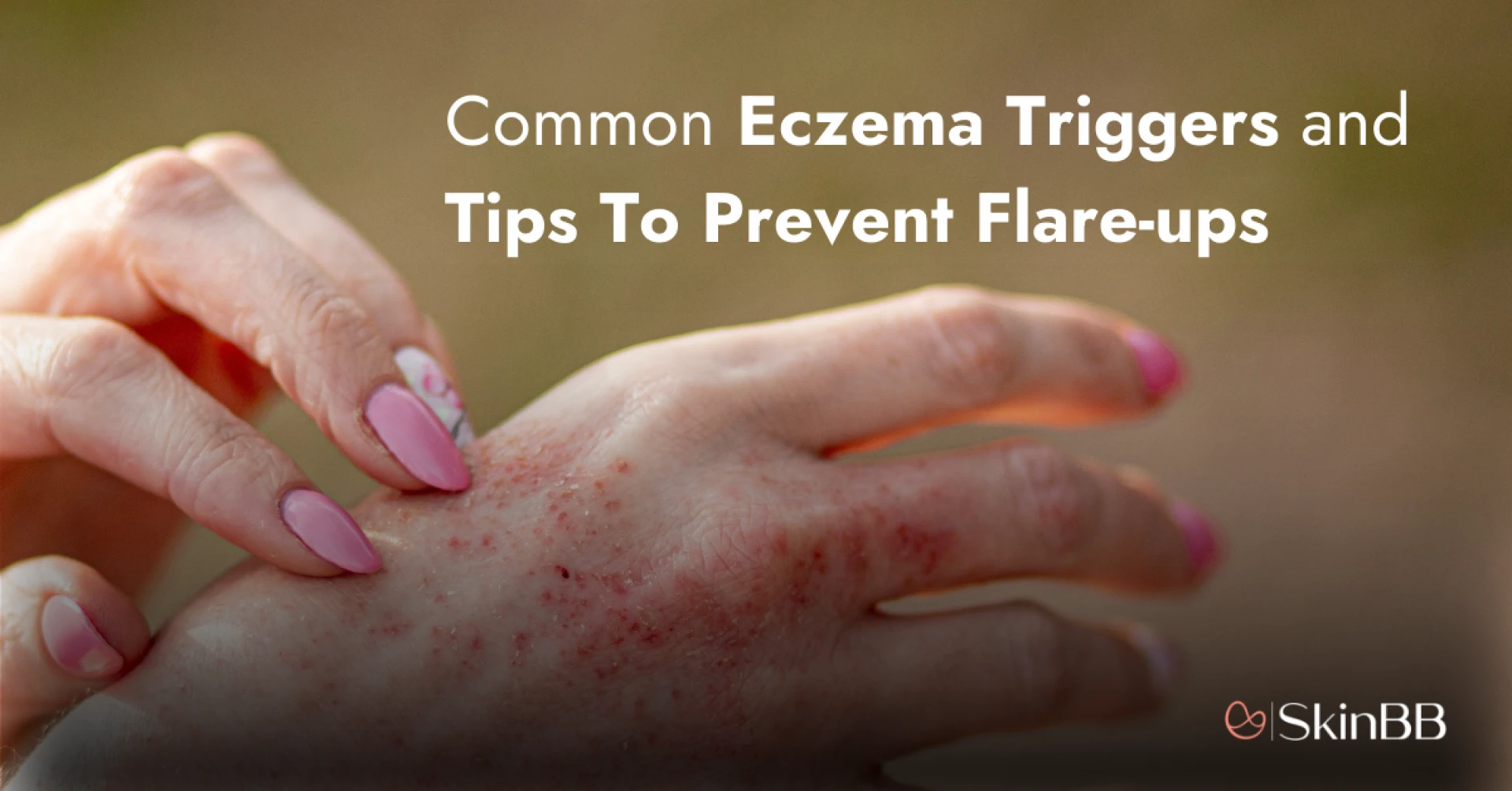

Eczema Troubles Again? Discover What's Really Behind Your Skin Problems

Are you frustrated with the endless 'itch-scratch cycle' that seems to cause eczema flare-ups unexpectedly? You're definitely not the only one experiencing this. Nearly 10% of adults in India are affected by eczema, a long-term skin issue that causes inflammation. Daily life can become stressful and uncomfortable due to symptoms such as itchy, dry, and inflamed skin.
And just when you think your skin is getting better, another eczema flare-up pops up seemingly out of nowhere. Does that sound like your experience? The unpredictable nature of eczema makes it even more difficult to handle. But here's an important point: you can better manage your symptoms and enjoy healthier, calmer skin by understanding and identifying what specifically triggers your eczema.
In this piece, we will explore the most common reasons for eczema, the science behind them, and some practical, real-life tips to help you prevent flare-ups.
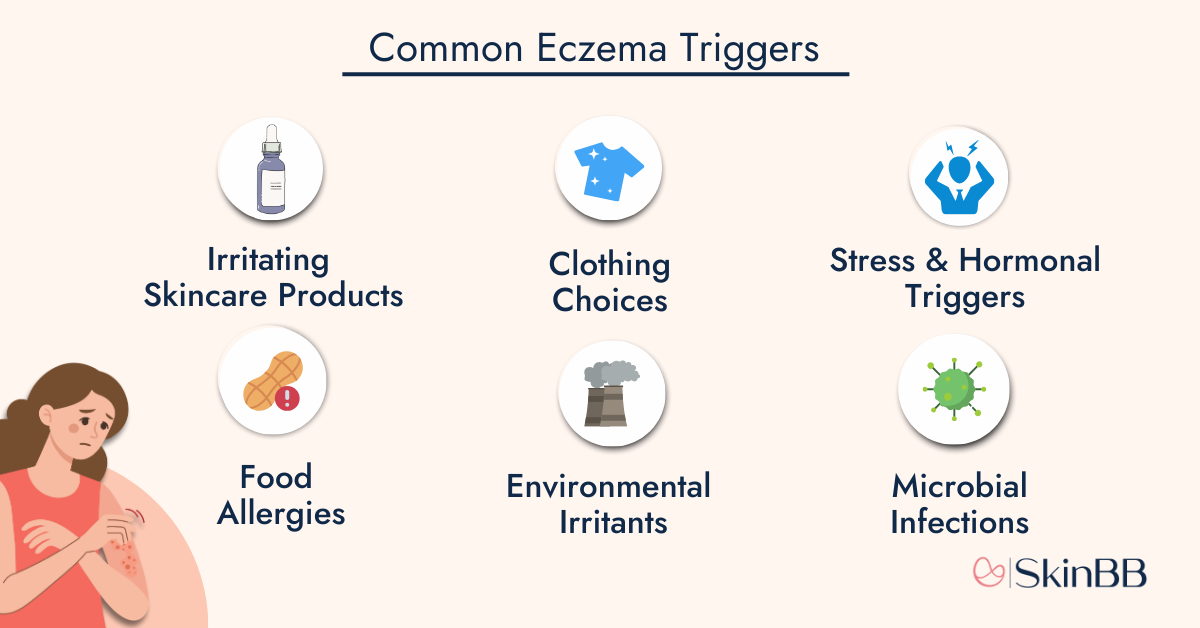
Reasons Behind Eczema and Common Triggers You Should Be Aware Of
Environmental Factors: The Significance of Your Surroundings
Were you aware that your surroundings can greatly affect your eczema? Environmental irritants can stimulate your body's defense system and raise IgE antibody activity, which makes skin inflammation and itching worse. Things such as smoke, pet hair, dust, and pollen—which are not just typical asthma triggers—can also make eczema worse.
- Pollution and Air Quality
If you're living in a city where pollution levels are high, especially with elevated PM2.5 levels, you are constantly exposed to small particles that can settle on your skin. These particles are so tiny that they can get through the skin barrier and start an immune reaction, often resulting in flare-ups. Studies indicate that pollution can weaken the skin’s natural defenses, making it more sensitive to common irritants.
Tip: Utilize an air purifier inside your home and attempt to remain indoors when the air quality is not good.
- Dust Mites and Pet Dander
Although you cannot see them, dust mites and pet dander are typical indoor allergens recognized for worsening eczema, frequently causing flare-ups and increasing skin irritation.
Tip: Although it's hard to completely get rid of dust mites, cleaning regularly and reducing clutter can be significantly helpful.
Cleansers and Soaps: Unexpected Irritants for Delicate Skin
A lot of these products have strong chemicals that strip the skin of its natural oils, damaging the barrier and leading to dryness and irritation.
Tip: Stay with what is effective for your skin. If irritation arises, choose gentle cleansers without fragrances.
Food Allergies: Your Eating Habits Might Be Causing Flare-Ups
If you’re thinking your meals may be affecting your eczema, you’re on the right path. Certain foods recognized as eczema diet triggers, especially in children, but they can also affect adults. Growing awareness around gut health shows that probiotics for eczema may help support the immune system, reduce inflammation, and improve overall skin health, making diet an essential consideration for managing flare-ups.
Common Food Triggers
The most common food allergens associated with eczema include:
- Dairy products (like milk, cheese, and yogurt)
- Eggs
- Wheat and gluten
- Soy
- Nuts (especially peanuts)
Research indicates that around 30% of kids with eczema also have food allergies that can make their symptoms worse.
Parents often inquire about which foods to avoid for eczema, and although these can vary per person, there's usually a list of foods that trigger eczema in those who are sensitive. Recognizing these foods can aid parents in figuring out potential reasons for infant eczema.
Tip: Speak with a dermatologist. A diet that temporarily removes certain foods may help identify what triggers the condition.
Microbial Infections: How Germs Can Make It Worse
Let’s discuss infections, which are unfortunately quite frequent in people with eczema-prone skin. Since the skin barrier is already weak, those with eczema are more vulnerable to bacterial, viral, and fungal infections.
- Staphylococcus aureus Infections
Almost 90% of individuals with eczema carry Staphylococcus aureus on their skin. While this bacteria doesn’t always cause problems, if it enters the skin barrier, it can result in infections and more intense flare-ups.
Tip: Maintain clean skin and adhere to your healthcare provider’s recommendations when using antimicrobial creams or diluted bleach baths. - Viral Infections
Some viruses can lead to serious issues for those with eczema. For instance, the herpes simplex virus can cause eczema herpeticum, which is a painful and potentially serious condition. If you notice blisters appearing along with worsening symptoms, it’s important to get medical assistance immediately.
Psychological Stress: The Connection Between Mind and Skin
You may have observed that stress tends to exacerbate issues, including eczema. Stress is a significant but often ignored trigger. When under stress, your body generates extra cortisol, which can weaken the skin barrier and increase inflammation.
The Vicious Cycle
Here’s the difficult part: Eczema can trigger stress, and in turn, that stress can worsen eczema, leading to a frustrating cycle. But don’t be discouraged—research shows that ways to reduce stress can truly be beneficial.
Tip: Consider adding mindfulness, meditation, or yoga to your daily routine. Even a few minutes of deep breathing can help lower stress levels.
Disturbance in Skin pH: Maintaining the Acid Mantle
Your skin’s normal pH level is slightly acidic, usually between 4.5 and 5.5, and this is crucial for keeping a healthy skin barrier. However, using products with an incorrect pH, like alkaline soaps, can disrupt this balance.
Tip: Opt for pH-balanced cleansers and avoid alkaline soaps, which can irritate and dry out your skin.
Fabrics and Clothing: Comfort Is Key
Believe it or not, what you wear can either help or irritate your eczema. Certain materials are known to cause irritation, while others can keep your skin calm and comfortable.
Fabrics to Avoid
- Wool: While it provides warmth, its coarse texture can induce a scratchy sensation that leads to intense itching.
- Synthetic Fabrics: Fabrics like nylon and polyester have a tendency to retain perspiration and body heat, intensifying the outbreak of eczema.
Fabrics to Choose
- 100% Cotton: This material is exquisitely gentle, exceptionally breathable, and delightfully soft, rendering it an ideal option for individuals susceptible to eczema.
- Bamboo: Being a naturally sourced material, bamboo possesses hypoallergenic qualities while also efficiently drawing moisture away from the skin.
- Silk: The smooth and airy nature of silk aids in diminishing friction on skin prone to sensitivity.
Clothing Tips
- Be sure to pre-wash all recently acquired clothing items utilizing a detergent devoid of fragrances prior to use.
- Opt for garments that possess a looser fit, as this will serve to alleviate friction and encourage enhanced skin ventilation.
- In order to mitigate potential discomfort, promptly remove any tags present or seek out clothing specifically designed to be devoid of tags.
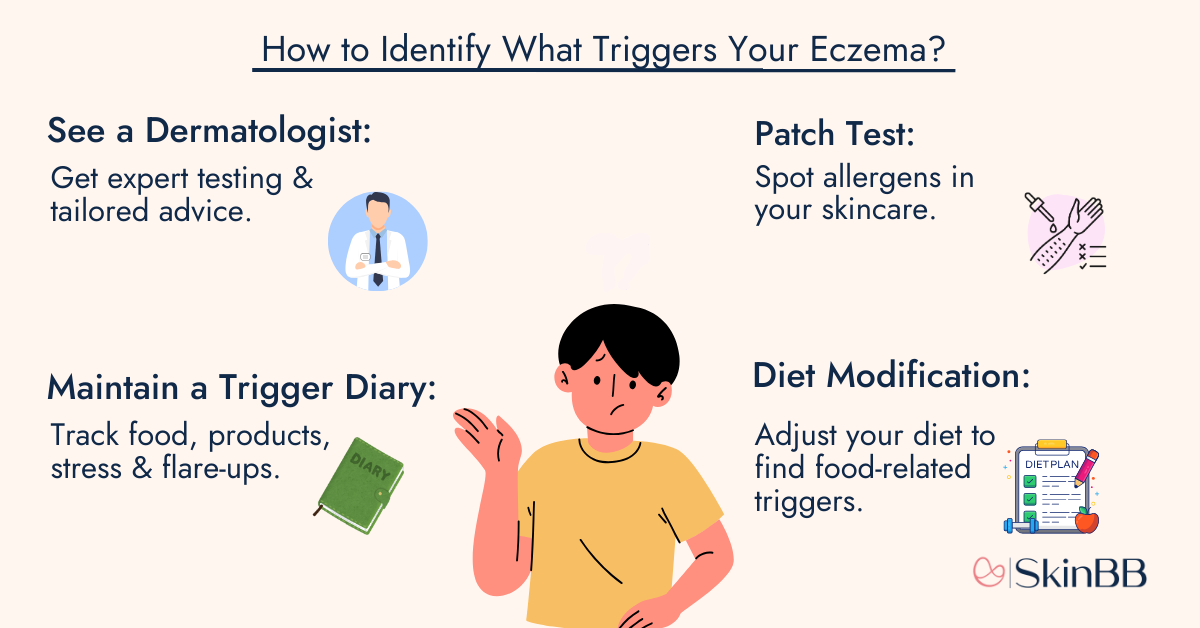
How to Identify What Triggers Your Eczema
Determining the factors that provoke your eczema outbreaks might involve experimentation, but it is a necessary step in effectively handling them. Here are helpful approaches for pinpointing what could be contributing to your eczema:
- Maintain a Trigger Log: Document every consumable item, all utilized products, your immediate environment, together with your overall stress level. Take note of flare-up occurrences, then search for repeating circumstances over a period of time.
- Patch Testing: A session of patch testing conducted by a dermatologist can pinpoint precise allergens, such as certain metals, perfumes, or preservatives, capable of triggering your eczema.
- Diet Modification: In instances where dietary sensitivities are suspected, seek guidance from your physician to partake in an elimination diet. Systematically exclude prevalent allergens such as soy, wheat, eggs, and dairy, over several weeks, before slowly adding them back to find out which items aggravate the eczema.
- Consult a Professional: Dermatologists are equipped to offer tailored advice and execute assessments to aid in determining both apparent and previously unnoticed potential triggers.
Through pinpointing your triggers, you can make educated selections regarding your dietary habits, the environment you are in, and your skincare routine, resulting in a decrease in flare-ups and enhanced skin well-being.
In case of perplexity or a belief that you may have eczema, proceed to SkinBB Community, finalize your profile creation, and upload a visibly clear image depicting the affected region.
The dermatologists at SkinBB are prepared to provide assistance in attaining comprehension regarding your ailment in addition to delivering suitable guidance, or otherwise consult your personal dermatologist for individualized care.
Reference:
- Barne M, Singh S, Mangal DK, Singh M, Awasthi S, Mahesh PA, et al. Global Asthma Network Phase I, India: Results for allergic rhinitis and eczema in 127,309 children and adults. Journal of Allergy and Clinical Immunology Global [Internet]. 2022 Mar 9;1(2):51–60. Available from: https://doi.org/10.1016/j.jacig.2022.01.004
- Patient Perspectives: Atopic Dermatitis (Eczema). Pediatric Dermatology [Internet]. 2016 Jan 1;33(1):85–6. Available from: https://doi.org/10.1111/pde.12810
- Cartledge N, Chan S. Atopic Dermatitis and Food Allergy: A Paediatric Approach. Current Pediatric Reviews [Internet]. 2018 Jun 13;14(3):171–9. Available from: https://doi.org/10.2174/1573396314666180613083616
- Ogonowska P, Gilaberte Y, Barańska-Rybak W, Nakonieczna J. Colonization With Staphylococcus aureus in Atopic Dermatitis Patients: Attempts to Reveal the Unknown. Frontiers in Microbiology [Internet]. 2021 Jan 11;11. Available from: https://doi.org/10.3389/fmicb.2020.567090
Sign in to leave a comment.