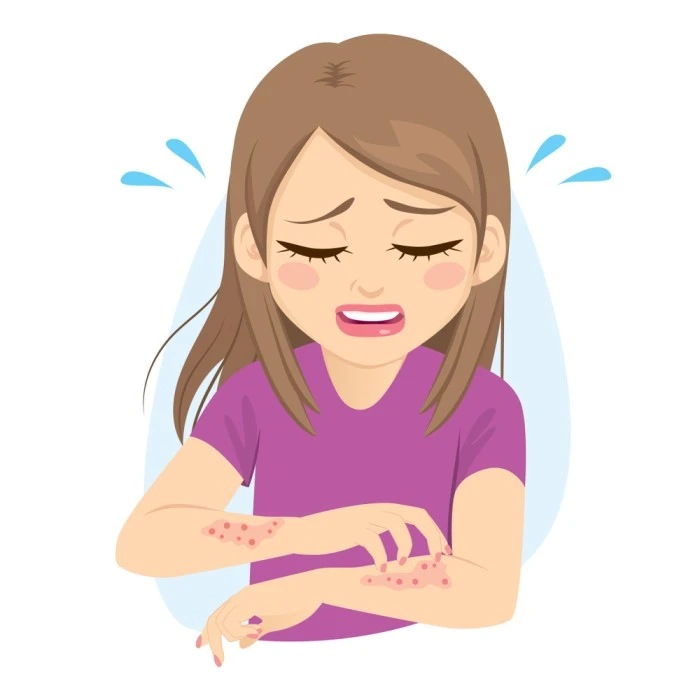

Eczema and psoriasis are chronic skin diseases. They both share similar symptoms, like dry scale, red skin, and scaly skin. Even when their symptoms are quite similar, they have very different causes and an entirely different set of treatments. Psoriasis can be considered the upgraded version of psoriasis and requires a defined treatment that can be much more intensive than eczema.
Here in this blog, we try to explain the differences and similarities between eczema and psoriasis.
Genetics, Environment or Autoimmune: What Causes Eczema and Psoriasis?
The major difference between psoriasis and eczema is that psoriasis is an autoimmune disease, which happens because the skin cell grows at a faster pace. These skin cells are bound to pile up on the top layer, causing white, scaly patches over the body. Eczema is far more difficult to ascertain as the scaling can be caused by both genetic and environmental factors.
Eczema patients have a mutated gene that discredits the formation of the protective layer over the skin and contributes to causing skin flare ups and infections. Climate conditions can also clearly contribute to eczema. People living in extremely cold or dry climates and people who are exposed to pollutants on a daily basis can be subjected to eczema. Eczema can also be triggered by dust mites, pollen, mold, diary products, eggs, nuts, seeds, soy products etc.
Differences in Itching
Yes, there will be subtle differences in the itching sensation between both eczema and psoriasis. Psoriasis has a mild to moderate form of itching and can cause a terrible burn during eczema. Eczema, on the other hand, causes intense itching that causes the patient to itch severely and ultimately causes the skin to bleed. Even though both of these can come up anywhere, they have their special areas for doing so.
Psoriasis shows up mainly in:
ScalpElbowsKneesButtocksFace
It is also called atopic dermatitis. Eczema mainly causes inflammation in two parts of the body: back of the knees and the inside of the elbows. These areas are known as flexural surfaces. Both these skin diseases can also cause ridges, discoloration, and thickening of the fingernails and toenails.
Eczema occurs mainly during the earliest years of growth, i.e., childhood. And psoriasis is usually seen in early adulthood or even later.
Sunshine: A boon or a bane
Sunshine can be a boon for psoriasis patients as natural ultraviolet radiations can help dial down the abnormal growth of the skin cells and help reduce the itchy and scaly skin. The skin is subjected to UVB light, and this is an exclusive treatment process in psoriasis. Being said that, overexposure to sunlight can also act as a trigger to psoriasis symptoms. It would be ideal to ask a dermatologist about the amount of time that a psoriasis patient has to expose skin to sunlight.
But, this is not exactly the case with eczema, sunshine can be something which can aggravate eczema in the host body. It effectively triggers the skin with perspiration, leading the skin to flare and cause inflammation.
Diagnosis
The dermatologist will help identify the kind of skin diseases after closely examining your skin and also enquire about any other hereditary diseases that are running in your family. The medical symptoms can be given much more scrutiny when your skin is monitored under a microscope.
In eczema, the inflammation on the skin causes spongiosis. Under the microscope, it can show large spaces between the skin cells. In the case of eczema, the inflammation on the skin causes the production of more cells. It is called hyperproduction. Under the microscope, skin looks thick and compressed.
Treatment
The goal of ayurvedic treatment for psoriasis or any kinds of psoriasis treatments mainly revolves around the ultimate aim of reducing the inflammation and making the overall symptoms of both conditions better. There are certain over the counter treatment options for both the conditions, like:
Emollient-rich moisturizersTopical corticosteroidsOral antihistamines (to relieve itching)Staying away from triggers
But not all treatments can equally be used for both eczema and psoriasis. The examples of how different treatments affect the conditions are as follows:
Immunosuppressant drugs: These drugs are mainly used to suppress the immune system and are used against the symptoms of psoriasis. The treatment is used for moderate and severe psoriasis. These drugs are used only in cases of severe eczema. Phototherapy: Ultraviolet therapy is used heavily in the treatment of psoriasis. It is not usually suggested for eczema, as it can aggravate the issue terribly.Topical calcineurin inhibitors: These medications help deactivate the T-cells in the body. This medication is approved by the U.S. Food and Drug Administration (FDA) to treat eczema. It is an off-label treatment for psoriasis. Biologics: These medicines work by aiming at the protein that triggers your body's inflammatory response. Typically, they are administered intravenously (IV) or via an injection. Medicines like:AdalimumabBrodalumabEtanerceptInfliximabCertolizumab pegolUstekinumabRisankizumabSecukinumabIxekizumabGuselkumabTildrakizumabSystemics: These are oral medications that you can take to regulate your immune response and lessen inflammation. If your condition is serious, you may frequently be prescribed it.
Conclusion
Eczema and psoriasis are very difficult skin conditions. If you feel any unnecessary itching, bumps, or lesions on your skin, it will be ideal to consult a dermatologist as soon as possible to determine the condition at an earlier stage.
0











Sign in to leave a comment.