
Your EHR data is more than records, it's the foundation of every patient decision. One migration mistake can disrupt care, compromise compliance, and cost millions.
Therefore, EHR data migration is a very critical step for every healthcare organization wether you are upgrading the system or moving to the cloud. A successful migration goes beyond the process to ensure that records remain complete, accurate, secured and easily accessible throughout the migration process.
This guide will take you through the strategies, challenges you may face before migrating the first record and why healthcare organization should migrate their system to EHR.
Why Healthcare Organizations Should Migrate to EHR Systems
Healthcare organizations often migrate EHR systems to get better interoperability, smoother clinical workflows, and to follow how patient care needs keep changing
Improving Clinical Efficiency
Legacy EHR setups can slow clinicians down, with clunky navigation and outdated interfaces. The thing is, newer platforms make documentation more fluid, they reduce click counts, and the care teams end up spending more time with patients, less with all that paperwork that piles up
Supporting Interoperability Initiatives
Modern care depends on data that actually moves right between hospitals, labs, pharmacies, and specialists. When you migrate to systems built on open standards like FHIR, organizations can connect with partners without the usual manual workarounds, you know the ones
Meeting Regulatory Requirements
Regulations like HIPAA and the ONC interoperability rules nudge orgs toward platforms that back up secure and traceable healthcare data moves. This consistent consent tracking for patients in the long run
Reducing Maintenance Costs
Running two or three legacy systems at once also gets costly. A migration plan built with the right EHR development services helps consolidate infrastructure, trims licensing costs, and lowers the IT load that comes with babysitting outdated hardware and software
Enabling Advanced Analytics and AI
Clean, structured feeds power population health tools, forecasting models, and AI assisted diagnostics. But without a well-planned migration, the data tends to get stuck in silos, which really limits how useful it can be clinically.
Essential Strategies for Secure and Accurate EHR Data Migration
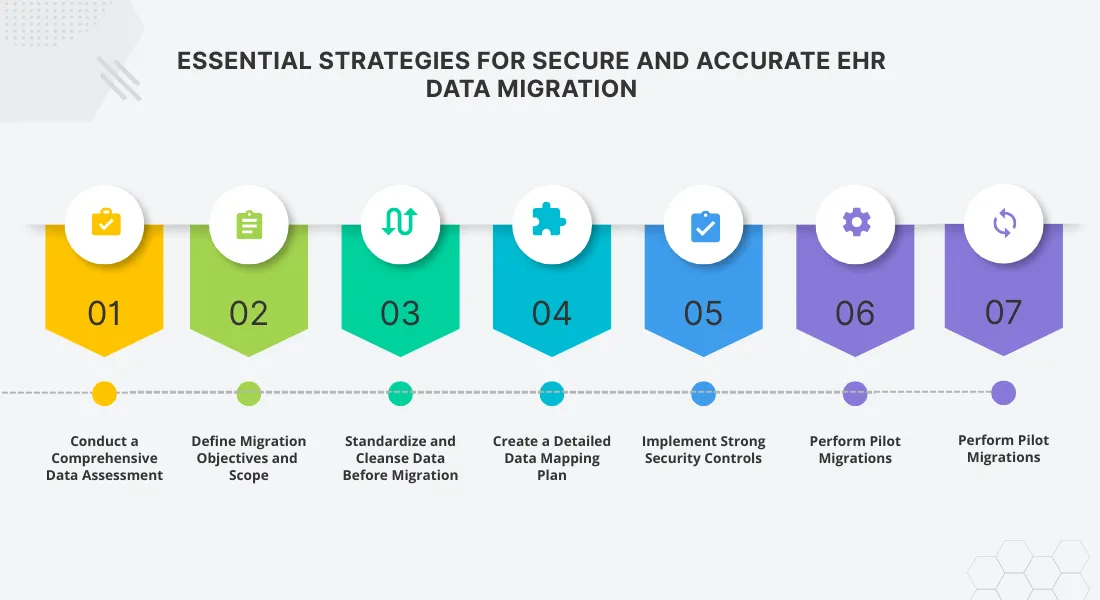
Conduct a Comprehensive Data Assessment
Before any transfer starts, teams need a clear view of what data there is, where it’s hosted, and how clean it looks. That kind of review often pulls up duplicate records, partial or unfinished fields, plus those older legacy formats that should be cleaned up before the EHR data migration work begins.
Define Migration Objectives and Scope
Every effort also needs boundaries. You have to choose which records, which departments, and what time windows are in scope, then decide on measurable outcomes for accuracy, any downtime expectations, and completion schedules that are actually doable. At this stage, most organizations get EHR Consulting services to set realistic, well-scoped goals before any data actually moves.
Standardize and Cleanse Data Before Migration
Most migration problems come from mixed formats, duplicate patient entries, and old codes that nobody updated. When you standardize terminology and tidy up the records first, errors drop a lot once the data arrives in the new system.
Create a Detailed Data Mapping Plan
The fields in the old setup rarely align with the new one. A mapping plan spells out how each data item transfers, it also highlights missing parts early on and gives the technical crew a solid reference they can use all the way through.
Implement Strong Security Controls
Patient data is a high value target during transfer. Encryption, role based access, and secure transmission channels guard the records while they travel between systems and help reduce the chance of exposure from breaches.
Perform Pilot Migrations
Testing on a smaller set of the dataset before going full scale can catch mapping errors, even if there can be performance issues. A pilot run helps you teams fix things without putting the whole patient database at risk.
Validate Data Accuracy
After migration, every record needs verification against the source system. Automated checks combined with manual sampling confirm that clinical data, billing details, and patient identifiers transferred correctly. This step is often where healthcare data migration projects either succeed quietly or reveal costly gaps.
Key Challenges in EHR Data Migration
There are a few EHR Data migration challenges that need attention and addressing to ensure a smooth, secure, and accurate transition.
Data Quality Issues
Traditional system with years of data, some with incorrect entries, while some with missing files. These issues will pop up while migration starts and can delay the process if the issues are not resolved properly.
Data Mapping Complexity
Custom fields, legacy codes, and system specific configurations make one-to-one mapping difficult. Mapping complexity is one of the main reasons EHR data migration timelines keep slipping, and clinical input is required to interpret older data correctly.
Downtime Risks
If you experience extended outages, patient care and staff workflows can be significantly disrupted. Planning migration windows during low-activity periods and keeping backup access available reduce operational impact, even when something goes sideways.
Compliance and Security Concerns
When you keep moving information between systems, HIPAA exposure is the concern. Each transfer step has to be documented, with audit trails and controls that line up with what regulators expect. So, secure healthcare data migration becomes a compliance requirement, not only a technical task.
Maintaining Data Integrity
Even smaller mistakes in dosage entries or lab values can end up affecting patient safety. Therefore, a continuous validation across the whole project, not just at the finish line, helps keep data integrity intact from start to finish.
Most of these challenges come down to having the right hands on the data at the right time. That's why many organizations choose to hire EHR Developers rather than stretch their internal IT team across a migration this sensitive.
Summary
The EHR data migration is a complex process, and it can be a tough task to take on for health systems looking to progress in terms of interoperability, compliance, and analytics. Before migration, make a good plan at every level, clean data, and perform rigorous validation. Organizations that approach healthcare data migration as a project with defined structure and security-first principles come out on top of both protecting patient records and avoiding expensive downtime. If done well, the transition enhances clinical operations and also data long-term reliability.





















Sign in to leave a comment.