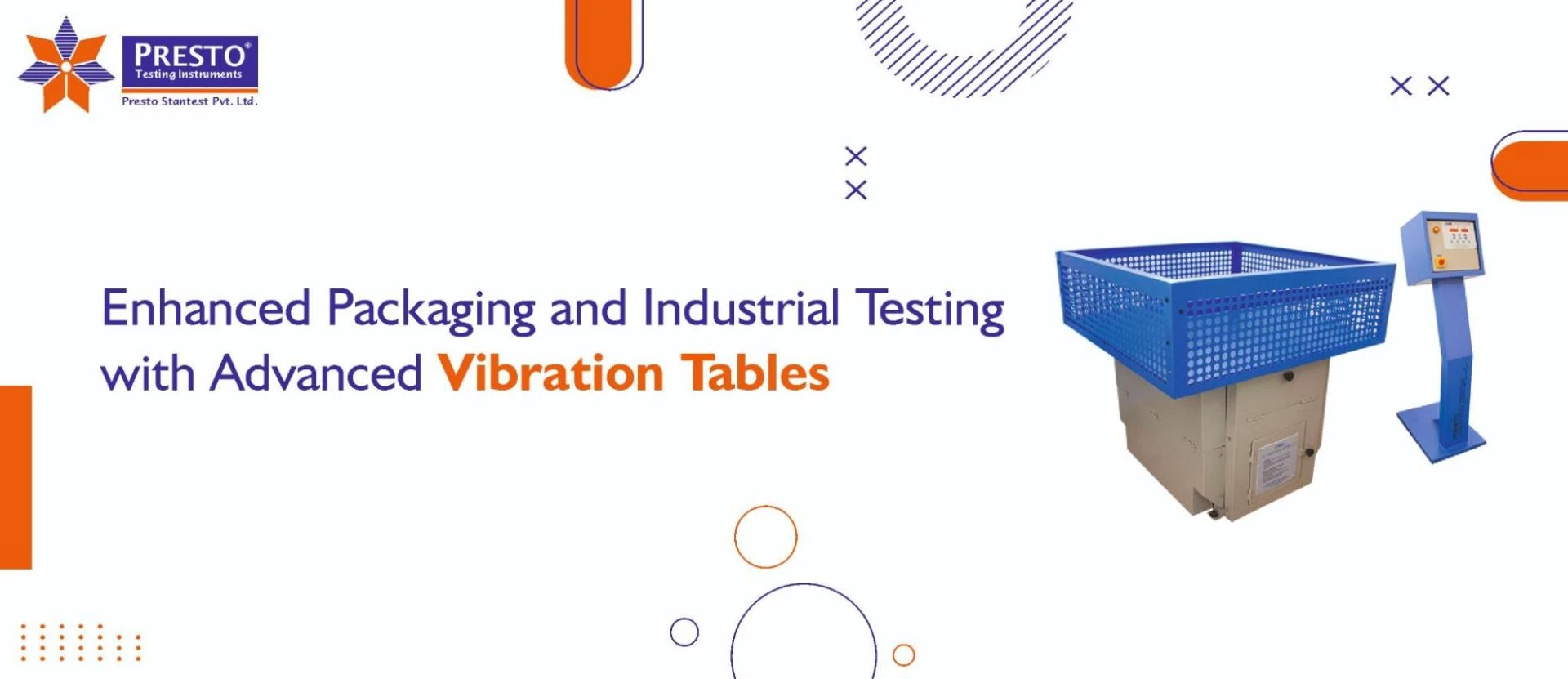

Vibration tables, also known as vibration testing systems, are important in many industries to evaluate the durability of products and the design integrity and material reliability. Specialized platforms provide real-world vibration conditions that manufacturers can simulate to evaluate their products in controlled but challenging conditions. You can find them in packaging, automobile, electronics, space industries, and even building applications, among others. All this provides data-driven information that focuses on optimizing performance with a reduction in failures while maintaining even safety standards.
As a vibration table manufacturer, Presto Testing Instruments provides the latest technology solutions that are industry-specific. In this article, we go into the technical details of vibration tables, their applications, and how the right choice of system can make all the difference in testing results and operational efficiency.
Why Presto?
At Presto Stantest Pvt. Ltd., we take pride in delivering unparalleled vibration testing solutions. Our vibration tables are engineered for precision, reliability, and efficiency, offering:
Customizable Systems: Tailored designs to meet specific industry requirements.
Durable Construction: High-grade materials ensure longevity and consistent performance.
Advanced Technology: Intuitive control systems for seamless operation and detailed data collection.
Affordable Pricing: Competitively priced vibration tables without compromising quality.
Being a reliable vibration table supplier, we prioritize customer satisfaction through expert consultation and after-sales support. Our commitment to innovation keeps clients ahead in their respective industries.
How Vibration Tables Work: The Science Behind the Platform
A vibration table works on the principle of controlled oscillation. These systems reproduce the forces and frequencies encountered during the transport, operation, or installation of a product by converting electrical energy into mechanical vibrations. The basic components are:
Actuators or Exciters: Usually electromagnetic or hydraulic, these are the devices that create the motion.
Tabletop or Platform: The surface to which the test sample is mounted. Precision machined and often made from high-strength materials to ensure consistency.
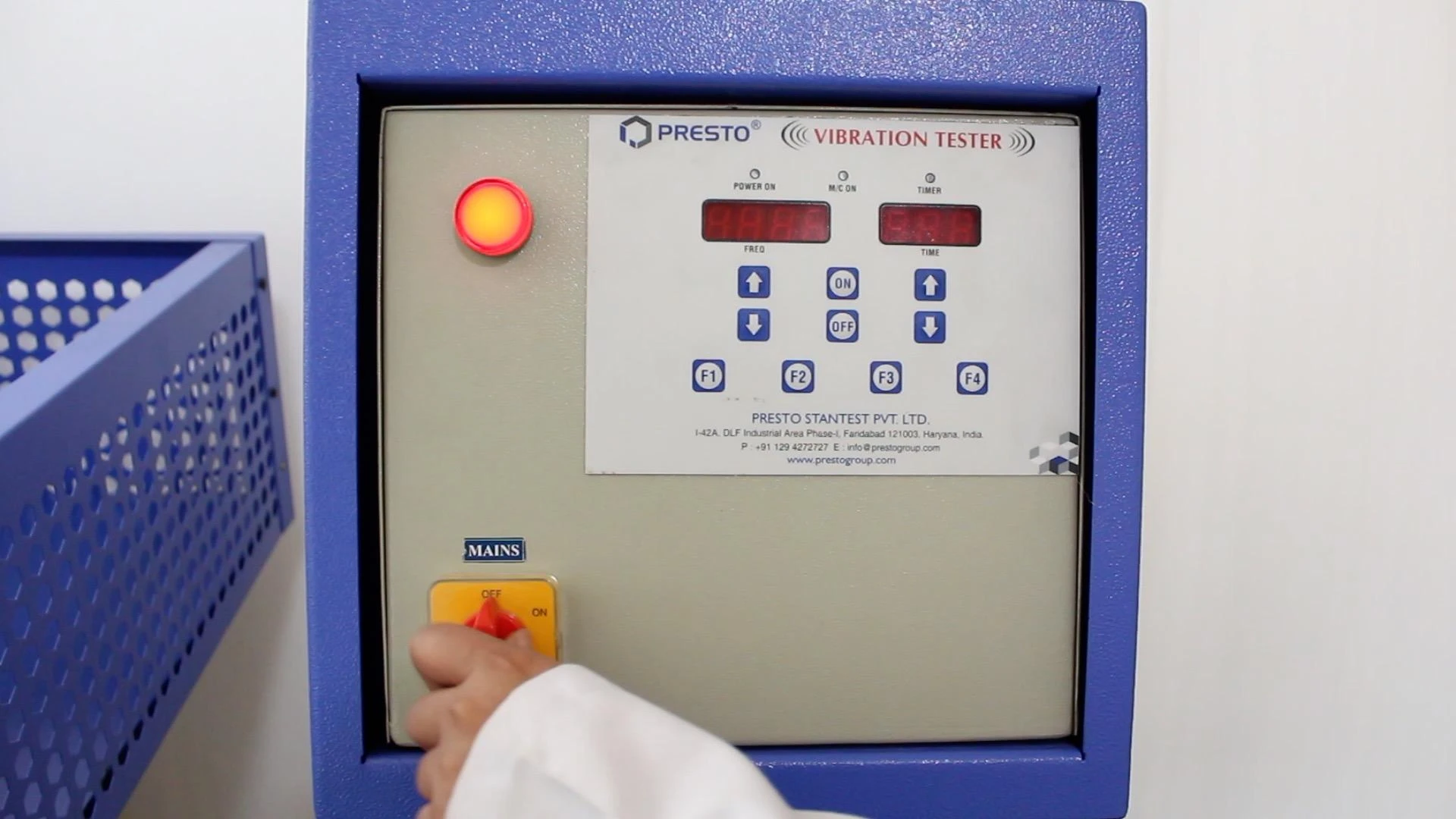
Controller Unit: It controls the amplitude, frequency, and waveform so that a variety of vibration profiles can be simulated.
Sensors: Accelerometers and load cells measure the responses of the sample to applied vibrations.
Applications Across Industries
1. Packaging Industry: In packaging, vibration tables test the robustness of materials and designs against transit-induced stress. Testing standards like ASTM D999 and ISTA protocols guide these evaluations. For instance, a 100 kg package subjected to a 5 Hz frequency vibration simulates road transport conditions, exposing weak points and preventing costly damages.
2. Automotive Industry: Vibration tables are used to test road conditions for components, including engine mounts, dashboards, and suspension systems. For the automotive industry, it is common to find a need for multi-axis vibration tables that can simulate simultaneous horizontal and vertical vibrations of being driven.
3. Electronics Industry: Sensitive components, which include circuit boards, connectors, and displays, may easily fail by vibration. Resonant frequencies are detected to lead to possible fatigue failure. This helps in improving the reliability and durability during actual use.
4. Aerospace Industry: In aerospace, vibration testing is an essential test of components such as avionics, satellite hardware, and structural parts. These tests often require fine control over frequency ranges-for example, 20 Hz to 2000 Hz-and amplitudes to simulate launch and operating environments.
5. Construction Industry: They assess the concrete, asphalt, and prefabricated panels for their strength, and responses to earthquake motions, or seismic effects, with tests conducted in a vibration table. Such processes comply with safety rules and standards concerning structures.
How to Pick the Perfect Vibration Table: Some Key Considerations
Technical aspects:
Frequency Range: Determines the simulation accuracy for specific applications. Packaging tests might require frequencies up to 5 Hz, whereas aerospace applications often exceed 2000 Hz.
Amplitude: Impacts the force applied to the test object. Adjustable amplitude allows for versatile testing.
Payload Capacity: Ensures the table can support the weight of test samples without compromising performance.
Control System: Advanced controllers with user-friendly interfaces streamline test setup and data analysis.
Vibration Profiles: Options like sinusoidal, random, or shock testing expand application versatility.
Cost-Benefit Analysis
On face value, a quality vibration table may appear as though it is capital intensive initially. However, all said and done, it yields long-term benefits by making sure that product recall incidence is reduced, enhancing the satisfaction of customers, and strictly adhering to industrial regulations. Presto’s Vibration Table Price is approx 5,80,000 to 6,80,000.
FAQs
Q1 How to choose the right Vibration Table
Assess factors such as frequency range, amplitude, payload capacity, and vibration profiles. You can also get the process done easily by consulting with a vibration table supplier like Presto.
Q2: Do vibration tables accurately mimic real-world conditions?
Yes, modern vibration tables have control systems with sensors that replicate real-world vibration environments quite accurately.
Q3 What should a calibration schedule for vibration tables be?
There has to be annual calibration as well as the indicated requirements of the manufacturer to ensure a perfect operation.
Conclusion
Vibration tables are an essential tool in quality assurance and R&D in various industries. Since it offers rigorous testing
Phone: +91 9210 903 903
Mail: [email protected]


























Sign in to leave a comment.