

Introduction
Mental health care has changed more in the last five years than it did in the previous fifty. Waiting rooms, printed intake forms, and long commutes to a clinic are no longer the only path to psychiatric support. Today, a growing number of people are choosing to meet with a virtual psychiatrist from their living room, their office, or even their car during a lunch break. This shift is not a passing trend born out of necessity; it has become a permanent and often preferred way to receive dedicated, good health psychiatric services.
The reasons are practical as much as they are emotional. Psychiatrist shortages, long appointment backlogs, and the lingering stigma around seeking mental health support have all pushed patients toward digital alternatives. A virtual psychiatrist can offer the same diagnostic rigor, medication management, and follow-up care as an in-person provider, minus the friction of travel and scheduling conflicts. For many patients, this convenience is the difference between getting help and putting it off indefinitely.
This article explores how dedicated psychiatric services, delivered virtually, are enhancing patient outcomes across the board. We will look at what a virtual psychiatrist actually does, why accessibility matters so much for recovery, how technology is reshaping diagnosis and treatment planning, and what patients should consider before choosing a provider. By the end, you should have a clear, honest picture of where virtual psychiatric care stands today and how it might fit into your own health journey.
What a Virtual Psychiatrist Actually Does
A common misconception is that a virtual psychiatrist offers a lighter or less thorough version of care compared to an office visit. In practice, the clinical process is nearly identical. According to the general definition used across medical literature, telepsychiatry (sometimes called telemental health) refers to the use of videoconferencing and phone calls to deliver psychiatric care remotely for people with mental health conditions, and it functions as a branch of telemedicine more broadly, as outlined on Wikipedia.
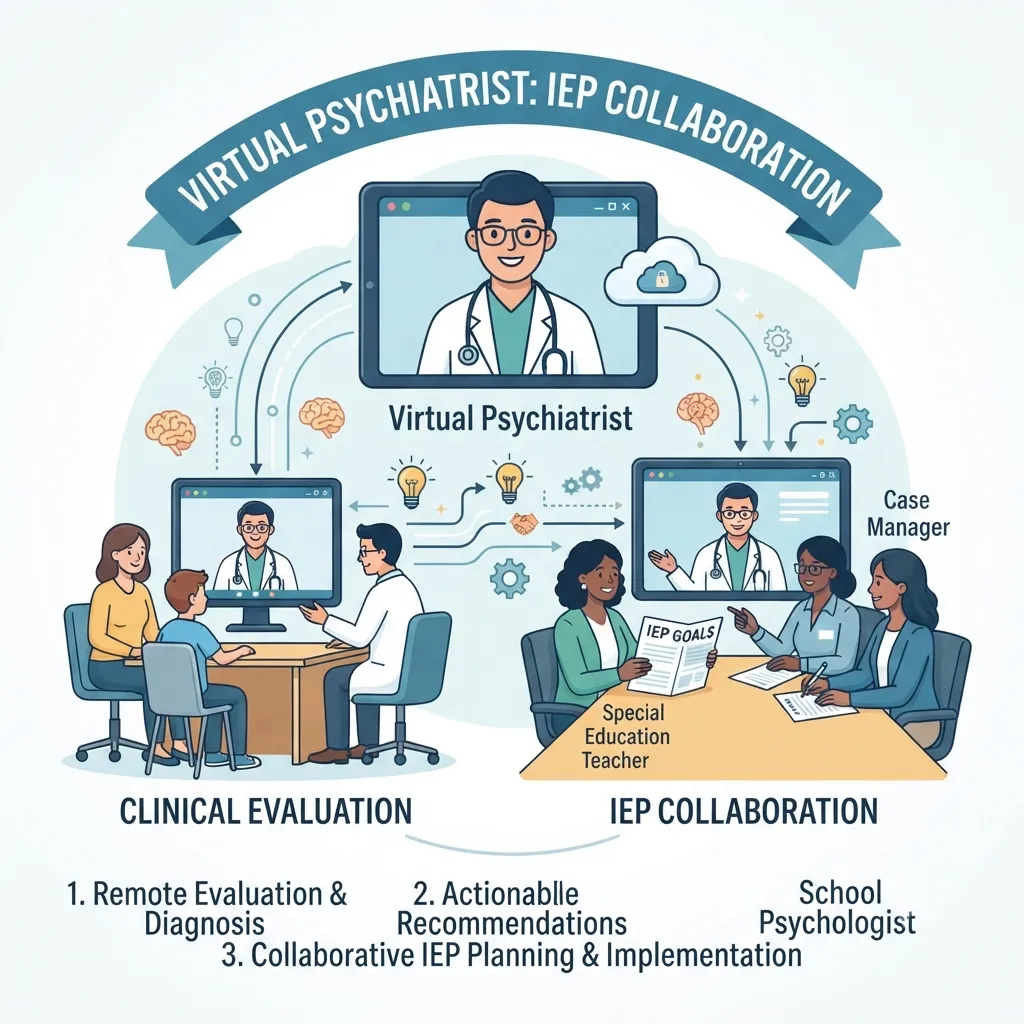
A typical session with a virtual psychiatrist includes a full psychiatric evaluation, a review of symptoms and history, and a collaborative discussion about treatment options. If medication is appropriate, the psychiatrist can prescribe it electronically, sending the prescription directly to a local pharmacy. Follow-up appointments track how the patient is responding, adjust dosages if needed, and monitor for side effects, exactly as they would in a traditional office setting.
What differs is the delivery method, not the clinical standard. Secure, HIPAA-compliant video platforms replace the exam room. Encrypted messaging replaces paper forms. And scheduling becomes far more flexible, since a virtual psychiatrist is not limited by a single physical location or a fixed set of office hours. This flexibility matters enormously for people managing anxiety, depression, ADHD, bipolar disorder, or other conditions that can make leaving the house on a strict schedule genuinely difficult.
Why Accessibility Is the Real Driver of Better Outcomes
Access to care is one of the strongest predictors of whether a person actually follows through with treatment. It does not matter how skilled a psychiatrist is if a patient cannot get an appointment for two months or has to drive ninety minutes each way to see them. Rural communities, people with mobility limitations, caregivers, and busy professionals have historically been underserved by traditional psychiatric models simply because the logistics did not work in their favor.
Virtual psychiatric services close that gap directly. A patient in a small town without a local psychiatrist can now connect with a board-certified provider licensed in their state within days rather than months. A parent juggling childcare can schedule an evening session instead of taking time off work. Someone managing chronic pain or a physical disability no longer has to weigh the discomfort of travel against the benefit of the appointment.
This is not a marginal effect. Reporting on the mental health landscape heading into this year has noted a continued push toward virtual care, increased demand for personalized treatment, and growing acceptance of remote clinical models as standard practice rather than a stopgap measure, a trend that continues to be tracked in ongoing coverage available through Google News.
Reduced stigma is another underappreciated benefit. Some patients feel more comfortable discussing sensitive topics from the privacy of their own home than in a clinical waiting room where a neighbor or coworker might see them. This sense of psychological safety can lead to more honest conversations, which in turn leads to more accurate diagnoses and more effective treatment plans. When a patient feels safe enough to be fully candid with their virtual psychiatrist, the entire treatment process improves.
Technology, Data, and the Future of Personalized Psychiatric Care
Beyond convenience, technology is quietly transforming how psychiatric care is delivered and measured. Digital clinical scales now allow providers to track symptom trends between sessions rather than relying solely on a patient's memory of how they felt over the past few weeks. Appointment adherence data and medication compliance tracking help a virtual psychiatrist flag when a patient may need an urgent check-in rather than waiting for the next scheduled visit. Industry analysis has highlighted this shift toward measurement-based, data-informed psychiatric care as one of the defining trends shaping behavioral health this year, with providers increasingly relying on real-time symptom tracking to determine whether a treatment plan is working, as detailed in a recent Forbes analysis.
That same analysis also raises an important caution. The rapid expansion of virtual care companies has not been without growing pains. Some platforms have faced scrutiny over prescribing practices, particularly around controlled substances, and the piece notes that while telehealth has genuine potential to expand access, it requires rigorous oversight to prevent the kind of systemic abuses that have drawn regulatory attention. This is a fair point, and it underscores why choosing a reputable, board-certified virtual psychiatrist matters just as much as choosing a good in-person provider would.
On the more encouraging side, integrated behavioral health, meaning the practice of embedding psychiatric care directly within primary care settings, is gaining momentum, and early data suggests it improves treatment adherence and catches problems earlier. Hybrid models that combine virtual visits with occasional in-person evaluations are also becoming more common, giving patients the best of both worlds: the convenience of remote care paired with the reassurance of periodic hands-on assessment when it is clinically useful.
Artificial intelligence is starting to play a supporting role as well, primarily in triage, symptom tracking, and administrative efficiency rather than replacing the clinical judgment of a trained psychiatrist. This is a meaningful distinction. A virtual psychiatrist still makes the diagnosis and designs the treatment plan; technology simply helps them do it with better information and less delay.
Choosing the Right Virtual Psychiatric Service
Not all virtual psychiatric platforms are created equal, and patients benefit from doing a bit of homework before committing to one. A few practical considerations can make a meaningful difference in the quality of care received.
First, confirm licensing. A virtual psychiatrist must be licensed in the state where the patient is physically located at the time of the appointment, not simply where the platform is headquartered. Reputable services will verify this automatically, but it is worth asking directly if there is any doubt.
Second, look at continuity of care. Some platforms rotate patients through different providers depending on availability, which can undermine the therapeutic relationship over time. Services that prioritize matching patients with the same psychiatrist for ongoing visits tend to produce better long-term outcomes, since trust and familiarity are genuinely important parts of psychiatric treatment.
Third, check insurance compatibility and pricing transparency. Costs vary widely across platforms, and unexpected billing has been a recurring complaint on some services. A provider that is upfront about session costs, follow-up fees, and insurance coverage before the first appointment saves patients from unpleasant surprises later.
Fourth, consider the scope of services offered. Some platforms focus narrowly on medication management, while others combine psychiatric care with therapy, genetic testing for medication response, or specialized programs for children and adolescents. Matching the platform's offerings to your specific needs, whether that is ADHD evaluation, postpartum support, or ongoing management of a chronic mood disorder, will produce a better fit than choosing based on price alone.
Finally, pay attention to how the platform handles emergencies. A dedicated, good health psychiatric service should have clear protocols for urgent situations, including guidance on when a patient should seek in-person or emergency care instead of waiting for a scheduled virtual appointment.
Conclusion
Dedicated psychiatric services delivered through virtual platforms are no longer a workaround for people who cannot access traditional care; they have become a legitimate, evidence-supported path to better mental health outcomes in their own right. A skilled virtual psychiatrist can diagnose, treat, and manage a wide range of conditions with the same clinical rigor as an in-person provider, while removing many of the barriers that have historically kept people from seeking help at all. Reduced travel time, greater scheduling flexibility, lower stigma, and increasingly sophisticated tools for tracking progress all contribute to a model of care that meets patients where they actually are, both literally and emotionally.
That said, the quality of care still depends heavily on the provider you choose. Licensing, continuity, transparency, and a clear plan for emergencies are not optional extras; they are the foundation of trustworthy psychiatric care, virtual or otherwise.




























Sign in to leave a comment.