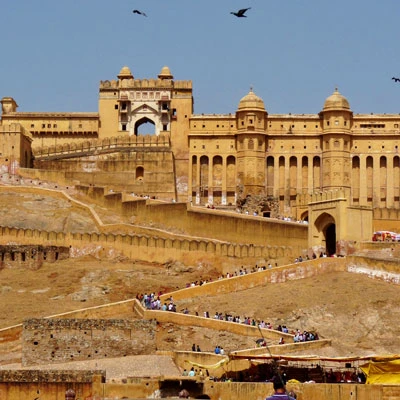

A word about the founder :
In a picturesque valley ringed by the hills of the Aravali Range 131 kms, west of Jaipur , lies Ajmer.
The city is said to have been founded by Maharaja Ajay Pal Chauhan in the 7th century AD. He named the place 'Ajaymeru ' ( The invincible hill ) from which the present name Ajmer is derived. Here , he built india's first hill fort - Tarahagh. Ajmer was a chauhan stronghold till 1192 AD when Prithvi Raj Chauhan, the last Hindu Kind of Delhi, lost it to Mohammed Ghori.
The Strategic Position of this city has led to its long and turbulent history. tour operator in jaipur is connected to Delhi , Agra , Ahmedabad , Abu , Jodhpur , Udaipur & Jaipur by main highways and holds strategic aceen to Gujrat and Malwa ( M.P). It was a key center of Chauhan power along with the twin capital of Delhi , but after Prithviraj Chauhan was defeated by Sultan Mohammed Ghori (1193 ) , it had to pass through a chequered and violent history.
Ajmer has remained throughout a great centre of pilgrimage for both Hindus and Muslims. A feature that gives the city its character and lends it Importance. rajasthan package Ajmer is a true amalgam of rich Hindu and Islamic heritage. The Sacred lake of Pushkar believed by Hindus to be a old as creation as the temple of Brahma has been a place of Pilgrimage from time immemorial. The great Sufi Sanit Khwaja Muin - Ud - Din Chisti of Persia was buried here and his Dargah is equally sacred for the followers of Islam as well as Hinduism. The Emperor Akbar made an annual visit to the Shrine of the saint , Sometimes on foot , as any ordinary pilgrim would.
PLACES TO SEE
THE DARGAH :
In the heart of the city is the tomb of Saint Khwaja Muin - Ud -din - Chishit , popularly known as Dargah Sharif , It has been since long a pilgrimage and spiritual centre where followers of almost every creed and faith , muslims and non muslims , came throughout the year, especially on the occasion of the annual 'Urs' celebrated from the 1st to 6th day of Islamic month of Rajab. The Shrine of Khwaja Muin -Ud-din Chishti is considered today, a second Mecca / Medina for the Muslims of South Asia. The enormous gate of the Mausoleum leading to the open court was built by Sultan Altamash ( 12th century ). In the Court are two gigantic iron cauldrons donated by the Mughal emperors.
On the right is Akbar's Mosque , a simple structure of dignified proportions , made of white marble.
On top of the inner gate huge drums are kept in the Naubat Ghar or drum house, The Inner gate was donated by a Nawab of Hyderabad , Several tombs are located in the inner enclosure.
SHAH JAHAN'S MOSQUE :
In a corner of the inner court is an elegant building . A long ( 30.5 meters ) and narrow court with a low arcade in white marble , is delicately carved with trellis -work , it is the most beautiful of all the buildings within the Dargah precinct.
The Tomb of the Saint is in a square building of white marble with a large dome. It has two entrances . The Front Porch is covered with lamps and chandeliers donated by devotees.
ADHAI- DIN - KA - JHONPRA :
Beyond the Dargah, among narrow and crowded lanes is a remarkable early Islamic structure . it was originally a Sanskrit college, probably within a temple enclosure. In 1193, Mohammed Ghori took over rajasthan tour packages from jaipur , destroyed the college and from its ruins, along with the remains of many nearby temples, hurriedly put together a mosque within two and a half days ( Adhai-Din). Pillars from at least thirty temples must have gone into the making of this elegant monument, a superb example of Indo-Islamic architecture.
TARAGARH FORT ( AKBAR'S FORT ) :
Above the Adhai- din - ka - Jhonpra, the road turns into a bridle path , leading to the top of hill on which the remains if strongly built fort stand . One is rewarded by a fine view of the city , from the Taragarh Fort.
THE MUSEUM :
Akbar's royal residence is now the museum which has an excellent collection of Moghal and Rajput armour and some fine Sculpture.
MAYO COLLEGE :
MAYO COLLEGE : In the South - East of the city is one of India's finest public schools, Mayo College . It was founded in 1875 , originally only for the sons of Rajput royalty , Each heir to a state built his own house within the spacious college ground covering 81 hectares which also housed his entire retinue along with his English Tutor. The college is now open to all and is run as public school tradition.
THE CIRCUIT HOUSE :
The former British Residency , overlooking Ana Sagar lake has been Convertel as the circuit house . From here the finest view of the lake can be had. One can also see the cenotaph and shrine of the Hindu reformer Swami Dayanand who founded the Arya Samaj movement in north India.
PUSHKAR LAKE :
An interesting drive. 11 km to the west , takes one through a mountain pass to the holy lake pf Pushkar. One of the mountains on this pass is called Nag Pahar or Snake Mountain where the Panchkund and cave of saint Agastya Rishi is located. It is said that Kalidasa, the 4th century Sanskrit poet and playright , palced the action of his masterpiece Abhijnama Shakuntalam in this forest hermitage . The Lake has legendary origins . A lotus fell from the hand of lord Bhahma and dropped into this valley. A lake sprang up on the spot , and was dedicated to him. A temple of Brahma is a popular place of pilgrimage.
PUSHKAR FAIR :
About 2,00,000 pilgrims gather annually at Pushkar during the autumnal fair, This is also a livestock fair and hundreds of horses , camels, cows and bulls are brought for sale. At the time of the fair Pushkar blossoms into gaiety and colour. There ae camel- cart races which everyone enjoys and are a delight to photographers , film makers and tourists.
MAN MAHAL :
Bulit by Raja Man Singh of Amer , the Man Mahal standing on the banks of Pushkar is now the R. T.D.C Sarovar tourist bungalow. It is most convenient place for visitors to stay, Pushkar Palace ( Kishangarh House ) an adjoining old building is now a heritage hotel.
FOY SAGAR :
12 km. Named after the engineer who built it , Foy Sagar is a picturesque artificial lake. Is was the result of famine relief project.
In a picturesque valley ringed by the hills of the Aravali Range 131 kms, west of Jaipur , lies Ajmer.
The city is said to have been founded by Maharaja Ajay Pal Chauhan in the 7th century AD. He named the place 'Ajaymeru ' ( The invincible hill ) from which the present name Ajmer is derived. Here , he built india's first hill fort - Tarahagh. Ajmer was a chauhan stronghold till 1192 AD when Prithvi Raj Chauhan, the last Hindu Kind of Delhi, lost it to Mohammed Ghori.
The Strategic Position of this city has led to its long and turbulent history. tour operator in jaipur is connected to Delhi , Agra , Ahmedabad , Abu , Jodhpur , Udaipur & Jaipur by main highways and holds strategic aceen to Gujrat and Malwa ( M.P). It was a key center of Chauhan power along with the twin capital of Delhi , but after Prithviraj Chauhan was defeated by Sultan Mohammed Ghori (1193 ) , it had to pass through a chequered and violent history.
Ajmer has remained throughout a great centre of pilgrimage for both Hindus and Muslims. A feature that gives the city its character and lends it Importance. rajasthan package Ajmer is a true amalgam of rich Hindu and Islamic heritage. The Sacred lake of Pushkar believed by Hindus to be a old as creation as the temple of Brahma has been a place of Pilgrimage from time immemorial. The great Sufi Sanit Khwaja Muin - Ud - Din Chisti of Persia was buried here and his Dargah is equally sacred for the followers of Islam as well as Hinduism. The Emperor Akbar made an annual visit to the Shrine of the saint , Sometimes on foot , as any ordinary pilgrim would.
PLACES TO SEE
THE DARGAH :
In the heart of the city is the tomb of Saint Khwaja Muin - Ud -din - Chishit , popularly known as Dargah Sharif , It has been since long a pilgrimage and spiritual centre where followers of almost every creed and faith , muslims and non muslims , came throughout the year, especially on the occasion of the annual 'Urs' celebrated from the 1st to 6th day of Islamic month of Rajab. The Shrine of Khwaja Muin -Ud-din Chishti is considered today, a second Mecca / Medina for the Muslims of South Asia. The enormous gate of the Mausoleum leading to the open court was built by Sultan Altamash ( 12th century ). In the Court are two gigantic iron cauldrons donated by the Mughal emperors.
On the right is Akbar's Mosque , a simple structure of dignified proportions , made of white marble.
On top of the inner gate huge drums are kept in the Naubat Ghar or drum house, The Inner gate was donated by a Nawab of Hyderabad , Several tombs are located in the inner enclosure.
SHAH JAHAN'S MOSQUE :
In a corner of the inner court is an elegant building . A long ( 30.5 meters ) and narrow court with a low arcade in white marble , is delicately carved with trellis -work , it is the most beautiful of all the buildings within the Dargah precinct.
The Tomb of the Saint is in a square building of white marble with a large dome. It has two entrances . The Front Porch is covered with lamps and chandeliers donated by devotees.
ADHAI- DIN - KA - JHONPRA :
Beyond the Dargah, among narrow and crowded lanes is a remarkable early Islamic structure . it was originally a Sanskrit college, probably within a temple enclosure. In 1193, Mohammed Ghori took over rajasthan tour packages from jaipur , destroyed the college and from its ruins, along with the remains of many nearby temples, hurriedly put together a mosque within two and a half days ( Adhai-Din). Pillars from at least thirty temples must have gone into the making of this elegant monument, a superb example of Indo-Islamic architecture.
TARAGARH FORT ( AKBAR'S FORT ) :
Above the Adhai- din - ka - Jhonpra, the road turns into a bridle path , leading to the top of hill on which the remains if strongly built fort stand . One is rewarded by a fine view of the city , from the Taragarh Fort.
THE MUSEUM :
Akbar's royal residence is now the museum which has an excellent collection of Moghal and Rajput armour and some fine Sculpture.
MAYO COLLEGE :
MAYO COLLEGE : In the South - East of the city is one of India's finest public schools, Mayo College . It was founded in 1875 , originally only for the sons of Rajput royalty , Each heir to a state built his own house within the spacious college ground covering 81 hectares which also housed his entire retinue along with his English Tutor. The college is now open to all and is run as public school tradition.
THE CIRCUIT HOUSE :
The former British Residency , overlooking Ana Sagar lake has been Convertel as the circuit house . From here the finest view of the lake can be had. One can also see the cenotaph and shrine of the Hindu reformer Swami Dayanand who founded the Arya Samaj movement in north India.
PUSHKAR LAKE :
An interesting drive. 11 km to the west , takes one through a mountain pass to the holy lake pf Pushkar. One of the mountains on this pass is called Nag Pahar or Snake Mountain where the Panchkund and cave of saint Agastya Rishi is located. It is said that Kalidasa, the 4th century Sanskrit poet and playright , palced the action of his masterpiece Abhijnama Shakuntalam in this forest hermitage . The Lake has legendary origins . A lotus fell from the hand of lord Bhahma and dropped into this valley. A lake sprang up on the spot , and was dedicated to him. A temple of Brahma is a popular place of pilgrimage.
PUSHKAR FAIR :
About 2,00,000 pilgrims gather annually at Pushkar during the autumnal fair, This is also a livestock fair and hundreds of horses , camels, cows and bulls are brought for sale. At the time of the fair Pushkar blossoms into gaiety and colour. There ae camel- cart races which everyone enjoys and are a delight to photographers , film makers and tourists.
MAN MAHAL :
Bulit by Raja Man Singh of Amer , the Man Mahal standing on the banks of Pushkar is now the R. T.D.C Sarovar tourist bungalow. It is most convenient place for visitors to stay, Pushkar Palace ( Kishangarh House ) an adjoining old building is now a heritage hotel.
FOY SAGAR :
12 km. Named after the engineer who built it , Foy Sagar is a picturesque artificial lake. Is was the result of famine relief project.
0


























Sign in to leave a comment.