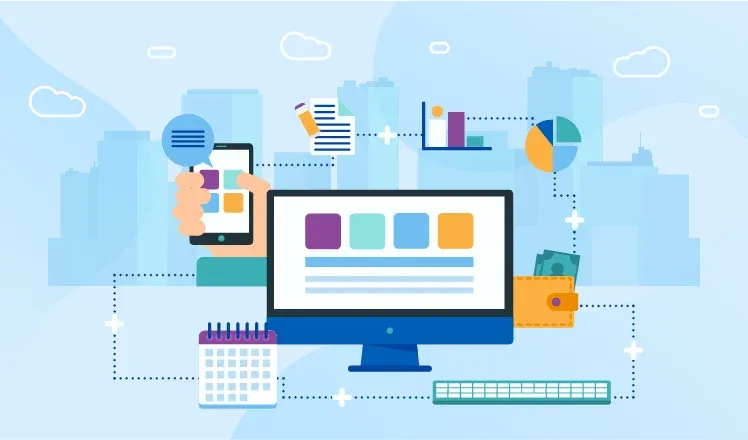

Modern enterprises rely on dozens of applications to manage operations, customer relationships, financial processes, supply chains, employee workflows, and data. While these applications serve specific business functions, they often operate in separate environments and use different technologies. Without proper connectivity, organizations can face data silos, duplicated processes, inconsistent information, and inefficient workflows.
Enterprise application integration (EAI) provides a structured approach to connecting these applications so they can exchange data and support coordinated business processes. By implementing the right integration architecture and EAI services, organizations can create a connected technology ecosystem that improves efficiency, data visibility, scalability, and operational agility.
This guide explains enterprise application integration, its architecture, benefits, common approaches, challenges, and best practices for implementing reliable application integration solutions.
What Is Enterprise Application Integration?
Enterprise application integration is the process of connecting multiple applications, systems, databases, and services across an organization so they can communicate and exchange information.
An enterprise may use applications such as:
- Customer relationship management (CRM) systems
- Enterprise resource planning (ERP) platforms
- Human resource management systems
- Supply chain management applications
- E-commerce platforms
- Data warehouses
- Cloud applications
- Legacy applications
- Custom business applications
- Partner and third-party systems
EAI creates communication between these systems, allowing information to move between applications without requiring users to manually transfer data.
For example, when a customer places an order through an e-commerce platform, an integration can automatically send the order information to the ERP system, update inventory, trigger fulfillment workflows, and synchronize customer information with the CRM.
The goal is not simply to connect applications. Effective EAI creates a reliable, scalable, and manageable integration environment that supports business processes.
Why Is Enterprise Application Integration Important?
As organizations adopt more cloud applications, legacy platforms, APIs, and specialized business systems, technology environments become increasingly complex.
Without integration, applications often create isolated data silos. Employees may need to enter the same information into multiple systems, increasing the possibility of errors and delays.
Enterprise application integration helps organizations establish a connected environment where systems can share information automatically.
Key objectives include:
- Eliminating data silos
- Automating business processes
- Improving data consistency
- Reducing manual data entry
- Connecting legacy and modern applications
- Supporting real-time data exchange
- Improving operational visibility
- Enabling scalable digital transformation
Organizations can use EAI services to connect applications while maintaining appropriate security, governance, monitoring, and performance standards.
Enterprise Application Integration Architecture
A well-designed EAI architecture defines how applications communicate, how data moves, and how integrations are managed.
A typical enterprise application integration architecture can include the following layers.
1. Application Layer
This layer contains the systems that need to communicate.
Examples include:
- ERP
- CRM
- HR systems
- E-commerce applications
- Databases
- Legacy systems
- SaaS applications
Each application may use different communication protocols, data formats, and technologies.
2. Integration Layer
The integration layer manages communication between applications.
Depending on the organization's requirements, this layer may use:
- APIs
- Middleware
- Enterprise service buses
- Message queues
- Integration platforms
- Event-driven architecture
The integration layer transforms and routes information between connected systems.
3. Data Transformation Layer
Different applications may use different data structures.
For example, one application may identify a customer using customer_id, while another uses client_number.
Data transformation converts information into a format that the receiving application understands.
4. API and Connectivity Layer
APIs provide standardized interfaces through which applications can communicate.
API-based integration is particularly useful for connecting cloud applications, SaaS platforms, mobile applications, and external services.
5. Monitoring and Governance Layer
Enterprise integrations require continuous monitoring to identify:
- Failed transactions
- Performance issues
- Authentication problems
- Data inconsistencies
- Integration downtime
Governance policies help organizations control APIs, integration workflows, security, access, and operational standards.
Common Enterprise Application Integration Approaches
Organizations can use different approaches depending on their application landscape and business requirements.
Point-to-Point Integration
Point-to-point integration directly connects one application to another.
It can be effective for simple environments with a small number of applications. However, as the number of applications increases, point-to-point connections can become difficult to manage.
Middleware-Based Integration
Middleware provides an intermediary layer between applications.
Instead of every application connecting directly to every other system, middleware manages communication, routing, transformation, and orchestration.
This approach can simplify complex enterprise environments and improve maintainability.
API-Based Integration
API integration allows applications to communicate through standardized interfaces.
It is widely used for:
- Cloud integration
- SaaS connectivity
- Mobile applications
- Partner integration
- Microservices
- Digital platforms
Event-Driven Integration
Event-driven integration allows systems to respond to events as they occur.
For example, when an order is created, an event can trigger inventory updates, payment processing, fulfillment, and customer notifications.
This approach can support real-time and highly scalable enterprise workflows.
Benefits of Enterprise Application Integration
A well-designed EAI strategy can provide several business and technical benefits.
1. Improved Data Consistency
Integration allows information to synchronize across applications, reducing inconsistent or outdated data.
For example, changes to customer information in a CRM can automatically be reflected in connected systems.
2. Reduced Manual Work
Automated data exchange eliminates repetitive manual activities such as copying customer, order, invoice, or inventory information between applications.
This improves productivity while reducing human error.
3. Faster Business Processes
Integrated workflows allow information to move between systems automatically.
Instead of waiting for employees to transfer information manually, connected systems can trigger the next step in a business process immediately.
4. Better Visibility
Integrated applications provide organizations with a more complete view of business operations.
Teams can combine information from multiple systems to improve reporting, analytics, and decision-making.
5. Legacy System Connectivity
Many enterprises continue to depend on legacy applications because replacing them can be expensive and disruptive.
Application integration solutions can connect legacy platforms with modern cloud applications, allowing organizations to modernize their technology ecosystem gradually.
6. Improved Scalability
A well-designed integration architecture makes it easier to add new applications and services without redesigning the entire technology environment.
This is especially important as organizations adopt new SaaS platforms and digital technologies.
7. Support for Digital Transformation
Integration is a foundation for digital transformation.
Organizations cannot effectively modernize their customer experience, data infrastructure, or business processes when critical applications operate in isolated environments.
Common Challenges in Enterprise Application Integration
Despite its benefits, EAI can introduce technical and operational challenges.
Complex Application Environments
Large enterprises may have hundreds of applications using different technologies, protocols, and data models.
Understanding dependencies between systems is essential before implementing integration changes.
Data Format Differences
Applications may use different formats such as JSON, XML, CSV, or proprietary structures.
Transformation logic may therefore be required to make systems compatible.
Security Risks
Integrating multiple applications creates additional communication points that must be secured.
Organizations should implement appropriate authentication, authorization, encryption, and access controls.
Integration Monitoring
Failed integrations can affect business-critical processes.
Organizations need monitoring and alerting mechanisms to detect failures quickly and understand their impact.
Legacy Technology
Older applications may not provide modern APIs or integration capabilities.
Specialized integration techniques may be required to connect these systems with newer applications.
Best Practices for Enterprise Application Integration
Organizations should follow several best practices when developing an EAI strategy.
1. Start With Business Requirements
Do not begin integration projects solely from a technology perspective.
Identify the business processes, applications, data flows, and outcomes that the integration needs to support.
2. Create a Clear Integration Architecture
Define how applications will communicate and where transformation, routing, security, and orchestration will occur.
A standardized architecture can reduce technical complexity over time.
3. Prefer Reusable Integration Components
Where possible, create reusable APIs, services, connectors, and integration components.
Reusable components can reduce development effort when new applications need to be connected.
4. Establish Integration Governance
Define standards for:
- API development
- Authentication
- Data transformation
- Naming conventions
- Error handling
- Monitoring
- Documentation
- Version management
Strong governance helps maintain consistency as the integration environment grows.
5. Build Strong Error Handling
Integrations should be designed to handle failures gracefully.
Implement logging, retry mechanisms, alerts, exception handling, and recovery procedures for critical workflows.
6. Monitor Integration Performance
Track integration health using relevant metrics such as:
- Transaction success rate
- Processing time
- Error rate
- API response time
- Message throughput
- System availability
Continuous monitoring helps teams identify problems before they significantly affect business operations.
7. Design for Scalability
Integration architecture should account for future growth.
Organizations should consider transaction volumes, new applications, additional business units, geographic expansion, and changing technology requirements.
8. Prioritize Security
Security should be incorporated into the architecture from the beginning rather than added after implementation.
Use secure authentication, encryption, access controls, API security policies, and appropriate monitoring mechanisms.
How to Choose the Right Application Integration Solution
The right application integration solutions depend on the organization's technology environment, integration complexity, scalability requirements, and business objectives.
Before selecting an approach or integration platform, evaluate:
- Number of applications
- Cloud and on-premise environments
- Integration patterns
- Data volumes
- Real-time requirements
- API availability
- Security requirements
- Monitoring capabilities
- Scalability
- Total cost of ownership
- Existing technology investments
Organizations should also consider whether they need ongoing integration management, modernization, testing, monitoring, or consulting support.
Enterprise Application Integration: Building a Connected Enterprise
Enterprise application integration is no longer simply a technical requirement. It is an important component of building a connected and agile enterprise.
By connecting applications, automating data flows, modernizing legacy environments, and establishing scalable integration architecture, organizations can reduce operational complexity while creating a stronger foundation for digital transformation.
However, successful EAI requires more than connecting two systems. Organizations need a clear integration strategy, appropriate architecture, strong governance, security, monitoring, and ongoing optimization.
With the right EAI services and application integration solutions, enterprises can create a technology ecosystem where applications work together efficiently and business information moves reliably across the organization.
Frequently Asked Questions
1. What is enterprise application integration?
Enterprise application integration is the process of connecting different enterprise applications so they can exchange data and support coordinated business processes.
2. What are EAI services?
EAI services help organizations design, implement, manage, modernize, monitor, and optimize integrations between enterprise applications and systems.
3. What are the common types of enterprise application integration?
Common approaches include point-to-point integration, middleware-based integration, API-based integration, message-based integration, and event-driven integration.
4. What are the benefits of enterprise application integration?
Key benefits include improved data consistency, process automation, reduced manual work, better visibility, faster workflows, legacy system connectivity, scalability, and support for digital transformation.
5. How do I choose the right application integration solution?
Organizations should evaluate their application landscape, integration patterns, data volumes, security requirements, scalability needs, real-time requirements, existing technologies, and long-term business objectives before selecting an integration solution.
























Sign in to leave a comment.