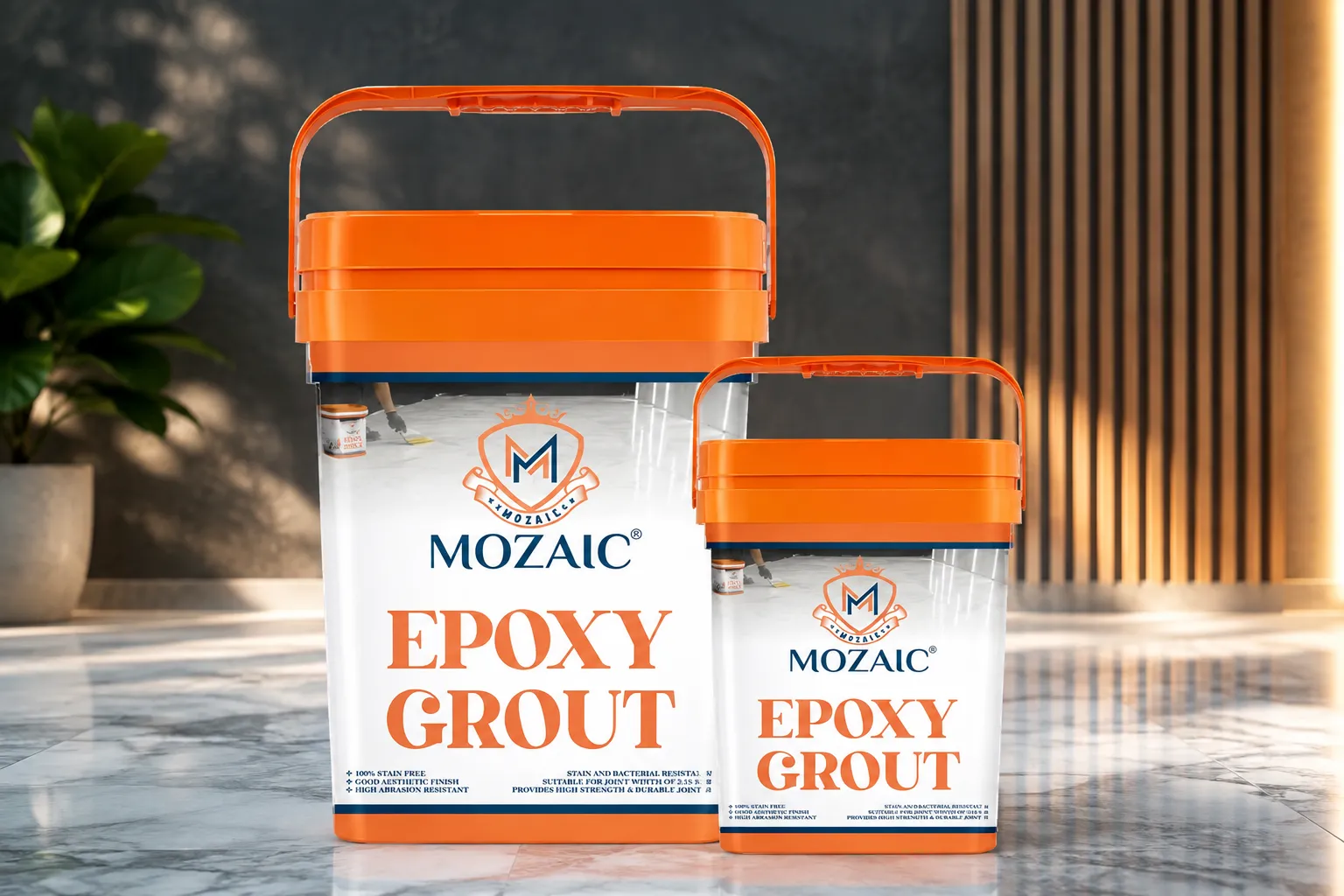

The joints between tiles do more than improve the appearance of a tiled surface. They help protect the edges of tiles and prevent moisture, dirt, and other contaminants from entering the gaps. Choosing the right grout becomes especially important in bathrooms, kitchens, commercial areas, and other places exposed to water or frequent cleaning.
Epoxy tile grout is one option for these demanding applications because its cured structure offers low water absorption, good stain resistance, and better resistance to many chemicals than conventional cement-based grout.
What Is Epoxy Tile Grout?
Epoxy grout is generally made from a resin component and a hardener. These components are mixed before application and undergo a chemical curing process.
Unlike ordinary cement grout, cured epoxy grout has a dense surface with very low porosity. As a result, water, oil, food stains, and dirt have less opportunity to penetrate the joint.
It can be used with several tile types, including ceramic, vitrified, porcelain, glass, mosaic, and some natural stone tiles. However, compatibility should always be checked before applying it across the entire surface, particularly with sensitive or porous tiles.
Main Benefits of Epoxy Grout
Low Water Absorption
Epoxy grout is useful in wet locations because it absorbs considerably less water than many cement-based alternatives. This makes it suitable for shower areas, bathroom floors, kitchen backsplashes, and other moisture-prone surfaces.
Stain and Chemical Resistance
Its dense structure helps resist common stains from food, oils, dirt, and cleaning products. Some epoxy formulations also provide strong resistance to acids and chemicals, which can be important in commercial or industrial environments. The actual resistance depends on the product's technical specification.
Reduced Cracking and Powdering
Properly mixed and cured epoxy grout forms a hard joint that is less likely to powder than traditional cement grout. However, grout cannot compensate for movement, poor tile installation, or an unsuitable substrate. Movement joints should still be provided where required.
Anti-Fungal and Anti-Bacterial Performance
Low porosity makes the grout less favourable for moisture and contaminant retention. Some formulations also include properties designed to limit fungal and bacterial growth. This can be useful in bathrooms, kitchens, healthcare environments, and other areas where hygiene matters.
Resistance to Outdoor Conditions
Certain epoxy grouts are designed for outdoor applications and can withstand moisture, temperature changes, and UV exposure. This makes them worth considering for patios, pool surroundings, and other exterior tiled areas. Always confirm that the specific product is rated for outdoor use.
Different Colour Options
Grout does not have to match every tile exactly. Available colours can be used to create either a continuous appearance or a deliberate contrast between the tile and joint. This is particularly useful for mosaic and decorative tile installations.
Where Can Epoxy Grout Be Used?
Epoxy grout can be considered for:
- Bathroom floors and walls
- Shower enclosures
- Kitchen floors and backsplashes
- Countertop tile joints
- Swimming pool surroundings
- Residential flooring
- Commercial and high-traffic areas
- Outdoor patios and tiled spaces
Commercial locations may benefit from epoxy grout where frequent cleaning, staining, and heavy use place greater demands on the joints.
How to Apply Epoxy Grout Properly
Installation quality has a direct effect on the finished result.
1. Prepare the joints: Remove dust, loose adhesive, dirt, and other material from the joints. The surface should meet the product's required moisture and cleanliness conditions.
2. Mix the components correctly: Follow the specified resin-to-hardener ratio. Do not add water, cement, or other materials unless the manufacturer's instructions specifically allow it.
3. Apply in manageable sections: Epoxy grout has a limited working time. Applying too much at once can make spreading and cleaning difficult.
4. Clean excess material promptly: Remove grout residue from tile surfaces while it is still within the recommended cleaning window. Hardened residue can be much harder to remove.
5. Allow adequate curing: Keep the installation protected from water, dirt, and heavy traffic during curing. Many epoxy grout products require roughly 24–48 hours for complete drying or curing, but temperature, humidity, product formulation, and application thickness can change the actual time. Follow the technical data sheet for the specific product.
Epoxy Grout vs Cement Grout
Neither option is automatically right for every project. Cement grout can work well for standard indoor tile installations and is generally familiar to installers. Epoxy grout is more suitable when the project places greater importance on stain resistance, low water absorption, chemical resistance, or frequent cleaning.
Cost, application skill, joint width, tile material, location, exposure, and maintenance requirements should all be considered before selecting a grout.
Final Takeaway
Epoxy tile grout is a practical choice for tile joints that face moisture, stains, frequent cleaning, or demanding environmental conditions. Its low porosity, chemical resistance, durability, and availability in different colours make it suitable for a wide range of residential and commercial applications.
The key is not simply choosing epoxy grout. Proper joint preparation, accurate mixing, timely cleaning, tile compatibility, and sufficient curing are equally important for achieving durable and clean-looking joints.



























Sign in to leave a comment.