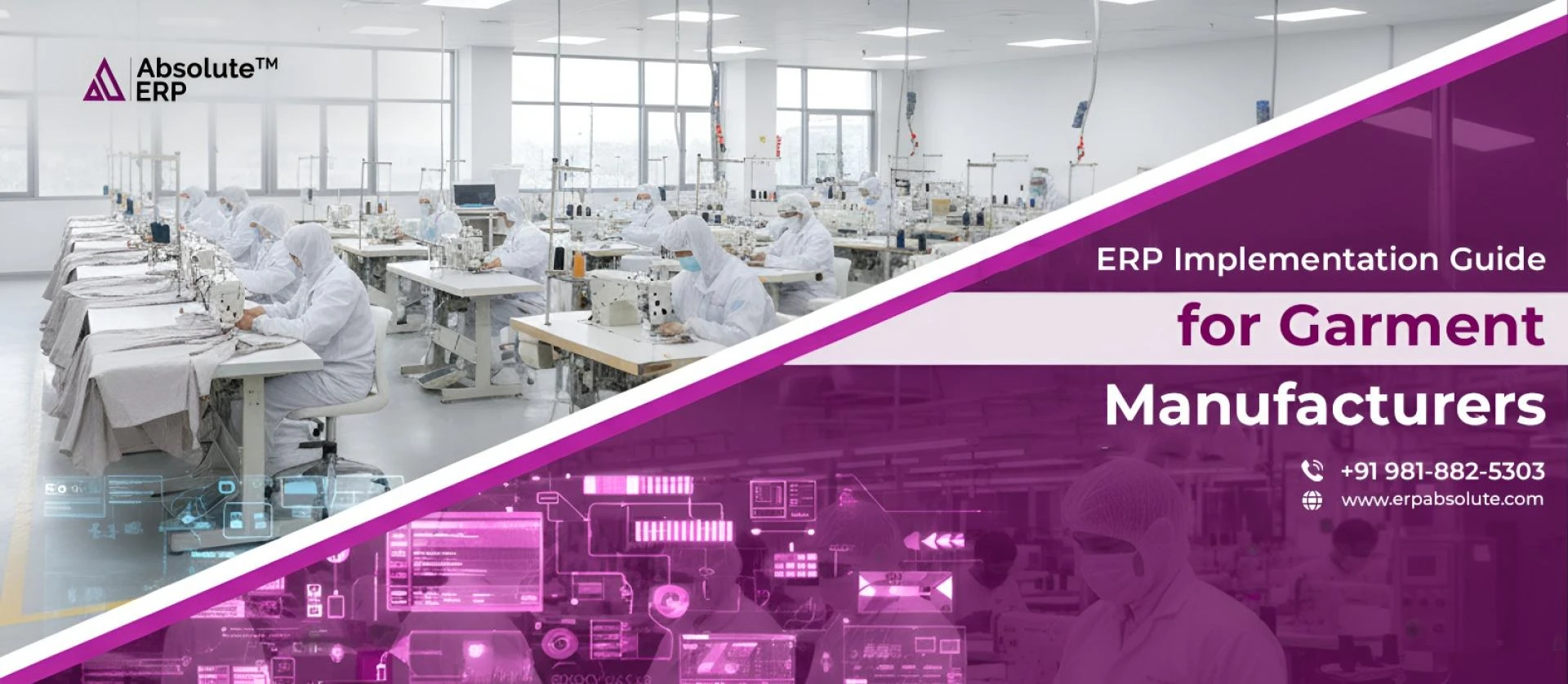

ERP implementation is one of the most game-changing yet challenging undertakings for a garment manufacturing company. Unlike general manufacturing sectors, the apparel industry faces distinctive challenges: seasonal trends, changing color ranges, complicated sizing systems, varying raw material costs, and a rapid supply chain often referred to as "fast fashion."
A successful ERP rollout does not merely digitize existing processes; it integrates them, connecting the design phase with the distribution phase. This guide outlines the critical steps that garment manufacturers must take to ensure a smooth ERP transition.
Top Steps for Implementing Garment ERP into the Business
Let’s know the garment ERP implementation steps in a very user-friendly way:
Planning and Scoping
This phase identifies how well the system aligns with the organization’s needs. Misjudging the scope at this stage can result in significant budget overruns later on. Garment manufacturing ERP adoption has become a challenge for various industries. Still, those who have smart ideologies and clear planning for the same can easily do this job for an automated next-gen garment ERP implementation.
Go Through the Software
Garment manufacturing ERP is not a tough utility for business operation, but it has some crucial functions and mechanisms you need to know and understand before you buy this application suite. Once you are done with R&D and all your referential understanding regarding the product, you can easily go for ERP implementation. In this way, you can easily know new things and strengthen your understanding of the software, which will assist further in the implementation process.
Know the Customization Offered
When you are ready for the ERP implementation process of your garment software, you should know the offered customisations by your service providers, as it will help you you can make edits easily for CMT, sample development and designing, inventory, production planning and scheduling, garment finishing and packaging, etc. After completing this stage with the Garment manufacturing ERP, you will find yourself in an eligible condition to beat the competition with confidence. Variety of flexibilities and customisations made the apparel industry go for the best ERP for garment manufacturers.
Data Migration
The old data and company information is very crucial to store and for the enterprise growth and records. If you are running a garment industry for many years and want ERP implementation in this stage, then you should always consider data migration in your priority list. Ask for the data migration process to the ERP implementation team and get it done by expert hands, as every data is important for every department, be it apparel inventory, garment production, finishing, tie and dye, and finally, to the garment packaging. Get quality assurance from the ERP team to migrate data securely to the new software.
Testing and Training
Software testing and its further training of the staff have become very crucial in ERP implementation. Get your garment software checked by IT and ERP professionals. Get in touch with the ERP support team in any emergency, and they will assist you thoroughly. Post testing, you have to get adequate training for your garment manufacturing ERP. It will help you find every issue or challenge coming your way before going live with the ERP application.
Go Live
It's a very important stage of ERP implementation when an enterprise gets the software into its system. You will be instructed and advised properly by the ERP team. Cherish your day of ERP implementation for your garment business, as from now you will avail advanced automation and high-tech process mechanisms to bring a perfect balance to your enterprise.
Summary
Just like any other business, ERP implementation in the garment business also needs the same steps, planning, and procedures. To make apparel inventory, production line, finishing, and delivery in check, you have to adopt this software as the complete process is very simple if you connect to a genuine ERP solution provider.










Sign in to leave a comment.