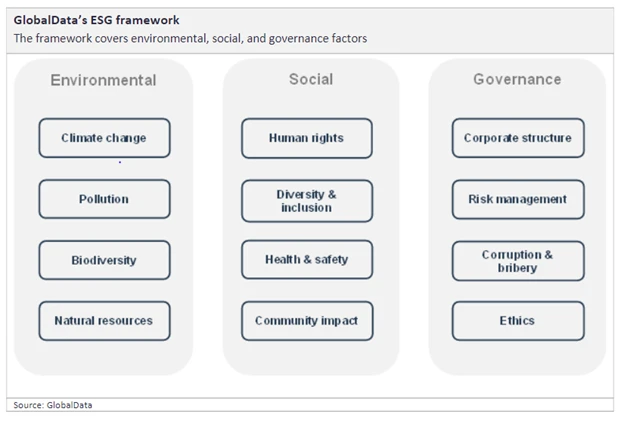

Environmental, Social, and Governance (ESG) considerations have emerged as pivotal factors shaping the landscape of responsible and sustainable business practices. This article aims to provide a comprehensive exploration of the ESG framework, delving into its components, significance, and the transformative impact it has on organizations worldwide.
Understanding ESG Components
Environmental Factors
The "E" in ESG encapsulates environmental considerations. Companies embracing ESG integrate eco-friendly practices, resource conservation, and emissions reduction into their operations. From renewable energy adoption to waste management strategies, environmental consciousness is at the core of the ESG framework. For more information on GlobalData’s ESG Framework, download a free report sample
Social Responsibility
The "S" in ESG focuses on social responsibility. This encompasses a commitment to fair labor practices, diversity and inclusion, community engagement, and the overall welfare of employees and stakeholders. Organizations prioritizing social responsibility foster a positive corporate culture and contribute to the broader societal well-being.
Governance Principles
The "G" in ESG centers on governance principles. This includes transparent decision-making processes, ethical business conduct, and accountability mechanisms within an organization. Strong governance ensures that companies operate with integrity, adhere to regulatory standards, and maintain a robust framework for risk management.
Significance of ESG in Business
Stakeholder Trust and Reputation
Prioritizing ESG principles builds trust among stakeholders, including investors, customers, and employees. Companies known for their commitment to sustainable practices often enjoy enhanced reputations, attracting like-minded partners and customers who value social and environmental responsibility.
Risk Mitigation
ESG considerations play a pivotal role in risk mitigation. By addressing environmental, social, and governance risks, organizations are better equipped to navigate challenges and safeguard their long-term viability. Proactive ESG strategies contribute to resilience in the face of evolving market dynamics.
Implementation Challenges and Solutions
Integration into Corporate Culture
Challenges in implementing the ESG framework often revolve around integrating these principles into the corporate culture. Companies need to foster a mindset shift, ensuring that sustainability becomes embedded in decision-making processes, from the boardroom to day-to-day operations.
Metrics and Reporting
Accurate measurement and transparent reporting of ESG performance can be challenging. Establishing standardized metrics and reporting mechanisms, aligned with global frameworks, is essential. This not only facilitates internal tracking but also provides stakeholders with clear insights into an organization's ESG journey.
Global ESG Trends
Regulatory Developments
Across the globe, regulatory bodies are increasingly emphasizing ESG compliance. Companies that proactively align with or exceed these regulatory standards position themselves as leaders in sustainable business practices. Staying abreast of evolving regulations is crucial for long-term ESG success.
Investor Influence
Investors are playing a pivotal role in driving ESG adoption. A growing number of investors prioritize companies with robust ESG frameworks, recognizing the financial and ethical benefits of sustainable business practices. Aligning ESG goals with investor expectations is becoming a strategic imperative.
Future Outlook
ESG as a Business Imperative
Looking ahead, ESG is poised to become a non-negotiable business imperative. Organizations that view ESG not as a compliance burden but as a strategic opportunity are likely to thrive. The integration of sustainable practices will not only contribute to societal well-being but also enhance corporate resilience and competitiveness.



























Sign in to leave a comment.