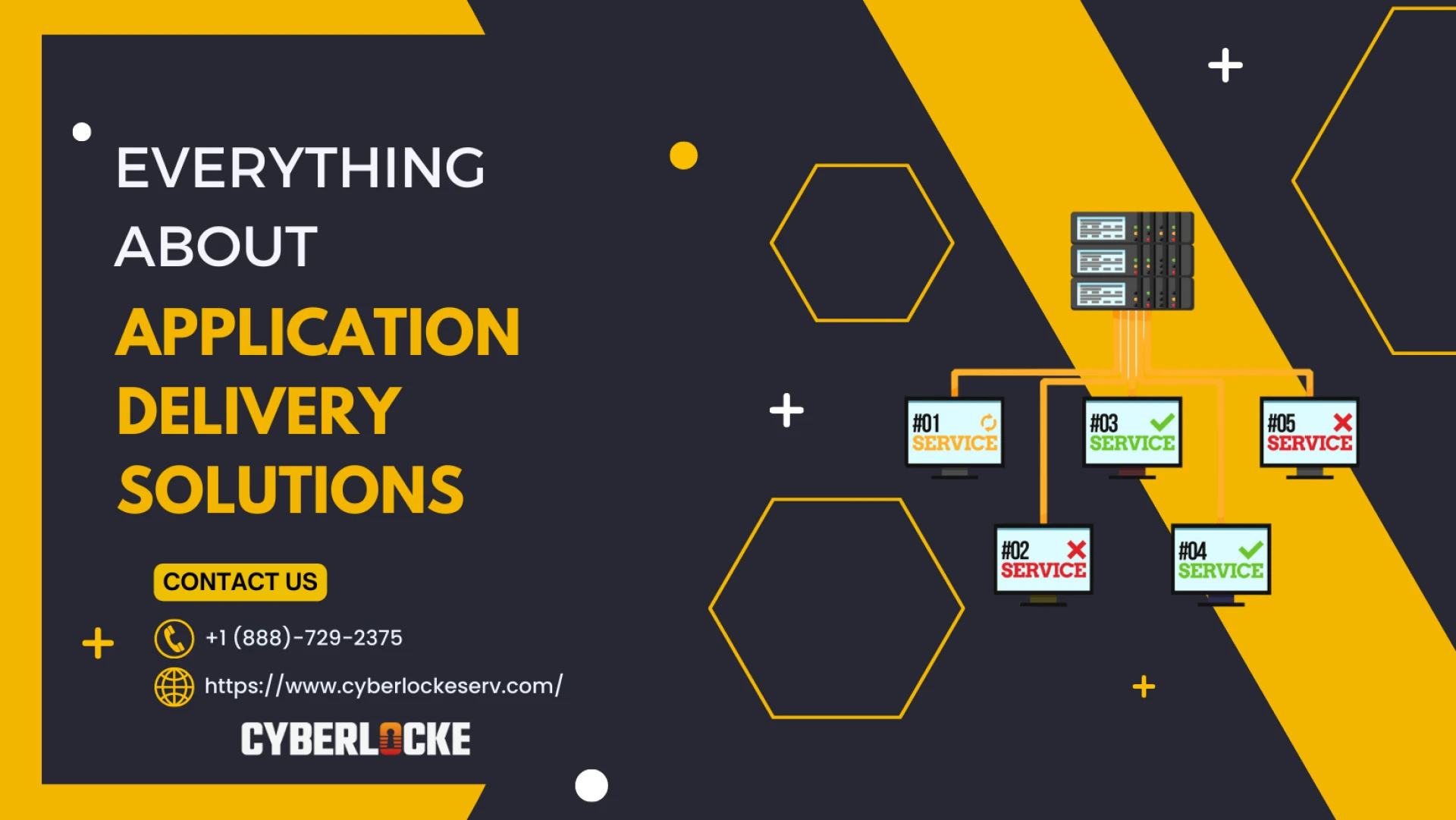

Delivering content and functionality to end users is essentially what application delivery solutions entail. The application, which may be an online store or social networking platform, may be hosted on local servers or in the cloud. However, it must be reliably delivered with the least amount of latency to the end-user devices.
End customers are provided with complete and smooth application delivery through a number of platforms and technologies. The primary part of the application delivery process that routes client requests to the application servers is the Application Delivery Controller (ADC). ADC enables the best performance and resource management, which are crucial for cloud-native applications in particular.
What is an Application Delivery Solutions Network?
Web applications can maintain high availability, security, and visibility with the help of an application delivery network (ADN), which is a group of services delivered across a network. ADNs work by speeding up IT visibility and decreasing data centre load times throughout the app delivery process. The fundamental difference between an ADN and a content delivery network (CDN) is that CDNs speed up the distribution of static content (such as high-resolution photographs), whereas ADNs speed up the delivery of dynamic content (like web apps).
Application Delivery Management: Its Importance
Application delivery management is the art of ensuring that all essential programs are accessible to users when and when they need them. A sound management strategy can enable users to access apps quickly, predictably, and securely.
Application delivery solutions management makes sure that essential business applications are accessible to users and offers delivery options. Throughout, connections per second, security, debugging, and analytics application delivery optimization are required because of this.
Benefits of Application Delivery Solutions Systems
Organizations can benefit from cloud-based app delivery in a number of ways, including cost-effectiveness, scalability, device independence, centralized management, secure delivery, and agility.
Infrastructure made easier
Replace hardware-based servers with a more scalable cloud service that won't compromise the level of delivery.
Lower costs
When application performance improves and user experience increases, the budget for customer support is significantly reduced. The cost of purchasing and maintaining hardware is also eliminated by an app delivery method.
A rise in productivity
Efficiency is maximized when workers have access to information and programs from any location and on any device. A cloud-native app delivery system can deliver applications more quickly than conventional hardware-based ADCs.
Centralized administration
All the applications and data are housed centrally when an app delivery system is implemented, making them simpler to manage and maintain. For instance, you only need to update an application on the server once, regardless of how many workstations are using it.
The Challenges of Application Delivery Solutions
These advantages come with a few drawbacks.
The proliferation of BYOD introduces various mobile devices into the picture. Creating a rich and consistent user experience for different devices is difficult.IT faces security concerns as the number of people using smartphones to access corporate networks rises. Implementation of permission-based access is required.Scalability and high availability are essential for preserving staff productivity levels. In order to deliver applications with good performance and high availability, the server load must be balanced well.It is necessary to have a comprehensive app distribution solution with a centralized administration system.
Finally, there is a problem with how difficult it is to install and configure virtualization servers.
























Sign in to leave a comment.