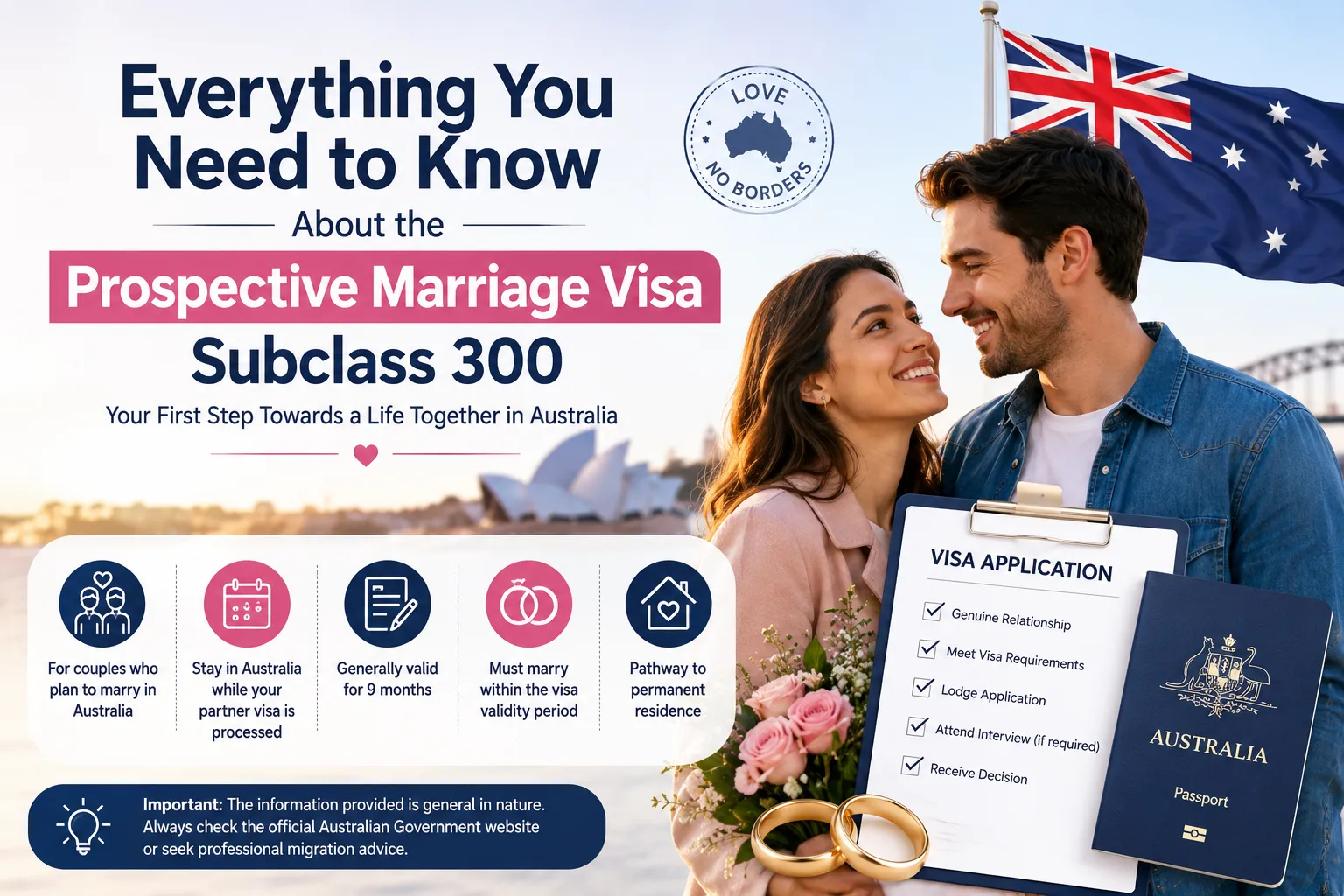

For engaged couples who wish to begin their life together in Australia, the Prospective Marriage Visa (Subclass 300) provides a pathway for an eligible fiancé(e) of an Australian citizen, Australian permanent resident, or eligible New Zealand citizen to travel to Australia, marry their sponsor, and later apply for an onshore Partner Visa if they meet the relevant requirements. Understanding how this visa works, the eligibility criteria, and the application process can help couples prepare for their future with greater confidence.
What Is the Prospective Marriage Visa (Subclass 300)?
The Subclass 300 Prospective Marriage Visa is a temporary visa intended for people who are engaged to an eligible Australian sponsor. If granted, the visa allows the applicant to travel to Australia, marry their sponsoring partner within the visa validity period, and then, if eligible, lodge an application for an onshore Partner Visa after the marriage.
Unlike partner visas that are generally available to married or de facto couples, the Subclass 300 Visa is specifically designed for couples who intend to marry after the applicant arrives in Australia.
Who Can Apply?
To be eligible, applicants generally need to satisfy several requirements, including:
- Be outside Australia when the visa application is lodged and when a decision is made.
- Be engaged to an Australian citizen, Australian permanent resident, or eligible New Zealand citizen.
- Intend to marry their sponsoring partner within the visa validity period.
- Demonstrate that the relationship is genuine and ongoing.
- Meet Australia's health and character requirements.
- Satisfy all other applicable visa criteria.
As immigration requirements may change, applicants should always refer to the latest Australian Government guidance before applying.
Evidence of a Genuine Relationship
A key part of the assessment is demonstrating that the relationship is genuine and that both partners genuinely intend to marry.
Supporting evidence may include:
- Photographs together over time
- Records of communication
- Travel itineraries and shared trips
- Statements from family and friends
- Evidence of meeting in person
- Engagement documentation
- Plans for the wedding
Providing clear, consistent, and well-organised evidence can strengthen the application.
Documents Commonly Required
Applicants should prepare complete and accurate documentation before lodging their application.
Common documents include:
Identity Documents
- Current passport
- Birth certificate
- Passport-sized photographs
- National identity documents where applicable
Relationship Documents
- Evidence of engagement
- Proof of ongoing communication
- Travel records
- Photographs together
- Statutory declarations or supporting statements where appropriate
Sponsor Documents
- Australian passport or citizenship certificate
- Permanent residency evidence (if applicable)
- Eligible New Zealand citizen documentation where relevant
Additional documents may be requested depending on individual circumstances.
Health and Character Requirements
Applicants are generally required to satisfy Australia's health and character standards.
This may involve:
- Medical examinations
- Chest X-rays or other health assessments if required
- Police clearance certificates
- Character declarations
Meeting these requirements is an important part of the visa assessment process.
What Happens After the Visa Is Granted?
If the Subclass 300 Visa is granted, the applicant can travel to Australia and make arrangements to marry their sponsoring partner.
During the visa period, holders may generally be able to:
- Live in Australia temporarily
- Work in Australia, subject to visa conditions
- Study in Australia (although government financial assistance may not be available)
After the marriage takes place, eligible applicants can apply for an onshore Partner Visa to continue their pathway toward permanent residency.
Benefits of the Subclass 300 Visa
The Prospective Marriage Visa offers several important advantages for eligible couples, including:
- The opportunity to join a fiancé(e) in Australia.
- Time to plan and celebrate a wedding in Australia.
- A pathway to apply for an onshore Partner Visa after marriage.
- The ability to begin building a life together while complying with Australia's migration framework.
For many couples, the visa provides a structured route toward long-term family reunification.
Common Mistakes to Avoid
Applicants can help reduce delays by avoiding common issues such as:
- Providing incomplete relationship evidence.
- Submitting inconsistent information.
- Forgetting required supporting documents.
- Delaying responses to requests from immigration authorities.
- Failing to notify the Department of any significant changes in circumstances.
Careful preparation and attention to detail can improve the overall application process.
Consider Professional Guidance
Some couples choose to seek assistance from a registered migration professional, particularly if they have complex circumstances or questions about eligibility.
Professional guidance may help with:
- Understanding visa requirements
- Organising supporting documents
- Preparing relationship evidence
- Managing application timelines
- Responding to requests for additional information
Although professional assistance is optional, it can provide additional clarity throughout the process.
Final Thoughts
The Prospective Marriage Visa (Subclass 300) provides eligible engaged couples with an opportunity to begin their future together in Australia before applying for an onshore Partner Visa. By understanding the eligibility criteria, preparing comprehensive relationship evidence, and meeting health and character requirements, applicants can approach the process with greater confidence.
Because Australian migration laws and visa requirements can change, it is important to rely on current official guidance throughout the application process. Careful planning, accurate documentation, and timely responses to any requests from immigration authorities can help support a smoother pathway toward building a life together in Australia.

























Sign in to leave a comment.