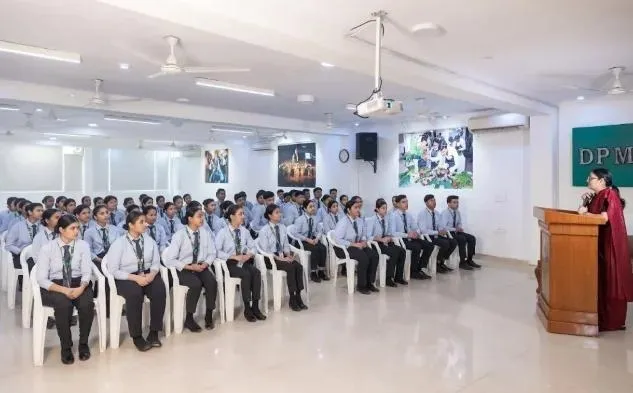

Most 12th-graders don't have a clear career plan yet. A smaller group does, and for a lot of them, it forms early: they like being around people, they like food and travel, and they want work that moves fast rather than sitting still. Hotel management in Delhi tends to pull in exactly this kind of a student.
This piece goes through what actually separates a hotel management program worth your time from one that's mostly a glossy prospectus.
Why Delhi's Hotel Industry Trains Differently
Delhi isn't just the seat of government; it's also one of the densest hospitality markets in North India, and that density changes what a student can access while still in college. What this means for a student is fairly concrete:
- Nearly every major domestic and international hotel brand has a property somewhere in NCR, which widens the pool of internship sites within commuting distance.
- The MICE circuit keeps demand for trained event and banquet staff fairly steady across the year, not just during a tourist season.
- Proximity to the airport opens doors into airline catering and ground hospitality roles that a student in a smaller city simply wouldn't have access to
A college with real ties to the local industry can turn this into working internships at functioning kitchens and front desks, rather than mock exercises confined to campus.
Inside the Classroom: What the Four Core Departments Actually Teach
A common assumption is that hotel management is mostly about greeting guests politely. It's a much broader course than that, and it's usually organised around four departments that a student rotates through:
- Food production: Knife skills, basic cooking methods, kitchen hygiene, and enough exposure to different cuisines that a graduate isn't lost on a real line
- Front office operations: Reservations software, check-in and check-out procedures, and the guest-relations judgment that's practised more than it's taught from a textbook
- Housekeeping: Property maintenance and inventory control, plus the standards hotel inspectors actually check during audits.
None of these departments functions in isolation on the job; a front office trainee who's spent time in housekeeping understands room turnover in a way one who hasn't never quite does.
Certificate, Diploma, or Degree: The Difference Actually Matters
Hotel management courses in Delhi generally come in three paths, and the right one depends on how soon a student wants to start earning versus how much they want to build toward a management track.
- A one-year certificate gets someone into an entry-level operational role fastest: front desk, service staff, junior kitchen positions.
- A diploma, usually two years, adds more depth and tends to open supervisory roles a bit sooner than a fresh certificate would.
- A three-year degree is the slower route, but the one most large hotel chains look for when hiring into their management trainee programs.
There's no universally "better" option here; a student aiming to open a café in five years doesn't need the same track as one aiming for a general manager role at a five-star property by thirty.
Who Actually Thrives in This Field
Most diploma and degree programs accept students straight out of Class 10 or 12 from a recognised board, and unlike engineering or medicine, the stream doesn't usually matter. What matters more than the academic stream is temperament:
- Genuine comfort with customer interaction, including the kind that requires problem-solving on the spot with no time to think it through
- Willingness to work shifts, weekends, and peak seasons, including the exact days most people want off
- Actual interest in food, travel, events, or guest services specifically, rather than "management" as an abstract idea
Students drawn to the idea of management without much interest in food, guests, or events tend to be the ones who drop out or switch fields within the first year or two of actually working.
Conclusion
Walk into a reputable hotel management college in Delhi, and within a few months you're not reading about front-office systems in a textbook; you're running them, in a real hotel, alongside staff who do this every day.
That kind of head start is hard to manufacture anywhere else in the country. Pick an institute that takes its internships as seriously as it takes its admissions brochure, and Delhi will do the rest: the chains, the airport, the events calendar, all of it working in your favour from year one.

























Sign in to leave a comment.