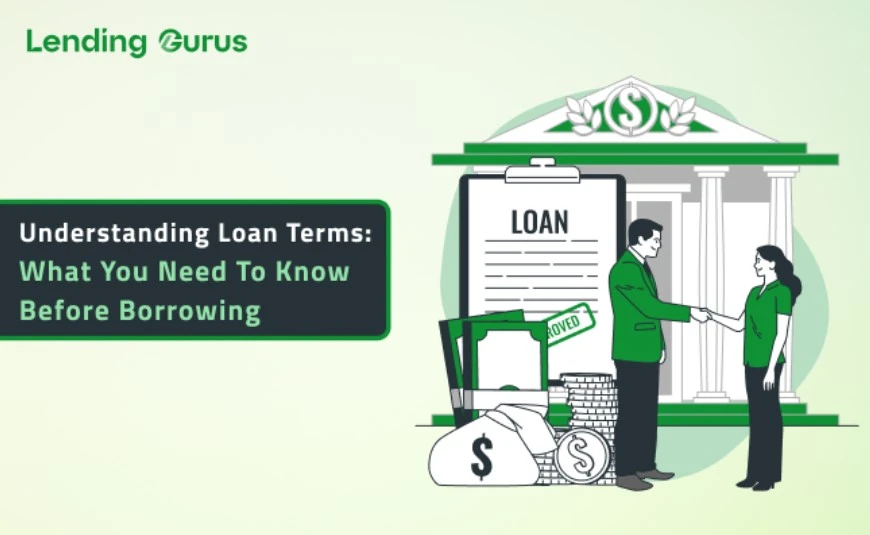
Taking out a loan is a significant financial decision, and understanding the terms associated with it is crucial to making an informed choice. Whether you are applying for a personal loan, a business loan, or a mortgage, knowing the key loan terms can help you navigate the borrowing process with confidence.
This guide will walk you through the essential aspects of loan agreements, so you can make responsible financial decisions and avoid potential pitfalls.
Key Loan Terms You Should Know
1. Principal Amount
A borrower obtains the principal amount by receiving the full sum of money they request from their lender. The principal amount excludes all fees and interest payments. A loan repayment includes both principal and interest payments where interest calculation happens through the current principal balance.
2. Interest Rate
The interest rate represents the expense of borrowing funds that is calculated as a percentage value of the original loan amount. Interest rates exist in two different forms.
- Fixed Interest Rate: The interest rate remains unchanged throughout the loan duration which produces steady monthly payments.
- Variable Interest Rate: Under this plan, the interest rate varies based on market conditions which results in payments that increase or decrease.
3. Annual Percentage Rate (APR)
The total borrowing expense comprises interest rate costs along with all fees that lenders impose on borrowers. Whether you’re considering a personal loan, mortgage, or a business line of credit, this percentage enables you to evaluate different loan offers between financial institutions by revealing the complete expense of borrowing money.
4. Loan Term
A loan term defines the duration during which borrowers must repay their loan. The duration of APR payment extends from short months to multiple years. Extending the duration of the loan decreases your monthly payment amount yet increases the total interest expense. Short-term loans may have higher monthly payments but lower overall interest costs.
5. Monthly Payment
The monthly payment you need to make represents the fixed or variable sum that pays back your loan. The payment consists of both principal amount and interest. The structure of your payment amounts becomes clear when you understand how they are organized which helps you create a budget.
6. Amortization
The process of paying off a loan through scheduled periodic payments is known as amortization. Each payment of your loan appears on an amortization schedule which reveals how your debt amount decreases by separating principal from interest amounts.
7. Prepayment Penalty
Some loans include a prepayment penalty, which is a fee charged if you pay off your loan earlier than agreed. Lenders impose this penalty to compensate for lost interest revenue. If you plan to make extra payments or pay off your loan early, check for any prepayment penalties before signing the agreement.
8. Collateral
A borrower protects their loan through collateral assets to obtain financing. When borrowers default on payments in secured loans such as mortgages, auto loans, or heavy equipment collateral loans, the lender can take possession of their collateral. Personal loans operate as unsecured debt since they need higher interest rates from borrowers but do not require any assets for security.
9. Loan Fees
After charging interest lenders may impose extra expenses which consist of:
- Origination Fee: A one-time fee for processing the loan application.
- Late Payment Fee: A fee from your lender emerges when you fail to meet your payment deadline.
- Application Fee: The submission of a loan application requires an application fee which lenders charge even when they do not approve the request. Understanding these fees can help you assess the true cost of borrowing.
10. Debt-to-Income Ratio (DTI)
Your DTI ratio compares your monthly debt payments to your gross monthly income. The ability to repay loans depends on this metric which lenders use to assess their borrowers. A low DTI ratio will increase your loan approval possibilities while providing better interest rates.
Read: Key Questions to Ask a Lender Before Applying for a Small Business Loan
How to Choose the Right Loan
Selection of a loan depends on both your financial requirements and your ability to make payments. The following steps will help you make an informed loan decision:
- Assess Your Needs: Begin by establishing both the funding amount you need and the precise reason for which you need it.
- Compare Lenders: Research different lenders to analyze their interest rates and payment terms along with their fees.
- Read the Fine Print: Review the entire loan agreement because it contains vital information about all terms and conditions.
- Use a Loan Calculator: A loan calculator tool should be used before loan commitment to estimate monthly payments and total interest costs.
- Check Your Credit Score: A credit score review helps you obtain better loan conditions which result in reduced interest rates.
Conclusion
The process of understanding loan terms helps you make responsible borrowing choices. Knowledge of principal along with interest rates and APR and loan fees allows you to select the best loan for your financial needs. Before signing any loan agreement, you must read all the fine print and ask questions to understand all terms and prevent hidden costs.
Looking for the right loan? Contact us at Lending Gurus to get expert guidance on loan terms and get the right loan for your needs.
Originally Posted at: Understanding Loan Terms























Sign in to leave a comment.