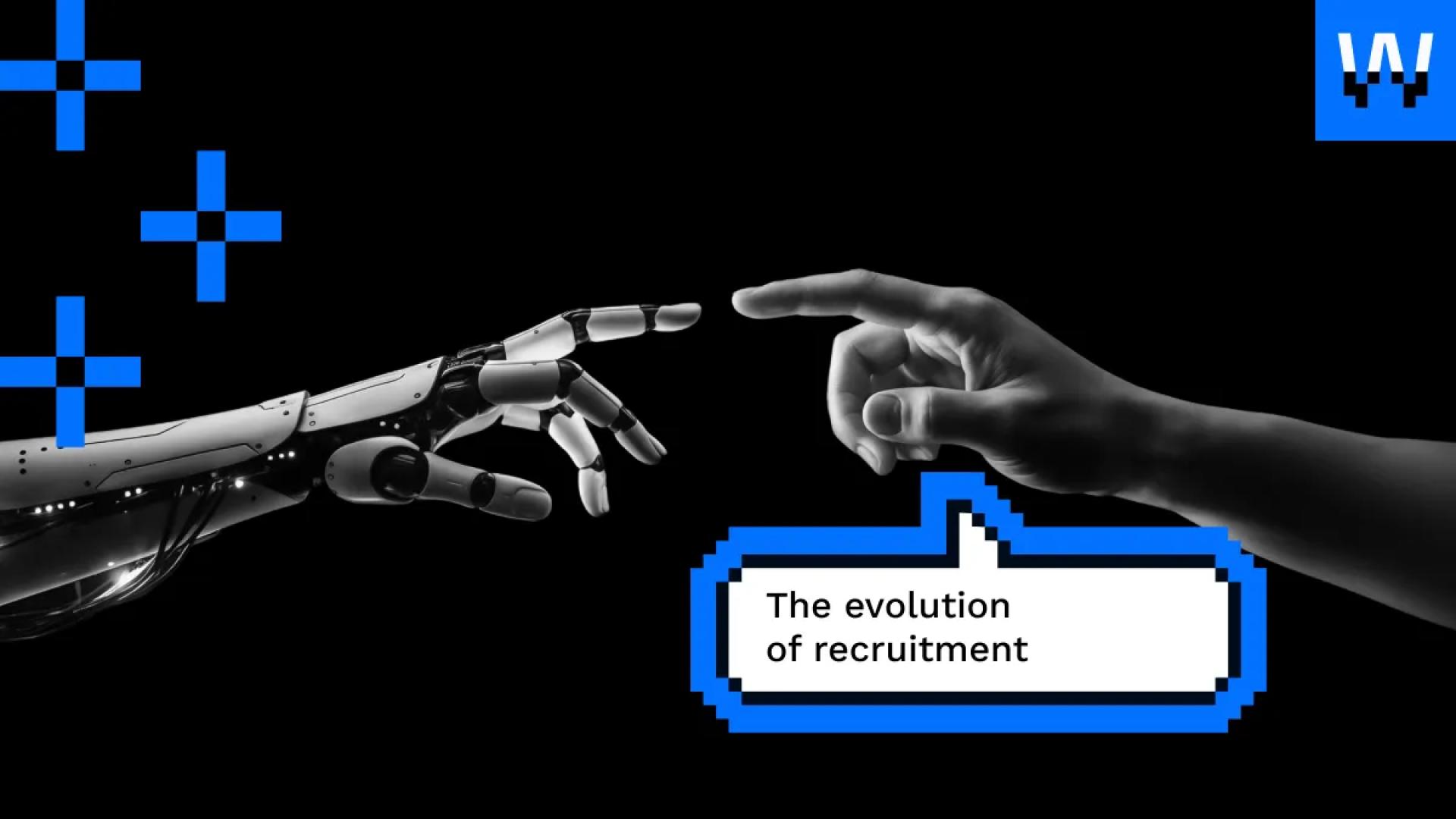

Recruitment has undergone a dramatic transformation over the past few decades. What once relied on personal networks, newspaper advertisements, and manual screening has evolved into a technology-driven process powered by artificial intelligence, data, and global talent platforms.
Today, companies no longer hire only within their local markets. Instead, they can access a worldwide talent pool, analyze candidates through sophisticated tools, and accelerate hiring decisions with unprecedented speed.
Understanding how recruitment evolved helps explain why modern hiring platforms and AI-powered tools are becoming essential for companies that want to remain competitive.
The Era of Traditional Recruitment
For many years, recruitment was largely a manual and localized process.
Companies relied on several traditional methods to find candidates:
- newspaper job postings
- recruitment agencies
- personal referrals
- university job boards
- walk-in applications
HR teams manually reviewed resumes, conducted multiple interview rounds, and managed communication through phone calls and email.
While these methods worked for decades, they came with several limitations.
Key challenges of traditional hiring
Traditional recruitment often involved:
- long hiring cycles
- limited access to global talent
- high recruitment costs
- inefficient resume screening
As businesses grew more digital and global, these limitations became increasingly problematic.
The Rise of Online Job Platforms
The first major shift in recruitment came with the rise of online job boards and professional networking platforms.
Websites allowed companies to post vacancies and receive applications from candidates across regions and industries. This expanded the reach of hiring beyond local markets and introduced a more scalable recruitment process.
Popular platforms helped companies:
- publish job listings quickly
- receive hundreds of applications
- build digital candidate databases
- streamline communication with applicants
However, while online platforms increased the number of applicants, they also created a new problem: information overload.
Recruiters often needed to review hundreds or even thousands of resumes for a single position.
The Emergence of Data-Driven Hiring
As recruitment platforms collected more candidate data, companies began using analytics and structured hiring processes to improve decision-making.
Recruiters started relying on:
- applicant tracking systems (ATS)
- automated screening tools
- structured interview frameworks
- candidate scoring models
These tools allowed companies to filter candidates more efficiently and reduce bias in hiring decisions.
Data-driven recruitment also made it easier to measure important hiring metrics, such as:
- time-to-hire
- cost-per-hire
- candidate conversion rates
- retention outcomes
However, even these systems still required significant human involvement and manual evaluation.
Artificial Intelligence Enters Recruitment
The next stage in the evolution of hiring was the integration of artificial intelligence and machine learning.
AI technologies began to transform recruitment by automating many of the most time-consuming tasks (more on https://wild.codes/ ) .
Examples of AI-powered hiring tools include:
- resume parsing and automated screening
- candidate matching algorithms
- AI interview assistants
- predictive hiring analytics
These tools can analyze large datasets of candidate information and identify the best matches for specific roles.
For companies, this means:
- faster hiring cycles
- more accurate candidate matching
- reduced manual workload for recruiters
Global Talent and Remote Hiring
At the same time AI tools emerged, another major shift occurred: the rise of remote work and distributed teams.
Companies realized that the best talent is not always located near their headquarters. As remote work became more accepted, hiring expanded beyond national borders.
Today, organizations frequently build teams composed of professionals from multiple countries.
Remote hiring allows companies to:
- access specialized skills globally
- scale teams quickly
- reduce operational costs
- operate across time zones
This shift has significantly expanded the possibilities of modern recruitment.
Technology-Driven Hiring Platforms
Modern hiring platforms combine AI technology, global talent networks, and streamlined hiring processes.
Instead of relying on slow traditional recruitment pipelines, companies can now match with developers, engineers, and specialists much faster.
Technology-driven recruitment platforms often provide:
- intelligent candidate matching
- pre-vetted talent pools
- faster onboarding processes
- transparent hiring workflows
These platforms are especially valuable for startups and technology companies that need to scale quickly.
The Future of Recruitment
Recruitment will continue to evolve as technology advances.
Several trends are shaping the future of hiring:
- deeper integration of AI tools
- predictive workforce analytics
- global talent marketplaces
- remote-first hiring strategies
Companies that adopt these innovations will gain significant advantages in attracting and retaining top talent.
At the same time, human judgment will remain essential. Technology can optimize processes, but successful hiring will always depend on understanding people, culture, and long-term collaboration. Hire on https://wild.codes/
Conclusion
Recruitment has evolved from manual processes and local networks to global, technology-driven hiring ecosystems.
Artificial intelligence, remote work, and digital platforms are transforming how companies discover and hire talent.
Organizations that embrace these changes can build stronger teams, accelerate hiring cycles, and remain competitive in a rapidly changing labor market.
The future of recruitment lies at the intersection of technology, global connectivity, and human insight and it is Wild Codes.










Sign in to leave a comment.