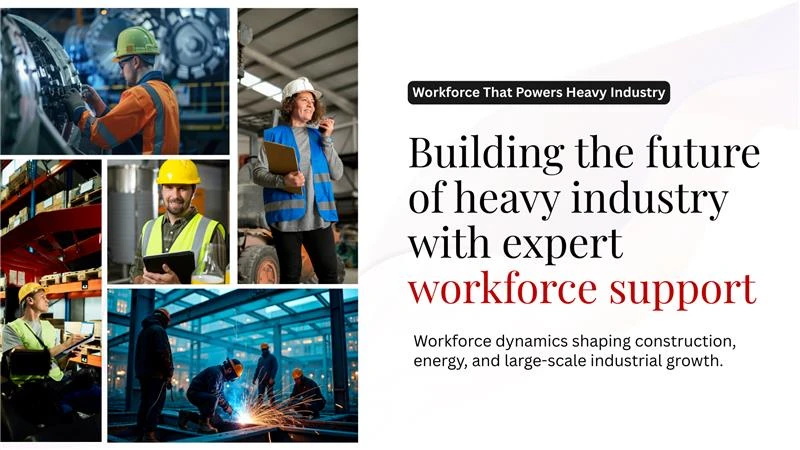

The world of heavy industry is in the midst of a transformation. As automation, AI, and digital technologies reshape the field, staffing needs are changing fast. Companies must adapt to fill new roles, preserve institutional knowledge, and stay safely productive. Here’s how intelligent staffing solutions are stepping up to meet this moment.
1. A Looming Workforce Shortage and Knowledge Gap
The industry is facing a wave of retirements, with seasoned technicians leaving and taking years of hands-on expertise with them. New hires, even those well trained, simply cannot replace that intuitive, real-world know-how overnight. As one recent analysis puts it, replacing workers is not the same as replacing wisdom—that experience is hard to replicate.
2. AI and Digital Twins to the Rescue
To bridge this expertise divide, companies are turning to AI-powered systems and digital twins—virtual replicas of physical assets. These tools simulate real work scenarios and serve as instant reference guides for newer staff. New technicians can learn and troubleshoot in a safe virtual environment, cutting down errors, preserving institutional knowledge, and boosting confidence.
3. Smart Staffing with Real-Time Analytics
Technology isn’t just aiding training—it’s transforming staffing itself. AI-enabled analytics can optimize scheduling by factoring in individual skills, equipment availability, shift demands, and production goals. This allows managers to allocate talent more efficiently and respond to changing needs in real time—boosting productivity and reducing waste.
4. Tech-Savvy Roles Are Becoming Core
While automation may replace some manual tasks, it also creates demand for new, higher-skill jobs. There’s growing need for technicians who can maintain robots, interpret data, and manage complex systems. Staffing partners now focus on finding workers equipped for tech-driven roles—often collaborating with trade schools or offering in-house training to meet that need.
5. Embracing Community Recruitment and On-Demand Payments
Modern staffing strategies are also more flexible and human-centred. Community-driven hiring, including targeting local talent pools, builds loyalty and cultural fit. On the payroll side, on-demand payment models—where workers access earnings as they earn them—boost satisfaction and retention, especially in industries where shift work and physical labor are the norm.
Why This Matters for Heavy Industrial Operations
Industrial organizations today need to do more than fill slots—they must build a resilient talent pipeline. That means preserving critical skills, embracing technology, and making staffing both strategic and on-demand. Innovative partners who combine human insight with smart systems are stepping into a vital role.
If you’re involved in heavy industrial operations and need hiring solutions for heavy industries that fit the modern era, it’s time to look beyond traditional models. Future-ready staffing means blending AI, analytics, training, and flexible hiring into a cohesive strategy—one that turns challenges into opportunity.

























Sign in to leave a comment.