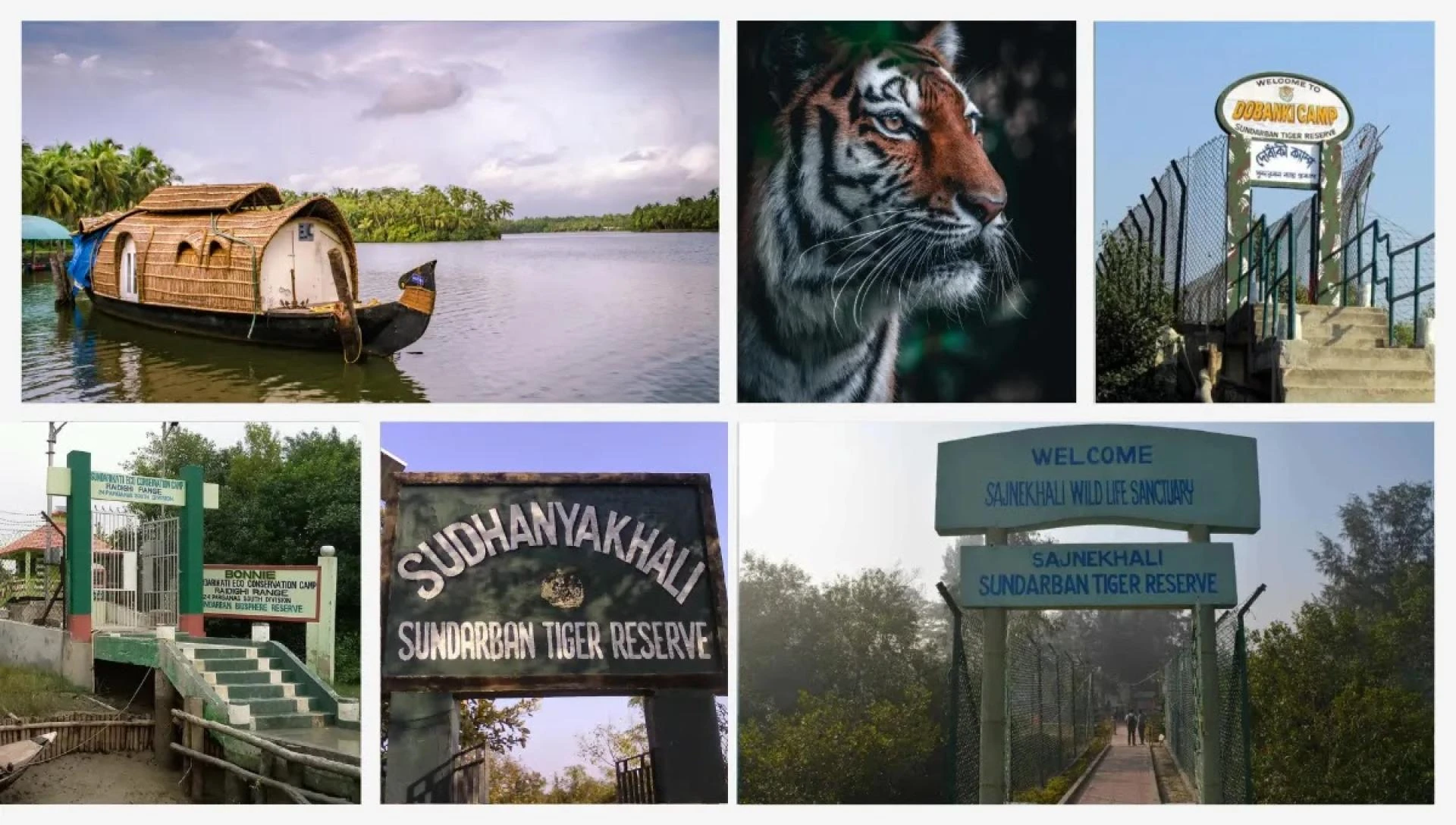

Here’s a simple, safe, and popular day-by-day Sundarban tour plan (Indian Sundarbans, West Bengal). I’ll give you a 3-day / 2-night itinerary, which most students and families choose. You can adjust days if needed.
Day 1: Arrival & River Safari
- Arrival at Godkhali / Sonakhali Jetty
- Boat transfer through rivers and mangrove creeks
- Welcome lunch on the boat or eco-resort
- Visit Sajnekhali Watch Tower & Mangrove Interpretation Centre
- Evening village walk to experience local culture
- Folk dance or Bonobibi story session
- Dinner & overnight stay
Highlights: Mangrove forests, river views, local life
Day 2: Wildlife Exploration & Watchtowers
- Early morning tea & breakfast
- Full-day Sundarbans jungle safari by boat
- Visit major watchtowers:
- Sudhanyakhali Watch Tower
- Dobanki Canopy Walk
- Crocodile and bird spotting
- Lunch on the boat
- Creek exploration through narrow channels
- Sunset over the delta
- Dinner & overnight stay
Highlights: Wildlife spotting, Royal Bengal Tiger territory, birds & crocodiles
Day 3: Nature Walk & Departure
- Morning nature walk near the village
- Visit local honey collectors or fishermen (seasonal)
- Breakfast
- Return boat journey to jetty
- Departure for Kolkata
Highlights: Peaceful mangrove views, eco-tourism experience
Best Time to Explore Sundarbans
- October to March – Best weather & wildlife sightings
- April to June – Hot but good for animal movement
- July to September – Monsoon (limited tours)
Travel Tips
- Carry valid government ID
- Wear light cotton clothes & comfortable shoes
- Avoid plastic to support eco-tourism
- Follow forest department rules strictly
Why Visit Sundarban?
1. World’s Largest Mangrove Forest
The Sundarbans is the largest mangrove forest on Earth, spread across India and Bangladesh. Its dense forests, tidal rivers, and creeks create a truly unique natural landscape.
2. Home of the Royal Bengal Tiger
The Sundarbans is famous for the Royal Bengal Tiger, specially adapted to live in mangrove forests. Even spotting tiger footprints is an exciting experience.
3. Rich Wildlife & Birdlife
Besides tigers, you can see:
- Saltwater crocodiles
- Spotted deer
- Wild boars
- Snakes and monitor lizards
- Migratory and native birds
It’s a paradise for nature lovers and wildlife photographers.
4. Unique River Safari Experience
Unlike typical forest safaris, Sundarban safaris happen on boats, moving through narrow creeks and rivers surrounded by mangroves.
5. UNESCO World Heritage Site
Sundarbans National Park is a UNESCO World Heritage Site, recognized for its ecological importance and biodiversity.
6. Peaceful Escape into Nature
Far from busy cities, the Sundarbans offers silence, fresh air, and calm surroundings, perfect for relaxation and reconnecting with nature.
7. Local Culture & Village Life
You can experience:
- Traditional fishing methods
- Honey collectors’ stories (Bonobibi folklore)
- Simple village lifestyle
This adds a cultural dimension to your visit.
8. Support Eco-Tourism
Visiting Sundarbans helps support local communities and conservation efforts, promoting sustainable tourism.



























Sign in to leave a comment.