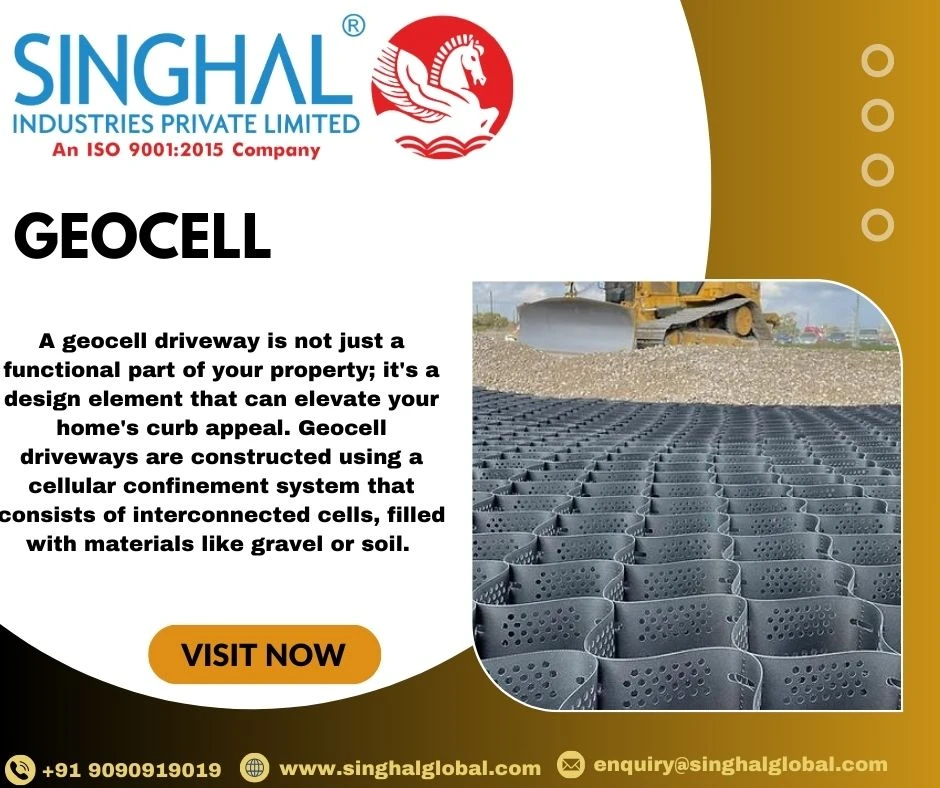

In the realm of modern construction, geocells have emerged as a groundbreaking technology that enhances the durability and sustainability of infrastructure projects. These innovative cellular confinement systems provide structural support, erosion control, and soil stabilization in various applications ranging from Geocell in Road Construction to environmental protection. This article delves into the benefits, applications, and considerations of geocells, highlighting their pivotal role in advancing construction efficiency and longevity.
Understanding Geocells
Geocells, also known as cellular confinement systems, are three-dimensional honeycomb-like structures made from high-density polyethylene (HDPE) or other durable polymers. These cells are interconnected and filled with compacted soil, aggregate, or concrete to form a stable, load-bearing foundation. Geocells effectively distribute loads over a wider area, reduce soil erosion, and improve the structural integrity of construction projects.
Benefits of Geocells
Enhanced Load Support: Geocells distribute heavy loads more efficiently, reducing settlement and extending the lifespan of pavements, roads, and embankments.
Soil Stabilization: They confine soil particles within the cells, preventing lateral movement and maintaining soil integrity in slopes, retaining walls, and erosion-prone areas.
Erosion Control: Geocells mitigate erosion by stabilizing slopes, shorelines, and riverbanks, protecting infrastructure and natural habitats from water-induced damage.
Versatility: Suitable for various soil types and environmental conditions, geocells adapt to different construction and environmental protection needs with customizable designs and installation methods.
Cost Efficiency: Geocells reduce material usage, construction time, and maintenance costs by providing durable, long-lasting solutions that minimize the need for repairs and replacements.
Applications of Geocells
Geocells find extensive applications in:
Road Construction: Used to reinforce subgrades, improve load-bearing capacity, and reduce pavement thickness in highways, rural roads, and urban streets.
Driveways and Parking Lots: Applied to stabilize and support gravel or aggregate surfaces, enhancing durability and reducing maintenance requirements.
Slope and Embankment Stabilization: Utilized to prevent soil erosion, reinforce slopes, and protect infrastructure from landslides and natural disasters.
Environmental Protection: Deployed in coastal protection projects, riverbank stabilization, and restoration of degraded landscapes to mitigate erosion and promote ecological sustainability.
Geocell Manufacturers
Geocell Manufacturers in India specialize in producing high-quality geocells tailored to meet diverse construction and environmental challenges. Singhal Industries is recognized for its expertise in geocell manufacturing, offering innovative solutions that meet stringent quality standards and project specifications. With a commitment to sustainability and technological advancement, Singhal Industries provides geocells that enhance construction efficiency and environmental resilience across the country.
Conclusion
Geocells represent a transformative technology in construction and environmental management, offering sustainable solutions for soil stabilization, erosion control, and infrastructure durability. With their versatility, cost efficiency, and environmental benefits, geocells empower engineers and developers to address complex challenges in road construction, Geocell Driveway India stabilization, and environmental protection effectively. Investing in geocells from reputable manufacturers like Singhal Industries ensures reliable performance, long-term durability, and enhanced resilience of construction projects across diverse landscapes. By integrating geocells into construction strategies, stakeholders can achieve sustainable development goals while safeguarding infrastructure and natural resources for future generations.
FAQ About Geocells
1. How are geocells installed in road construction? Geocells are typically laid on prepared subgrades and filled with compacted soil or aggregate. They are secured using anchoring methods and can be overlaid with pavement or gravel surfaces.
2. What are the advantages of using geocells in driveway construction?
Geocells stabilize gravel or aggregate surfaces, reducing rutting and erosion while enhancing load-bearing capacity. This improves driveway durability and reduces maintenance costs over time.
3. Are geocells environmentally friendly?
Yes, geocells promote environmental sustainability by reducing material usage, minimizing construction impacts on natural landscapes, and enhancing the longevity of infrastructure.
4. Can geocells be used in soft soil conditions?
Yes, geocells are effective in stabilizing soft or loose soil conditions by confining soil particles and improving load distribution. They provide a stable foundation for construction projects in challenging terrain.
5. How do geocell prices vary based on project requirements?
Geocell prices depend on factors such as cell size, material quality, project size, and installation complexity. It's advisable to consult manufacturers for customized quotes based on specific project needs.


























Sign in to leave a comment.