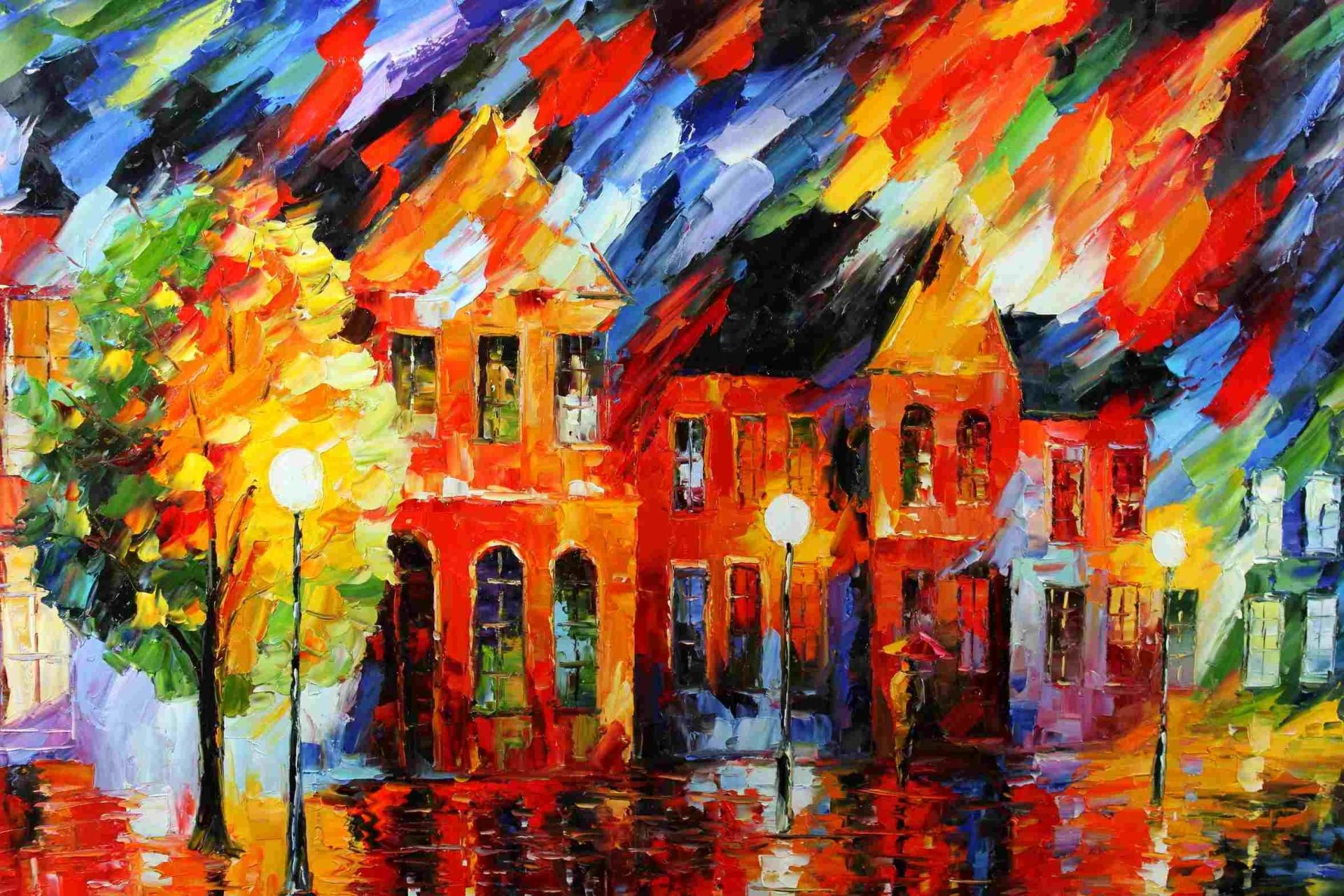

Modern art emerged in the late 19th century, disrupting traditional notions of representation and beauty. Through the 20th century\'s upheavals, it thrived, becoming transformative and divisive. From Wassily Kandinsky\'s vibrant abstractions to Salvador Dalí\'s surreal landscapes, modern art embraced diverse styles, mediums, and philosophies. Join us on a journey through this labyrinth as we unravel its complexities, explore its pioneers, and contemplate its enduring legacy. As a movement, modern art epitomizes innovation and expression, challenging viewers to expand their perceptions and engage with the world in new ways. Its impact reverberates through history, inspiring artists and audiences alike to embrace creativity, question conventions, and celebrate the boundless possibilities of human imagination.
The Birth of Modernism
At the outset of the 20th century, European artists embarked on a quest to defy the confines of academic art, yearning to mirror the swift evolution of the industrial era. Dismissing the rigid constraints of realism, luminaries such as Édouard Manet and Paul Cézanne embraced audacious brushwork and unconventional compositions, paving the way for a seismic shift in artistic paradigms. Paris, the epicenter of this revolution, bore witness to the Salon des Refusés, a rebellious showcase of works deemed too radical for the established Salon. Here, a crucible of controversy and innovation ignited, propelling modernism into the forefront of cultural discourse. This defiant rejection of tradition marked the birth of a new artistic epoch, one defined by boundless experimentation and a relentless pursuit of artistic authenticity. Through their daring vision, these trailblazers laid the groundwork for a transformative era, wherein the very essence of art would be redefined and revitalized.
The Rise of Abstraction
As the 20th century progressed, artists diverged from representational art, delving into abstraction to delve into the language of color, form, and emotion. Wassily Kandinsky, a trailblazer of abstract painting, espoused the belief that art should communicate directly with the soul, transcending the confines of the material realm. His dynamic canvases, alive with energy and motion, forged pathways to novel modes of expression, serving as a catalyst for successive generations of artists to challenge the constraints of perception and interpretation. Kandinsky\'s work acted as a beacon, illuminating the transformative potential of abstract art to evoke profound emotional responses and unveil unseen dimensions of human experience. Through his pioneering spirit, Kandinsky not only revolutionized the trajectory of art but also imbued it with a spiritual resonance, inviting viewers to embark on a transcendent journey beyond the tangible world into the realm
Surrealism and the Unconscious Mind
In the aftermath of World War I, a group of poets and artists in Paris coalesced around the principles of Surrealism, seeking to unlock the mysteries of the unconscious mind through dreams, free association, and automatic writing. Led by André Breton, Surrealists like Salvador Dalí, René Magritte, and Max Ernst created enigmatic, dreamlike images that defied rational explanation, inviting viewers to explore the depths of their own psyches. Through juxtaposition and distortion, they challenged the tyranny of reason, opening a portal to the irrational and the sublime.
Cubism and the Fragmented Reality
In the early 20th century, Pablo Picasso and Georges Braque embarked on a radical experiment in visual perception, dismantling the familiar forms of the physical world and reassembling them in fragmented, multi-dimensional compositions. Known as Cubism, this revolutionary approach to art sought to capture the essence of objects from multiple viewpoints, challenging the viewer to engage with the complexities of space and time. By deconstructing reality into its constituent parts, Picasso and Braque paved the way for a new understanding of form, movement, and perception.
Dada and the Art of Protest
In the tumult of World War I, a cohort of artists in Zurich spearheaded a daring rebellion against societal norms and artistic conventions. Embracing absurdity, chance, and nihilism as their arsenal, they birthed Dada, an anarchic movement disdainful of authority and hierarchy. Dadaists exalted the irrational and the anti-aesthetic, their ethos steeped in irreverent defiance. Through performances, collages, and assemblages, luminaries like Marcel Duchamp and Hannah Höch dismantled the very essence of art, blurring distinctions between high and low culture, creation, and destruction. Their creations were confrontational, inviting viewers to question preconceived notions and embrace the chaos of existence. Dadaism was more than an art movement; it was a philosophical insurgency, challenging the fundamental structures of society and inviting audiences to participate in the liberation of thought and expression from the shackles of convention.
Postwar Perspectives
In the aftermath of World War II, the landscape of modern art underwent a profound transformation, as artists grappled with the trauma and upheaval of the atomic age. Abstract Expressionism emerged as a dominant force in American art, as painters like Jackson Pollock and Willem de Kooning sought to capture the raw intensity of the human experience on monumental canvases. Meanwhile, in Europe, artists like Alberto Giacometti and Francis Bacon delved into the existential depths of the human condition, creating haunting, existentialist visions of alienation and despair.
As we navigate the maze of modern art, we\'re immersed in a vibrant tapestry of innovation and expression, showcasing the limitless creativity of humanity. From Kandinsky\'s daring abstractions to Dalí\'s surreal dreamscapes, from Cubism\'s fractured realities to Dada\'s rebellious chaos, modern art challenges us to perceive the world anew. It urges us to question entrenched assumptions and embrace the boundless horizons of imagination. In an era marked by uncertainty and change, the legacy of modern art stands as a guiding light, inspiring us to innovate and renew. It serves as a testament to the indomitable spirit of human ingenuity, reminding us of our capacity to transcend boundaries and create beauty amidst chaos.









Sign in to leave a comment.