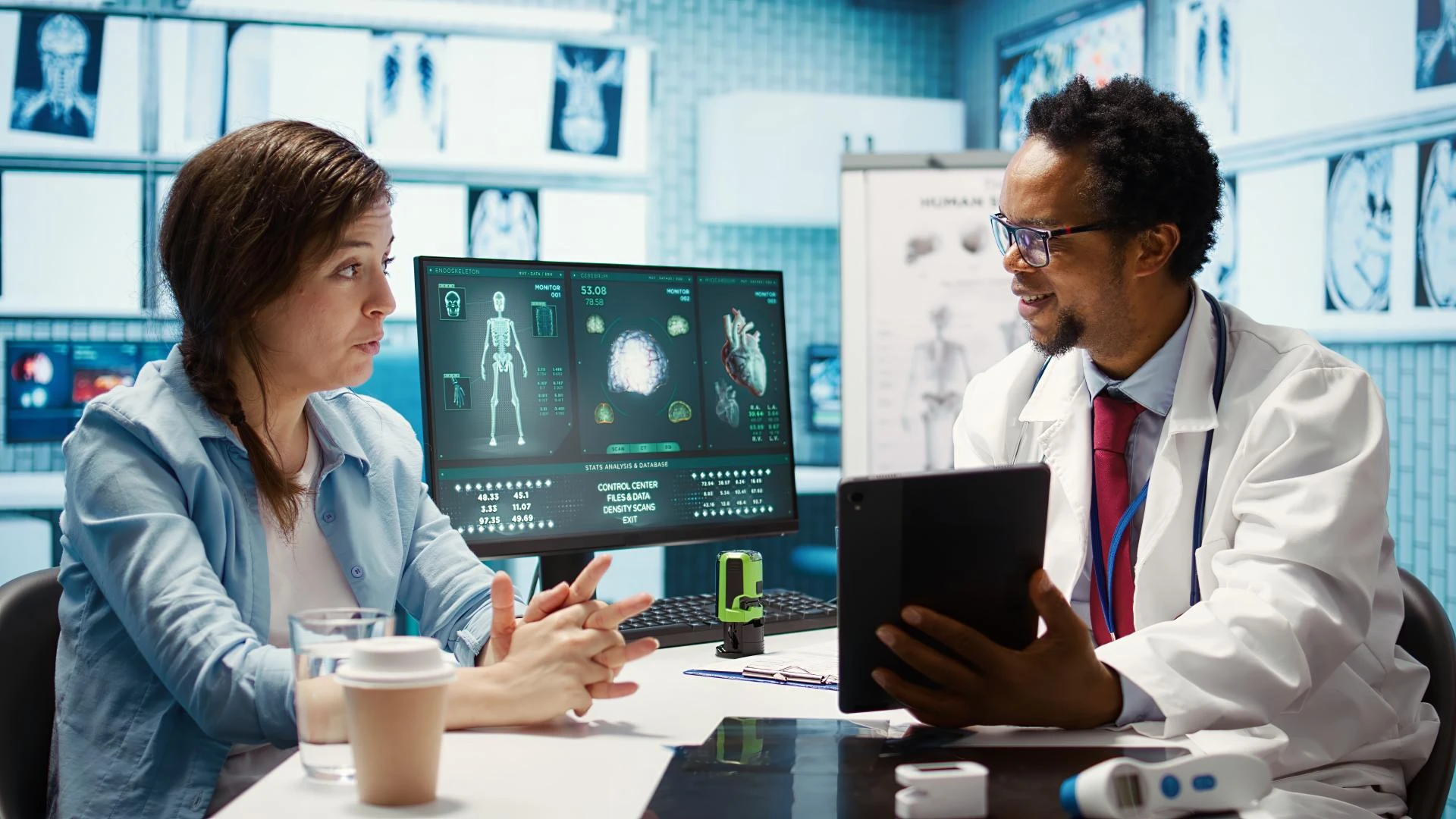

Picture this: A doctor in Mumbai receives real-time alerts about a patient's deteriorating condition through an AI-powered system. In Bangalore, health data analysts predict disease outbreaks before they happen. Welcome to the world where healthcare meets technology and health informatics professionals are the architects making it possible.
If you've been curious about bridging the gap between medicine and IT, an MSc in health informatics course might be your golden ticket. But what exactly does this programme entail and is it the right fit for you? Let's dive deep into everything you need to know about pursuing this cutting-edge qualification.
What is Health Informatics?
Health informatics lies at the interesting junction of healthcare, information technology and data management. It is about using technology to better patient care, enhance the workings of hospitals and healthcare to be more accessible. When you consider electronic health records, telemedicine services, health applications and AI-based diagnosis systems, all these technologies require the services of qualified specialists who know the clinical process and the technical solution.
The MSc Medical Informatics Eligibility Criteria
It is important to discuss the MSc Medical Informatics eligibility requirements before you become quite excited about enrolling. Knowing these requirements will enable you to know whether you are prepared to make the jump into this thrilling sector.
Educational Qualification- In most universities, it is necessary to have a Bachelor degree in relevant discipline. In some institutions, graduates with an engineering background and relevant medical experience are also accepted. The charm of an MSc in Health Informatics is that it opens to both health practitioners who desire to acquire the knowledge of technology and the IT practitioners who desire to learn about healthcare applications.
- Minimum Marks- Generally, you will be required to have a minimum of 50-55% aggregate in your undergraduate degree but this differs in different institutions. Better percentages may be necessary with some premier universities.
- Work Experience- It is not always a requirement, but some institutions would prefer candidates to have 1-2 years of working experience in healthcare or IT industries. This real-life experience can be very useful throughout the programme.
- Entrance Exams- There are those universities which undertake their own entrance exams and there may be those which tend to accept results of standardised exams or may admit on merit.
What Will You Learn?
The curriculum of MSc in health informatics is developed to produce professional all-rounders. Here's what you can expect-
The pre-requisites are healthcare systems, medical terminology and fundamentals of public health. You will know how hospitals work, the process of making clinical decisions and the regulatory environment of healthcare data.
Technical modules explore database management, health information systems, implementation of electronic health records and healthcare analytics. You will also get to study the programming languages of healthcare applications, master data visualisation tools, which can help you convert complex medical data into actionable data.
Clinical decision support systems, telemedicine technologies, healthcare cybersecurity and artificial intelligence applications in medicine are some of the specialised topics. Project management and healthcare leadership courses are also part of many programmes to equip you with managerial positions.
Prospects in Career: Where Will this Degree Take You?
Opportunities are really thrilling. Health informatics experts are required in various hospitals, drug manufacturing corporations, health insurance agencies, government health agencies and health technology startups. The following are the various career opportunities:
Clinical Informatics Manager- Lead the adoption and support of hospital information systems, which will provide the smooth integration of clinical operations and technology platforms.
Health Data Analyst- Derive significant trends out of large healthcare data to enhance patient outcomes, define disease trends and aid in making evidence-based decisions.
Healthcare IT Consultant- Assist health care organisations in selecting, adopting and maximising on the use of the relevant technology solutions that best suit their needs.
EHR Implementation Specialist- Be the head of implementation of electronic health record systems in healthcare institutions, educating the staff and enforcing the regulations.
Health Information Manager- Organise the collection, storage and protection of patient information, as well as compliance with patient privacy requirements such as HIPAA.
Medical Coding and Billing Specialist- Informatics tools are used to facilitate the management of the revenue cycle and proper medical coding.
Telemedicine Coordinator- Design and operate virtual healthcare service systems, which will bring medical assistance closer to remote communities.
Chief medical information Officer (CMIO)- At the top level, coordinate the digital transformation efforts and long-term technology choices of healthcare organisations.
The salary opportunities are also quite high, with an entry-level position having a salary of Rs 4-6 lakhs per year, middle-level jobs having a salary of Rs 8-12 lakhs per year and experienced specialists having a salary of Rs 15-20 lakhs or higher.
Selection of the Right Programme
The curriculum is not the only thing that is important when considering programmes. Determine whether the university has affiliations with hospitals to provide practical training, faculty experience in real-life healthcare practice and whether the programme has internship opportunities. Accreditation is also important, the institution must be accredited by reputable bodies.
And another thing is the flexibility of the programme. Most universities have shifted to part-time or online which has simplified the process of upskilling among working professionals.
Conclusion
Healthcare is transforming rapidly and professionals who can navigate both clinical and technological domains will be invaluable. An MSc in Health Informatics course equips you with precisely these hybrid skills, positioning you at the forefront of healthcare innovation.
Whether you're a healthcare professional looking to embrace technology or an IT specialist passionate about making a difference in people's lives, this programme opens doors to a fulfilling career.
The question isn't whether health informatics has a future—it's whether you're ready to be part of shaping that future. Take the first step today by researching programmes that align with your career aspirations and exploring how this dynamic field can transform your professional trajectory.























Sign in to leave a comment.