

In today’s fast-paced digital world, software must not only work it must work flawlessly. As businesses and developers push for faster release cycles, the demand for efficient and effective software testing has skyrocketed. Thanks to technological advancements, software testing is no longer confined to traditional labs or on-premise teams. Welcome to the world of software testing online where flexibility, automation, and scalability redefine quality assurance.
What is Online Software Testing?
Online software testing refers to the process of testing software applications using cloud-based platforms, tools, or remote teams. Unlike conventional methods, this approach offers the convenience of testing anytime, anywhere, with access to a broad range of devices, operating systems, and environments all virtually.
Why Software Testing Online is Gaining Popularity
Here are a few reasons why more companies are moving their testing efforts online:
1. Scalability and Flexibility
Cloud-based testing tools allow teams to scale resources up or down based on project needs. This is particularly useful for testing across multiple devices, browsers, or operating systems without maintaining a huge infrastructure.
2. Cost Efficiency
Online testing minimizes infrastructure costs, as testers can access tools and environments without investing in physical hardware. Many platforms offer pay-as-you-go models, making it cost-effective for startups and enterprises alike.
3. Remote Collaboration
With distributed teams becoming the norm, online testing enables seamless collaboration across geographies. Can learn software training in a well reputed Software Training Institutes. Testers, developers, and stakeholders can communicate and validate results in real time.
4. Automated Testing
Most online testing platforms support automation frameworks like Selenium, Appium, and Cypress, allowing teams to run automated test suites and get faster feedback.
Popular Online Software Testing Tools
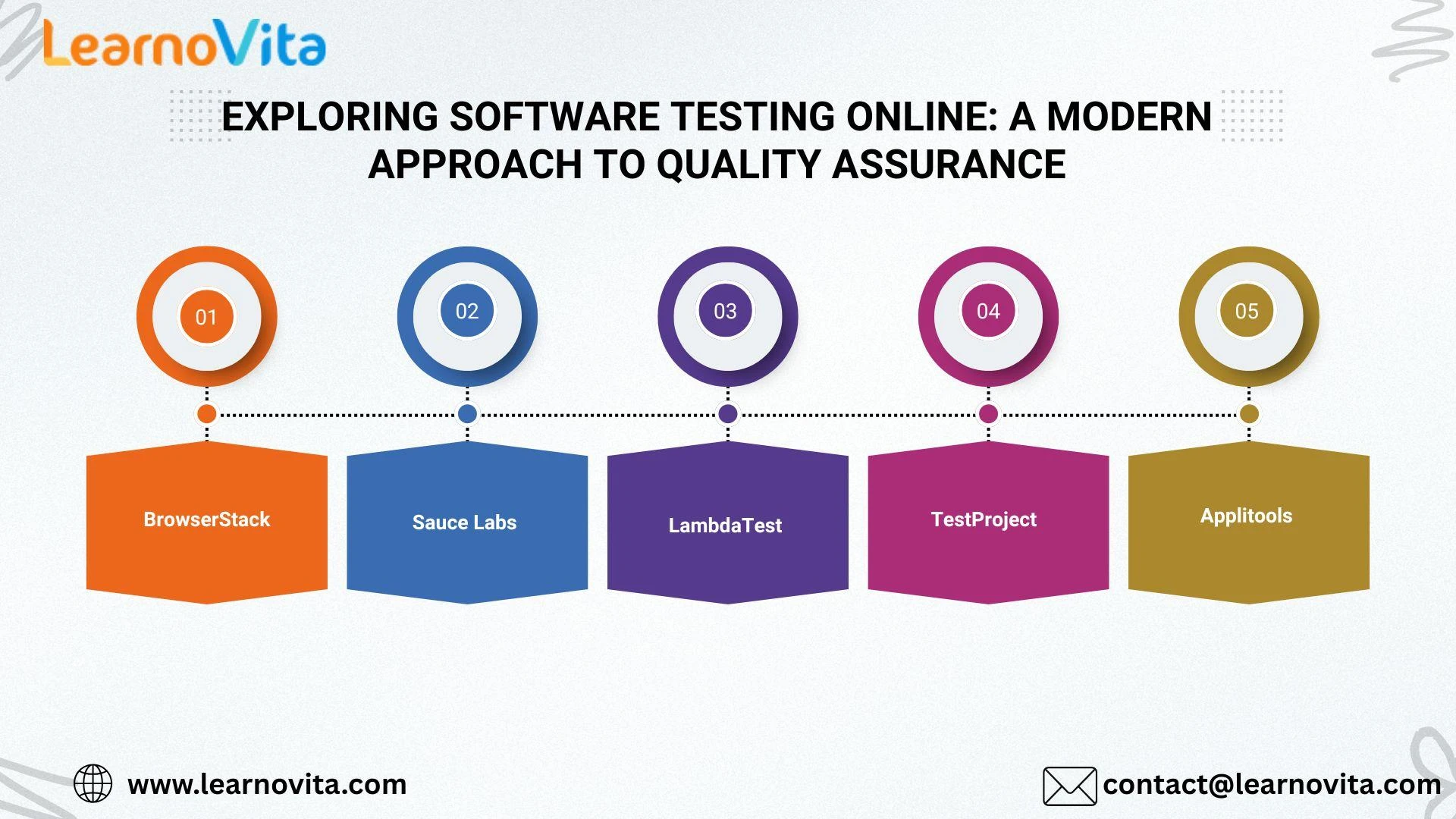
Here are some widely used tools and platforms in the online software testing ecosystem:
- BrowserStack – For cross-browser and mobile testing.
- Sauce Labs – Offers automated and manual testing on cloud-based infrastructures.
- LambdaTest – Provides a real-time testing environment for web apps.
- TestProject – A free test automation platform with cloud capabilities.
- Applitools – Focuses on visual testing using AI.
Types of Online Software Testing
Software testing online can cover a broad spectrum of testing types:
- Functional Testing – Ensuring software functions as expected.
- Regression Testing – Checking that new changes don’t break existing features.
- Performance Testing – Measuring app responsiveness under load.
- Cross-Browser Testing – Testing across various browsers and devices.
- Security Testing – Identifying vulnerabilities in cloud or online systems.
Final Thoughts
Software testing online is not just a trend it's the future of quality assurance. It empowers teams with the tools and flexibility needed to deliver high-quality, bug-free software at speed. Whether you're a business looking to enhance product quality or a budding tester aiming to build a career, embracing online software testing is a smart, strategic move.

























Sign in to leave a comment.