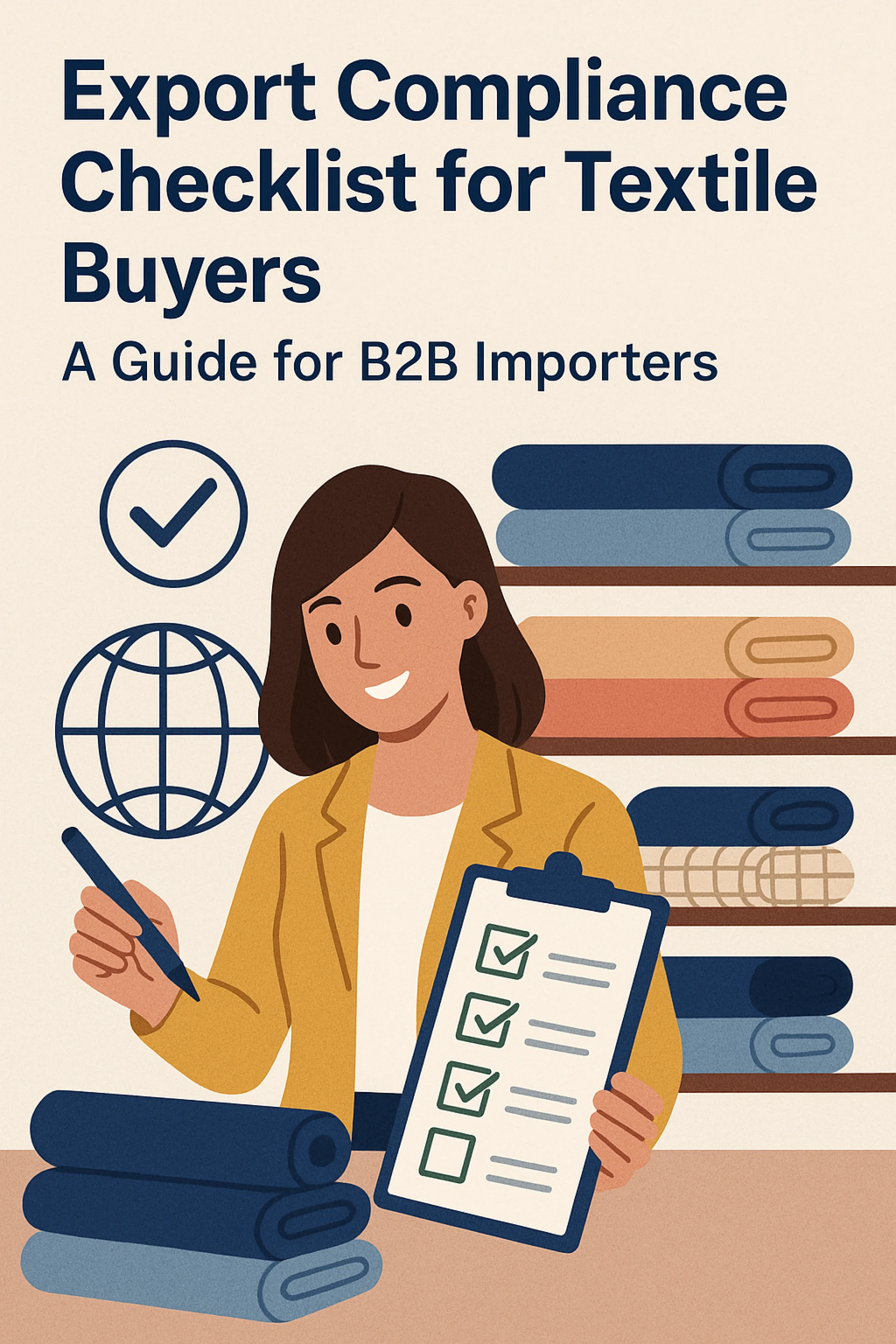
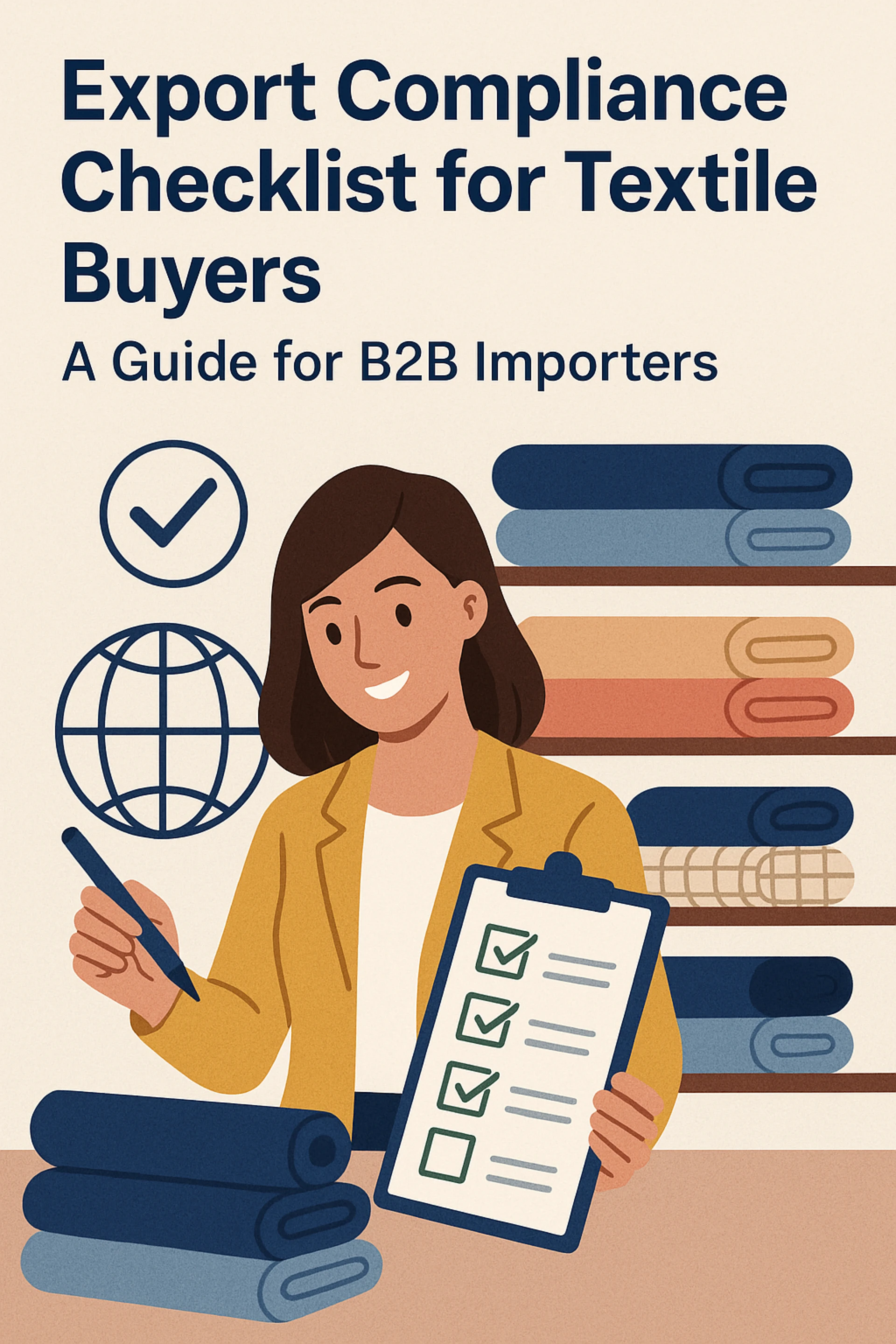
When sourcing from a home textile supplier, export compliance should never be overlooked. Even minor documentation or regulatory mistakes can lead to shipment delays, penalties, or border seizures.
Use this checklist to ensure you’re working with credible, compliant, and globally trusted textile exporters.
1. Verify Supplier Certifications
Before finalizing any agreement, confirm your supplier holds valid certifications such as:
- ISO 9001 — Quality Management
- OEKO-TEX® / GOTS — Sustainable, chemical-safe textile production
- Country-specific export licenses
- Request copies of certificates during initial evaluation.
2. Review Core Export Documentation
Accurate documentation prevents customs issues. Ensure your supplier provides:
- Commercial Invoice
- Packing List
- Certificate of Origin (COO)
- Bill of Lading / Airway Bill
- Export License (if applicable)
- Ask for sample documentation before placing large orders.
3. Understand Your Country’s Import Requirements
Each importing country follows different compliance rules:
- USA: Textile Fiber Products Identification Act (mandatory labeling)
- EU: REACH compliance for chemical and safety standards
- UK / Middle East / Australia: Varying product-labeling, testing, and packaging norms
- Partnering with an experienced B2B textile exporter helps avoid regulatory surprises.
4. Confirm HS Codes & Tariffs
Correct classification ensures accurate duty calculation.
- Identify the correct 6-digit HS Code (e.g., for bedding, towels, curtains).
- Estimate customs duty, VAT, and import taxes in advance.
- Ensure both buyer and supplier align on product classification.
5. Conduct Product Testing
For bulk imports, always validate product performance through third-party labs:
- Color fastness
- Shrinkage control
- Flame resistance (important for hotels & hospitality textiles)
- Testing protects you from post-shipment quality disputes.
6. Screen for Restricted Parties
Confirm your supplier is not listed on:
- Denied Persons List
- Entity List
- Global sanctions lists (U.S., EU, UK, UN)
- This step helps you avoid legal risks and shipment blocking.
Final Thoughts
Working with a compliant and well-documented home textile manufacturer safeguards your business and ensures smooth, interruption-free cross-border logistics.
Use this checklist to minimize risks, strengthen supply chain visibility, and build long-term sourcing partnerships.
Looking for a Reliable & Fully Compliant Home Textile Supplier?
Get a Quote Today from Concept Clothing Textiles — your trusted sourcing partner for sustainable, certified, export-ready home textiles.




























Sign in to leave a comment.