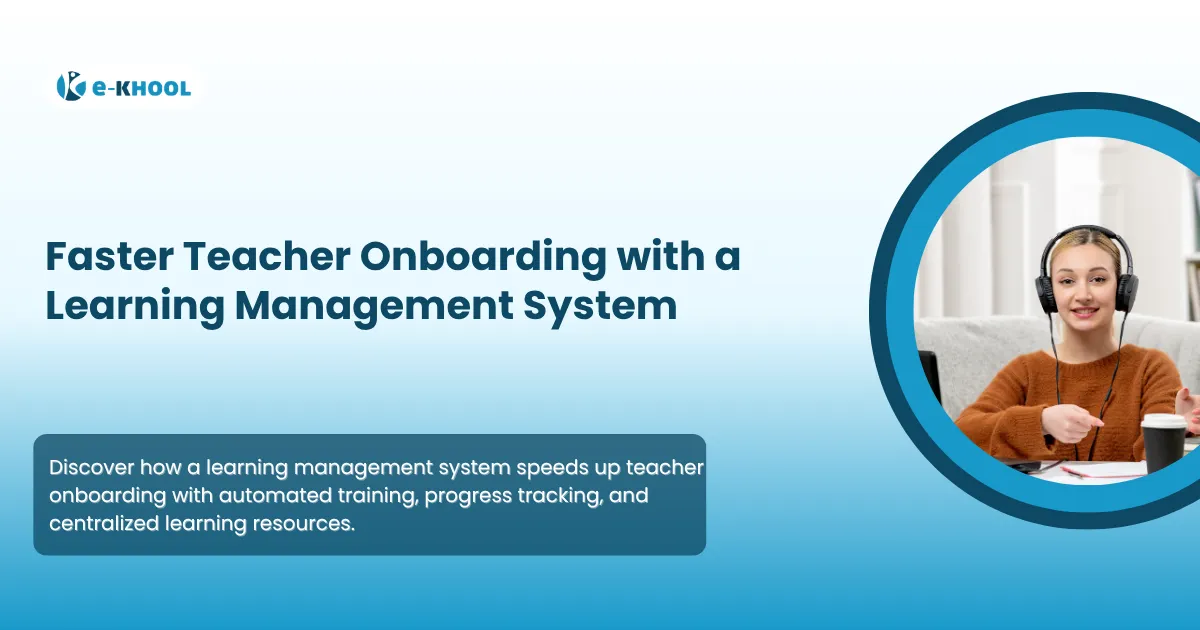

Educational institutions, schools, and training organizations face a growing demand to streamline operations, accelerate staff readiness, and deliver high-impact skill training. When a new educator or staff member joins an institution, traditional orientation processes can be slow, fragmented, and costly. Implementing a modern Learning Management System transforms teacher and staff onboarding from a tedious administrative burden into a fast, scalable, and measurable experience.
Using an enterprise-grade platform like e-KHOOL, institutions can deliver structured onboarding modules, conduct continuous professional development, and ensure compliance across campuses.
The Hidden Costs of Slow Staff Onboarding
Slow onboarding impacts more than just administrative efficiency; it directly affects classroom quality, student engagement, and institution-wide performance. Traditional orientation relies heavily on physical documentation, repetitive live lectures, and manual progress tracking.
Key challenges institutions face without an automated workflow include:
- Inconsistent Training Standards: Variations in how department heads present guidelines create gaps in institutional compliance and policy awareness.
- Lost Productive Hours: Senior educators spend valuable time conducting routine orientations instead of teaching or developing curriculum.
- High Turnaround Friction: Slow onboarding delays teachers from actively managing their classrooms and digital toolsets effectively.
- Lack of Tracking and Accountability: Administrators struggle to verify whether non-teaching staff and new educators have completed essential compliance, child safety, or technology training.
By moving training online, institutions reduce onboarding time by up to 60% while improving information retention through structured digital pathways.
Driving Onboarding Efficiency with an LMS Platform
A centralized LMS platform serves as the digital foundation for all training, certification, and professional development programs within an educational institution. Instead of storing onboarding documents across physical folders, emails, and isolated cloud drives, administrators can house every policy handbook, instructional video, and skill assessment in one secure environment.
Core Onboarding Capabilities
- Automated User Enrollment: Automatically assign custom onboarding paths to newly hired teachers based on their department, grade level, or operational role.
- Self-Paced Professional Development: Enable educators to complete training modules on classroom management, digital tools, and institutional policies on their own schedules.
- Interactive Assessments: Test comprehension instantly through auto-graded quizzes, ensuring staff members understand critical protocols before stepping into the classroom.
- Centralized Compliance Tracking: Access real-time dashboards that show who has completed required certifications, safety modules, and technical training.
Key Features for Institutional Staff Readiness
To support rapid onboarding and continuous skill training, an LMS education system must offer features tailored specifically to the operational needs of schools, colleges, and training institutes.
| Feature Category | Capability | Institutional Benefit |
| Content Management | Multi-format uploads (Video, PDF, SCORM) | Reuses existing training materials seamlessly. |
| Interactive Learning | Integrated quizzes, surveys, and assignments | Verifies skill acquisition and policy retention. |
| Automation | Automated notifications and certificate generation | Eliminates administrative follow-ups and manual paperwork. |
| Analytics & Reporting | Real-time completion metrics and user progress tracking | Provides instant insight into workforce readiness. |
Unifying Training Across Modern Institutions
As digital learning environments become standard, institutions must adopt a
versatile منصة التعلم الالكتروني that serves both internal staff development and student instruction simultaneously. A unified platform eliminates software fragmentation and lowers total operational costs.
Benefits of a Unified Digital System
- Single System Administration: Manage student courses, staff professional development, and administrative onboarding within one software ecosystem.
- Familiarity and Tool Adoption: Teachers who complete their onboarding inside the digital platform become proficient in using the same tools to deliver instruction to their students.
- Scalable Infrastructure: Easily scale onboarding programs from a single campus to multi-regional school networks without increasing administrative headcount.
- Localized & Multi-lingual Access: Modern educational hubs support global and regional institutions through multi-language capabilities, including tailored interfaces like a localized منصةlms for localized regions.
Why Leading Institutions Choose e-KHOOL
When selecting a Learning Management System, educational schools and corporate training organizations require scalability, custom branding, and robust analytics. e-KHOOL is built specifically to address these challenges by providing an end-to-end infrastructure for digital skill development.
Key Advantages of e-KHOOL for Staff Onboarding
- Custom Content Delivery: Upload your custom curriculum, training videos, administrative handbooks, and skill-building assessments with zero technical overhead.
- AI-Powered Personalization: Tailor skill development paths based on individual educator needs, experience levels, and subject specializations.
- Automated Certification Workflows: Issue official completion certificates automatically upon course passing, keeping your institution audit-ready at all times.
- Enterprise Security and Access Control: Maintain granular permission levels to secure internal policies, financial guidelines, and staff records.
Step-by-Step Implementation Strategy
Migrating your onboarding and skill training programs to a flexible LMS platform can be executed in five structured steps:
- Audit Existing Orientation Materials: Gather all current paper handbooks, presentation decks, and video tutorials used across departments.
- Structure Onboarding Pathways: Organize content into sequential modules (e.g., Week 1: Institutional Policies, Week 2: Classroom Technologies, Week 3: Pedagogy Standards).
- Upload and Enrich via e-KHOOL: Import existing documents into e-KHOOL, adding knowledge-check quizzes and interactive media to boost retention.
- Automate User Roles and Enrollment: Connect your HR database or user directory to enroll new hires into their respective onboarding tracks automatically.
- Monitor, Measure, and Refine: Use real-time analytics dashboards to spot bottlenecks where new hires struggle, adjusting module length or content accordingly.
Accelerate Institutional Growth Today
Transitioning to an advanced LMS education system empowers educational institutions, primary and secondary schools, higher education systems, and training institutes to onboard educators faster, standardise operational quality, and ensure ongoing skill development across all departments.
By replacing slow, manual orientation with automated, self-paced learning pathways inside e-KHOOL LMS , your institution can ensure every teacher steps into the classroom fully equipped, confident, and aligned with your organizational vision.


























Sign in to leave a comment.