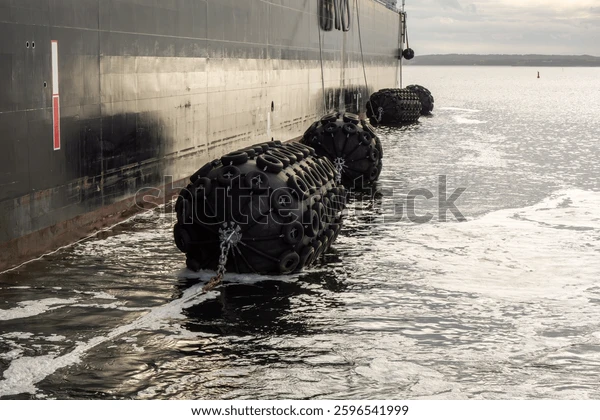

Offshore operations and deep-sea vessel movements demand some of the toughest marine equipment in the world. Whether it is an oil tanker approaching an offshore terminal, a cargo vessel berthing at a deep-water port, or two ships conducting side-by-side operations, the forces generated during high-energy contact are immense. To absorb these loads safely, marine operators rely on advanced fendering systems specifically engineered for heavy-duty applications.
Modern fender offshore solutions and large ship fenders play a vital role in protecting hulls, dock structures, offshore platforms, and crew. Their design, construction, and energy-absorbing capabilities have evolved significantly to meet the increasing size and operational demands of today’s global fleet.
Why Offshore Fenders Matter More Than Ever
As offshore terminals expand and vessels grow in tonnage, the impact forces during berthing have multiplied. Conventional dockside fenders are not designed to handle such loads, especially under unpredictable offshore conditions such as:
- Strong currents
- Swell and high waves
- Vessel surge and drift
- Berthing at varying angles
- Ship-to-ship transfer movements
High-performance fender offshore systems address these challenges with superior energy absorption, shock resistance, and robust construction. They ensure safe operations even in remote, exposed waters where docking conditions are less controlled.
Understanding the Role of Pneumatic Fenders for Large Vessels
When dealing with supertankers, LNG carriers, bulk cargo vessels, and offshore supply ships, the need for reliable large ship fenders becomes critical. One of the most widely adopted solutions is the pneumatic (air-filled) fender.
These fenders work by compressing air within a reinforced rubber body, allowing them to absorb high amounts of kinetic energy while exerting low reaction force on the vessel hull. This balance makes pneumatic fenders ideal for:
- Ship-to-ship (STS) transfers
- Deep-water berths
- Offshore mooring points
- Heavy-tonnage vessels requiring soft contact
Pneumatic fenders protect both vessels and structures from damage during high-energy impacts, making them a preferred choice in global maritime operations.
What Makes Offshore Fenders Unique?
Unlike standard dock fenders, fender offshore solutions are built for dynamic, unpredictable environments. Their design incorporates:
1. High Energy Absorption
Offshore fenders must dissipate enormous berthing forces while preventing structural damage. Advanced pneumatic and foam-filled designs deliver exceptional energy absorption capacity.
2. Wide Operating Range
Offshore conditions can vary every minute. These fenders function effectively across varying drafts, angles, and vessel sizes.
3. Corrosion and Weather Resistance
Constant exposure to saltwater, UV radiation, and biofouling requires highly durable materials and coatings.
4. Flexibility for STS Operations
Offshore fenders must adapt to shifting vessel positions, swell oscillations, and continuous movement — which pneumatic designs handle exceptionally well.
This combination of strength and flexibility makes offshore fenders indispensable for modern marine logistics.
How Large Ship Fenders Support Global Fleet Demands
The world’s largest vessels, including VLCCs, LNG carriers, car carriers, and bulk freighters, require fender systems capable of handling massive displacements. Large ship fenders ensure:
Stable Berthing
Their energy-absorbing characteristics keep vessels from hitting docks or offshore structures with damaging force.
Protection of Sensitive Hull Coatings
Low reaction forces prevent scraping, local pressure points, and coating failure.
Operational Efficiency
Fewer delays and less damage mean smoother, faster berthing cycles.
Safety for Crew and Infrastructure
High-performance fenders help prevent accidents caused by vessel surges or misalignment.
For ports upgrading to handle next-gen mega vessels, installing the right fenders is a crucial step.
Selecting the Right Fender System for Offshore or Large-Vessel Use
Choosing an appropriate fender requires evaluating several key factors:
- Vessel size and displacement
- Draft variations during loading/unloading
- Berthing velocity and angle
- Operational environment (harbor vs offshore)
- STS vs fixed berth requirements
- Maintenance expectations
- Budget and lifecycle cost
A well-designed fender system ensures lower stress on the vessel structure and longer service life for port infrastructure.
Common Applications of Offshore and Large Vessel Fenders
These advanced fenders are used across:
- Offshore oil and gas terminals
- LNG ship berthing points
- Deep-water ports handling tankers and bulk carriers
- Naval bases and large defense vessels
- Floating storage units (FSUs)
- Ship-to-ship transfer zones
- Heavy cargo loading and discharge platforms
Across all these environments, durability and performance remain top priorities.
Final Reflection
As vessel sizes grow and offshore operations become more demanding, investing in the right fendering system is essential for ensuring safety and operational efficiency. High-performance fender offshore systems and large ship fenders offer unmatched energy absorption and reliability for ports, terminals, and deep-water marine operations. If you are exploring durable, high-capacity fender solutions engineered for maritime heavy loads, you may consider reviewing the advanced marine fenders available from Lion Rubber, built to perform in the most demanding offshore conditions.










Sign in to leave a comment.