

In today's complex economic environment, achieving financial wellbeing is more important than ever. Financial wellbeing refers to having control over your day-to-day finances, being able to absorb a financial shock, staying on track to meet your financial goals, and having the freedom to make choices that allow you to enjoy life. Whether you're managing debt, building savings, or planning for retirement, prioritizing financial wellbeing helps reduce financial stress and enhances overall quality of life.
Improving your financial wellbeing isn't just about earning more; it's about making smart money decisions, improving financial literacy, and using tools that support personal finance health. From budgeting apps to financial wellness programs at work, there are numerous resources designed to support your journey. This guide will walk you through everything from the basics of financial wellbeing to long-term wealth-building strategies, all while embedding proven techniques to reduce stress and build financial confidence.
What Is Financial Wellbeing and Why It Matters
Financial wellbeing is the foundation of a healthy and secure life. It goes beyond income and touches every area of financial life—from how you spend and save to how financially prepared you feel for the future.
Why Financial Wellbeing Is Important:
- Reduces anxiety and financial stress
- Increases ability to plan long-term
- Improves relationships and quality of life
- Boosts workplace productivity and focus
When you focus on your financial wellbeing, you're more equipped to make informed decisions, avoid common money pitfalls, and plan confidently for the future.
How to Improve Your Financial Wellbeing Step-by-Step
Achieving true financial wellbeing is a process that involves consistent habits, awareness, and practical tools.
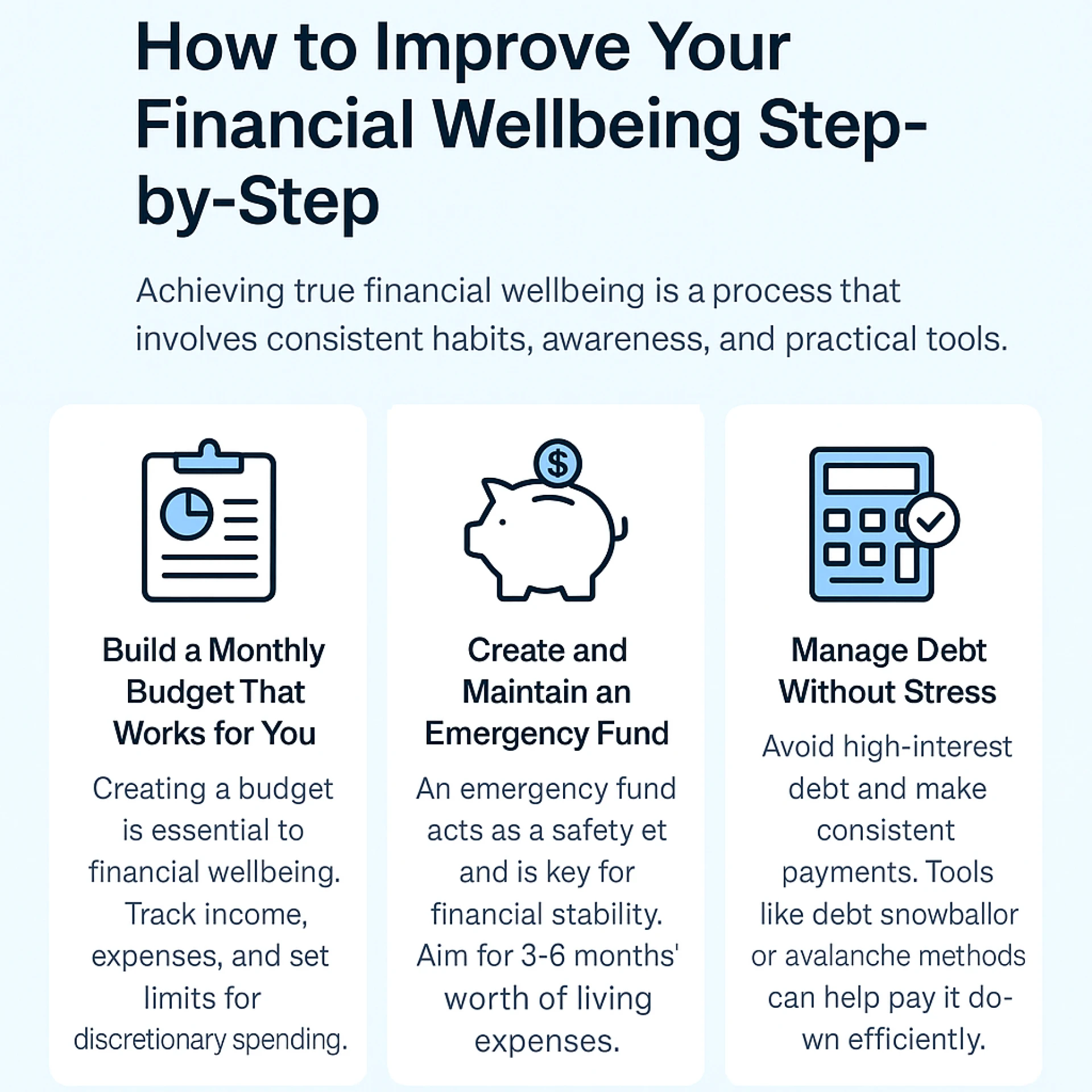
Build a Monthly Budget That Works for You
Creating a budget is essential to financial wellbeing. Track income, expenses, and set limits for discretionary spending.
Create and Maintain an Emergency Fund
An emergency fund acts as a safety net and is key for financial stability. Aim for 3–6 months' worth of living expenses.
Manage Debt Without Stress
Avoid high-interest debt and make consistent payments. Tools like debt snowball or avalanche methods can help pay it down efficiently.
Financial Wellbeing at Work: Empowering Employees Through Wellness
Employers are increasingly focusing on financial wellbeing at work as part of holistic employee wellness programs.
Benefits of Employer Financial Wellness Programs:
- Reduced absenteeism and turnover
- Increased employee satisfaction
- Better focus and productivity
Tools and Resources Companies Can Offer:
Financial Education Platforms
Offer workshops, webinars, and online courses to improve financial literacy.
One-on-One Financial Coaching
Personalized support can significantly improve financial confidence and long-term planning.
Tools and Apps to Track Your Financial Wellbeing
Technology can play a major role in improving your financial wellbeing by offering insights, automation, and convenience.
Budgeting Apps for Personal Finance Health:
- Mint
- YNAB (You Need a Budget)
- PocketGuard
Automated Savings and Investment Tools:
- Acorns
- Wealthfront
- Qapital
These tools help build financial confidence and make saving feel effortless.
Long-Term Strategies to Strengthen Financial Wellbeing
Plan for Retirement Early
Starting early allows compound interest to work in your favor. Use retirement calculators and employer-sponsored plans.
Diversify Your Income Streams
Freelancing, investments, or side businesses contribute to income stability and reduce dependence on one paycheck.
Set and Monitor Financial Goals
Write down specific, measurable, and time-bound financial goals. Check progress quarterly.
FAQs About Financial Wellbeing
Q1: What is financial wellbeing in simple terms?
A: It means feeling secure and in control of your finances—both daily and long-term.
Q2: How do I assess my financial wellbeing?
A: Review your budgeting habits, savings, debt levels, and how confident you feel about your financial future.
Q3: Why is financial wellbeing important in the workplace?
A: It impacts productivity, engagement, and employee retention.
Q4: Can technology help improve financial wellbeing?
A: Yes! Budgeting and savings apps help automate financial tasks and build better habits.
Q5: What are signs of poor financial wellbeing?
A: High stress over bills, lack of savings, missed payments, and uncertainty about the future.
Key Takeaways on Financial Wellbeing
- Financial wellbeing means control, security, and confidence with your money
- Tools like budgeting apps, financial coaching, and the CheckBoost tool by MuseTax can fast-track your progress
- Building an emergency fund and reducing debt are top priorities
- Employers play a key role in supporting financial wellness at work
- Long-term planning ensures income stability and retirement readiness
Start improving your financial wellbeing today—because your peace of mind is worth it.





























Sign in to leave a comment.