Flags are more than decorative items. They communicate identity, direction, and information in public and private spaces. In cities with active commercial, cultural, and civic life, the demand for reliable flag production has increased steadily. This is especially true in the UAE, where events, businesses, and institutions often rely on flags for visibility and organization.
This article explains flag printing Dubai in a clear, educational way. It is written for readers who want practical knowledge rather than marketing messages. You will learn how flag printing works, which materials are commonly used, what printing methods are available, and how flags are applied in real-world situations. The article also places flag printing within the broader context of printing Dubai, helping readers understand how this service fits into the local printing ecosystem.
What Is Flag Printing?
Flag printing is the process of transferring designs, colors, symbols, or text onto fabric that can be displayed on poles, walls, buildings, or indoor stands. Unlike standard paper printing, flag printing must consider wind, sunlight, heat, and repeated movement.
In Dubai, flag printing is used by:
- Government and municipal organizations
- Event organizers and exhibition planners
- Educational institutions
- Retail and commercial properties
- Sports clubs and community groups
The climate and environment of the region influence how flags are designed and produced. High temperatures, strong sunlight, and outdoor exposure make durability an essential requirement.
How Flag Printing Fits into Printing Dubai
The term printing Dubai covers a wide range of services, including digital printing, offset printing, signage, banners, packaging, and textile printing. Flag printing is a specialized branch within this broader industry.
What makes flag printing different from other printing services includes:
- Use of fabric instead of paper or plastic
- Requirement for color visibility from both sides
- Need for flexibility and tear resistance
- Long-term exposure to outdoor conditions
Because of these factors, flag printing often involves specific equipment, inks, and finishing methods that are not used in standard print jobs.
Common Types of Flags Used in Dubai
National and Institutional Flags
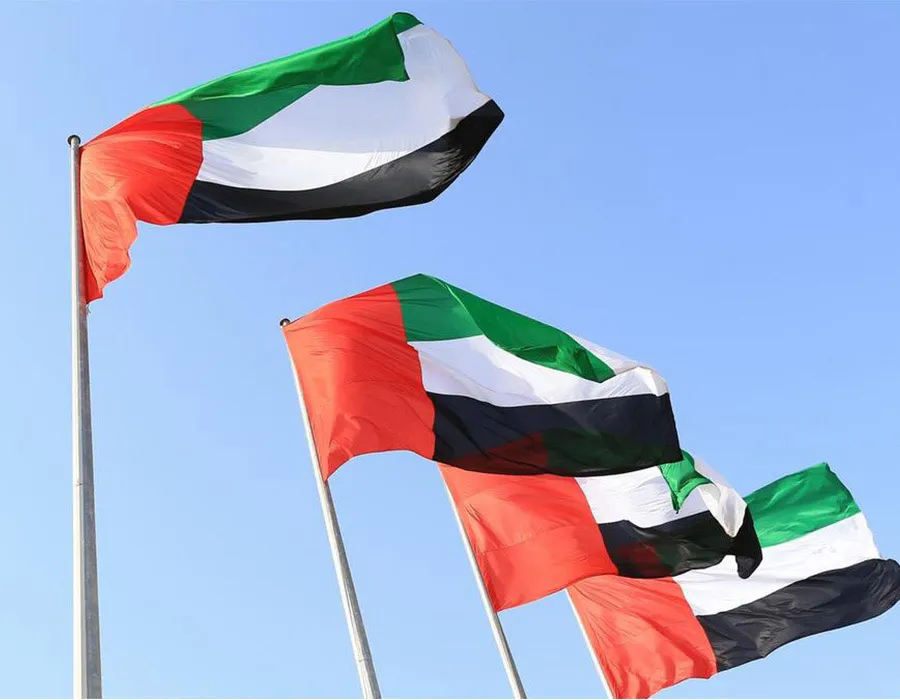
National flags and flags representing institutions are commonly used outside buildings, during official ceremonies, and on national holidays. These flags must follow strict size, color, and proportion guidelines.
Accuracy in color matching and layout is especially important for these flags.
Event and Exhibition Flags
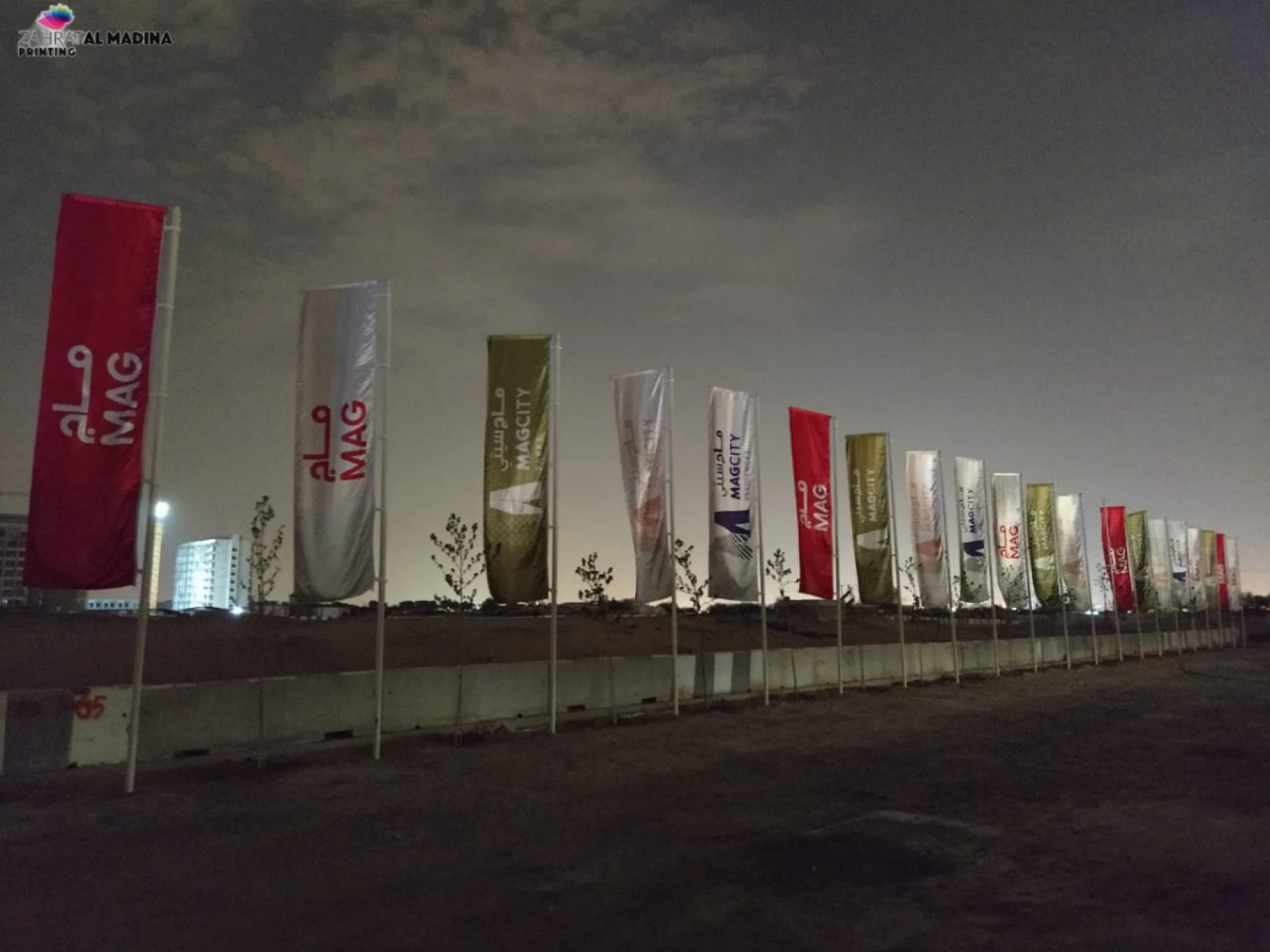
Dubai hosts exhibitions, trade shows, and conferences throughout the year. Event flags help guide visitors, mark entrances, and identify zones within large venues.
These flags are often temporary but still need to be visually clear and structurally stable.
Corporate and Commercial Flags
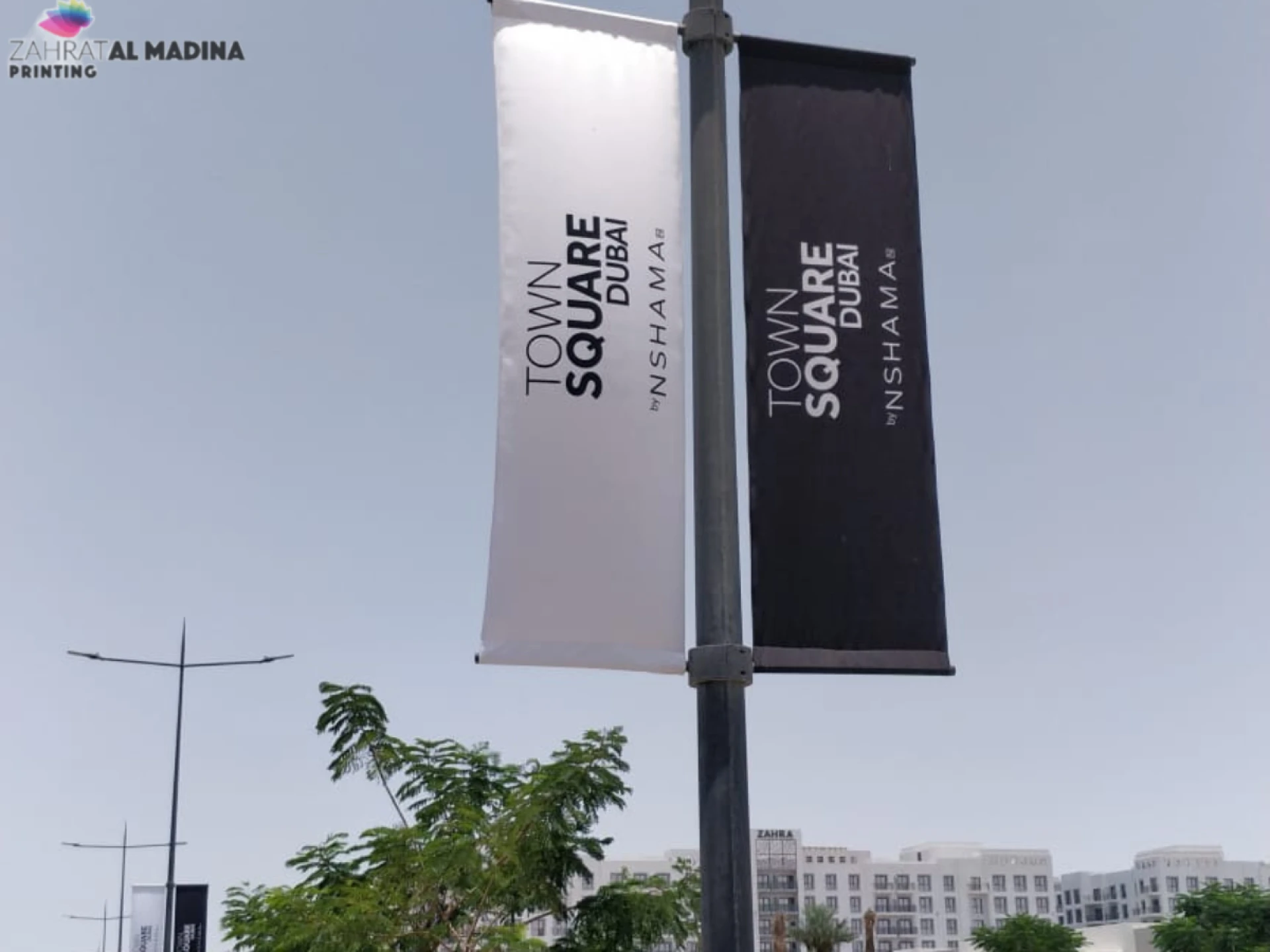
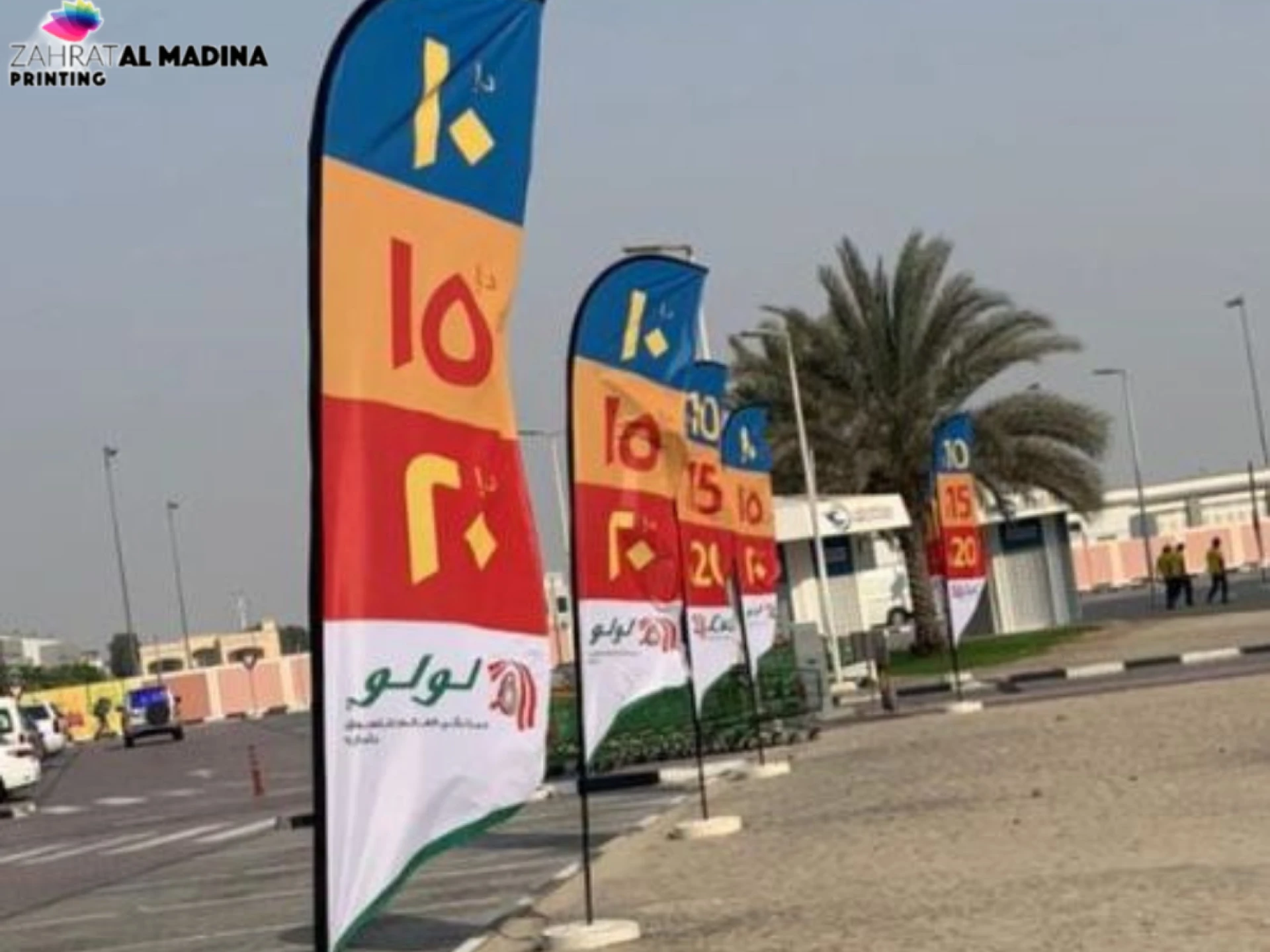
Businesses use flags to display logos, slogans, or brand colors. These are commonly placed outside offices, retail locations, or along roadsides during promotions or openings.
The focus here is readability, color contrast, and consistency.
Decorative and Seasonal Flags
Decorative flags are used during festivals, cultural celebrations, or seasonal events. They may feature patterns, symbols, or messages that are not tied to a specific organization.
Materials Commonly Used in Flag Printing
Choosing the right material is one of the most important steps in flag printing Dubai.
Polyester Fabric
Polyester is the most widely used material for flags. It is lightweight, durable, and suitable for both indoor and outdoor use.
Advantages include:
- Resistance to moisture
- Good color absorption
- Ability to withstand wind movement
Satin and Decorative Fabrics
Satin or similar smooth fabrics are often used for indoor flags or ceremonial purposes. These materials provide a polished appearance but are less suitable for outdoor use.
Mesh Fabric
Mesh fabric allows air to pass through small holes, reducing strain in windy conditions. This material is useful for large outdoor flags displayed in open areas.
Flag Printing Methods Explained
Digital Fabric Printing
Digital printing is commonly used for short runs or custom designs. The design is printed directly onto the fabric using specialized textile printers.
This method allows:
- Detailed graphics
- Multiple colors
- Fast turnaround times
Dye-Sublimation Printing
Dye-sublimation is widely used in professional flag printing. Heat transfers dye into the fabric fibers rather than sitting on the surface.
Key benefits include:
- Long-lasting colors
- Resistance to fading
- Ability to print on both sides with show-through effect
Screen Printing
Screen printing is sometimes used for large quantities of flags with simple designs. Each color is applied using a separate screen.
This method is durable but less flexible for complex or multi-color designs.
Single-Sided vs Double-Sided Flags
Single-Sided Flags
Single-sided flags have the design printed on one side, with the image visible in reverse on the back. These are lighter and more cost-effective.
They are suitable when:
- The flag is viewed mainly from one direction
- Budget and weight are considerations
Double-Sided Flags
Double-sided flags have two separate prints sewn together with a lining in between. The design reads correctly on both sides.
These flags are heavier and more durable, making them suitable for:
- Indoor displays
- Locations with foot traffic on both sides
Finishing and Installation Options
Flag printing does not end with the printed fabric. Finishing determines how the flag will be displayed.
Common finishing options include:
- Reinforced stitching along edges
- Eyelets or grommets for pole attachment
- Sleeves for sliding onto poles
- Ropes or clips for mounting
Proper finishing extends the life of the flag and ensures safe installation.
Environmental and Climate Considerations
Dubai’s climate affects how flags perform over time. Heat, UV exposure, and sand can impact fabric and color.
To address these challenges:
- UV-resistant inks are often used
- Strong stitching prevents fraying
- Regular inspection helps maintain appearance
Understanding these factors helps users choose the right type of flag for their location.
Real-World Use Cases
Public Spaces
Flags are used in parks, streets, and government areas to provide visual identity and direction. Durability and safety are priorities in these settings.
Educational Institutions
Schools and universities use flags to represent values, achievements, or events. Indoor and outdoor options are often combined.
Hospitality and Tourism
Hotels and tourist areas use flags to welcome visitors or highlight international representation. Visual consistency and quality are important here.
Sports and Community Events
Flags help create atmosphere and guide participants. Lightweight materials are often chosen for ease of handling.
Understanding Service Providers in Context
Within the broader landscape of printing Dubai, there are many providers offering textile and flag-related services. Names such as Zahrat Al Madina Printing Services may appear when researching local printing capabilities.
When evaluating any printing service, it is useful to consider:
- Experience with fabric printing
- Knowledge of local conditions
- Ability to explain materials and methods clearly
This approach helps users make informed decisions without focusing on brand promotion.
Challenges in Flag Printing
While flag printing is well-established, it does present challenges:
- Color consistency across large prints
- Balancing weight and durability
- Managing wear in outdoor environments
Understanding these challenges allows users to set realistic expectations and plan maintenance accordingly.
Practical Tips for Better Results
- Choose material based on location (indoor vs outdoor)
- Consider wind exposure when selecting size and fabric
- Use simple, high-contrast designs for visibility
- Inspect stitching and finishing before installation
These steps improve both appearance and lifespan.
Conclusion
Flag printing plays a practical and symbolic role in modern environments. In Dubai, where events, institutions, and businesses operate at a fast pace, understanding the basics of flag printing Dubai helps users make informed choices.
By learning about materials, printing methods, finishing options, and environmental factors, readers can better understand how flag printing fits into the wider printing Dubai industry. Whether for public spaces, events, or institutions, well-produced flags contribute to clarity, organization, and visual communication.




























Sign in to leave a comment.