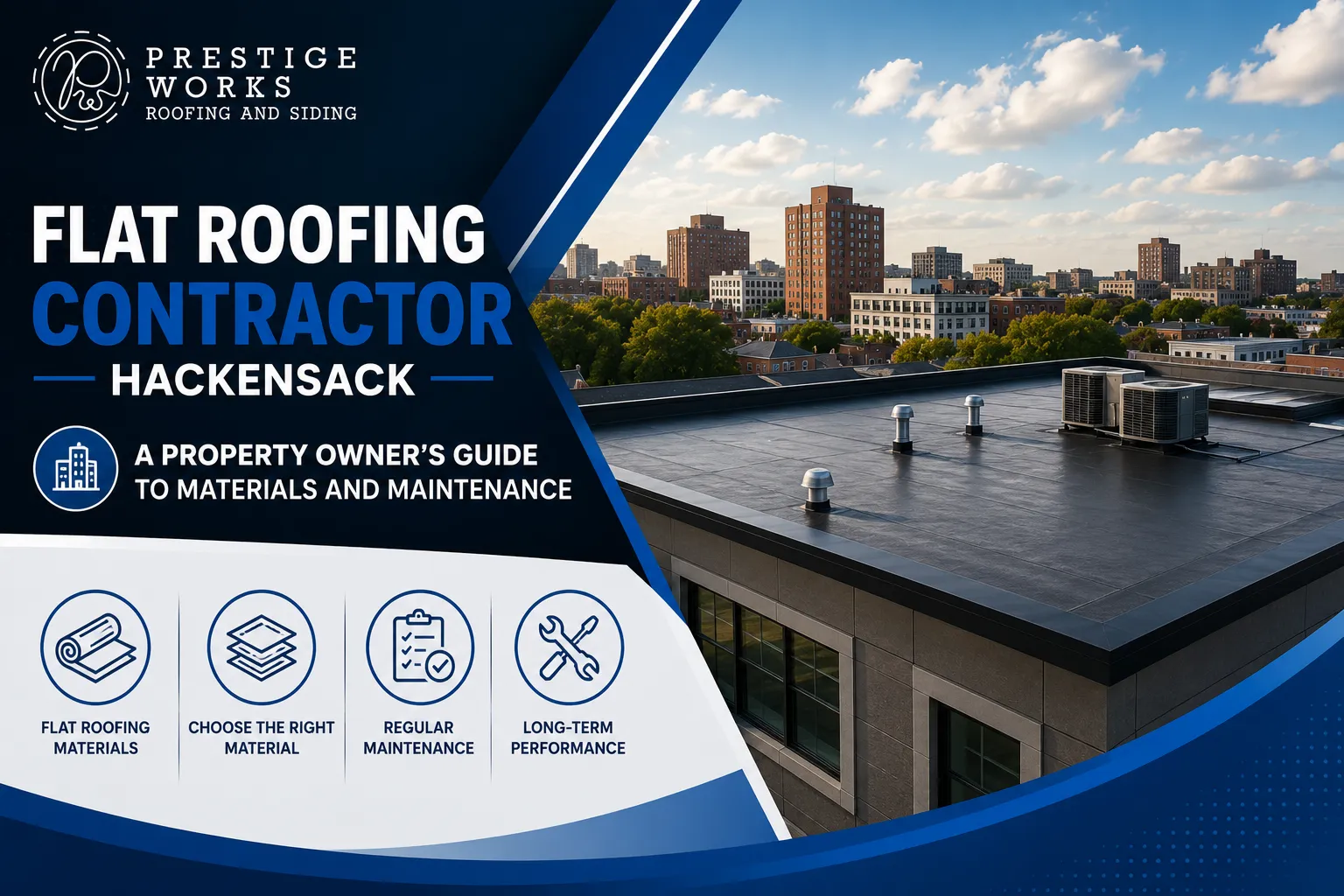

Flat roofing is a practical, widely used design found on many residential additions, garages, and commercial buildings, offering efficient use of space and a distinct architectural profile compared to traditional sloped roofs. But flat roofs come with their own set of requirements. Because they lack the natural water runoff of a steep-slope roof, they depend heavily on thoughtful design, proper drainage, appropriate materials, and skilled installation to perform well over time. In a place like Hackensack, New Jersey, where properties face rain, snow, temperature fluctuations, and wind throughout the year, choosing the right materials and the right flat roofing contractor matters just as much as the design itself.
What Is a Flat Roofing System?
Despite the name, a flat roof isn't actually perfectly level. Properly designed flat roofing systems typically incorporate a slight slope or built-in drainage strategy that helps direct water toward drains, scuppers, or gutters rather than allowing it to sit on the surface. This subtle design detail is one of the most important, and most often overlooked, aspects of a well-functioning flat roof.
Because flat roofs don't shed water the way sloped roofs do, several components become especially critical to their performance. Drainage systems need to function properly and stay clear of debris. Flashing around edges, walls, and roof penetrations needs to remain intact and properly sealed. Seams, where sections of roofing membrane meet, need to be securely bonded. And the overall surface condition needs to be monitored, since even small punctures or areas of wear can allow water to find its way beneath the roofing system.
Common Types of Flat Roofing Materials
Several roofing systems are commonly used on flat and low-slope roofs, each with its own general characteristics.
EPDM roofing is a rubber-based membrane commonly used for low-slope and flat roofing applications. It's a well-established option in the flat roofing industry, known for its flexibility as a single continuous membrane. As with any roofing material, its performance depends on proper installation and the specific conditions of the property it's installed on.
TPO roofing is a single-ply membrane system commonly associated with reflective, light-colored roofing surfaces. It's installed in sheets that are heat-welded at the seams, and its general characteristics make it a common consideration for both residential and commercial flat roofing applications.
Modified bitumen roofing is an asphalt-based membrane system, differing from single-ply membranes like EPDM and TPO in its composition and installation approach. It's often applied in multiple layers and may be considered for certain roofing applications where its specific characteristics align with a property's needs.
No single flat roofing material is automatically the right choice for every property. The appropriate system depends on factors including the building's design, the current roof's condition, climate exposure, drainage requirements, budget, insulation needs, and the property owner's long-term goals, factors best evaluated with the help of an experienced contractor.
Common Flat Roof Problems
Flat roofs are susceptible to a distinct set of issues, many of which relate directly to water management.
Common problems include ponding water, roof leaks, damaged membranes, and open or damaged seams where sections of roofing material meet. Cracked flashing, drainage problems, and damaged roof penetrations, such as areas around vents or HVAC equipment, are also frequent concerns. Depending on the roofing material, blisters or bubbles can develop beneath the surface, and punctures from debris or foot traffic can create entry points for water.
Deteriorated roofing materials, interior water stains, and broader moisture-related damage often develop gradually, sometimes without an obvious single cause. Recurring water accumulation in particular is worth paying attention to, since persistent ponding can be a sign that drainage or roofing conditions need professional evaluation rather than a simple surface fix.
Signs Your Flat Roof Needs Professional Attention
Property owners don't need specialized training to notice many of the warning signs that a flat roof may need attention. These include:
- Water appearing inside the building
- Persistent ponding that doesn't drain within a reasonable time after rainfall
- Visible membrane damage, including tears, cracks, or worn areas
- Damaged or lifted flashing
- Repeated leaks, whether in the same spot or different locations
- Sagging areas anywhere on the roof surface
- Moisture or staining on interior ceilings
- Unusual deterioration around roof penetrations
- Roofing materials that appear significantly aged
- An increasing frequency of needed repairs
If any of these signs appear, it's best for property owners to avoid walking on damaged roofing surfaces unless they're properly trained and equipped to do so safely, and instead arrange for a professional inspection.
Flat Roof Repair vs. Replacement
Determining whether a flat roof needs repair or full replacement typically comes down to a combination of factors that a qualified contractor evaluates during an inspection.
The age of the roofing system is often a starting point, since older systems nearing the end of their expected service life may not be good candidates for repeated repairs. The extent of the damage, along with the number and location of leaks, helps determine whether the problem is isolated or more widespread. The condition of the membrane itself, how well the drainage is performing, and the condition of the flashing all factor into the assessment, as does the state of the underlying roof deck.
A history of previous repairs, the remaining expected service life of the system, and anticipated long-term maintenance requirements round out the picture. It's worth being clear that a single leak does not automatically mean the entire roof needs replacing, many leaks are the result of isolated, repairable issues. At the same time, repeated repairs or widespread deterioration across the roofing system may indicate that a larger replacement project should be seriously evaluated rather than continually patched.
Why Proper Drainage Matters on Flat Roofs
Water management is arguably the single most important factor in how well a flat roof performs over time. Roof drains, scuppers, and gutters where applicable all play a role in moving water off the roof surface efficiently. Drainage paths need to remain clear, and the roof's underlying slope needs to actually direct water toward these outlets rather than allowing it to pool.
Regular debris removal and drain maintenance are simple but important tasks, since blocked or poorly functioning drainage can quickly contribute to standing water and added stress on roofing materials. Over time, water that isn't properly directed off the roof increases the likelihood of membrane wear, seam failure, and interior leaks, making drainage performance one of the first things worth evaluating on any flat roof showing signs of trouble.
What to Look for in a Flat Roofing Contractor in Hackensack
Choosing the right contractor for a flat roofing project involves looking beyond the initial price quote.
Prioritize contractors with genuine experience with flat roofing systems specifically, along with experience with the particular roofing material being considered, since flat roofing installation differs meaningfully from sloped roof work. Local knowledge of the Hackensack area and its seasonal conditions is valuable, as is confirmation of proper insurance and any applicable licensing or registration.
A reliable contractor should provide detailed written estimates with a clear project scope and specific material specifications, along with a clear explanation of the proposed drainage solutions for the property. Ask about warranty information, look into references or an established reputation, and expect a professional inspection before receiving a final recommendation. Throughout the process, clear communication is one of the best indicators of a contractor who will handle the project responsibly. A property owner working with an experienced Flat Roofing Contractor Hackensack property owners can rely on should come away from the estimate process with a clear understanding of the complete scope of work and long-term value, not just a bottom-line number.
Questions to Ask Before Hiring a Flat Roofing Contractor
Before signing a contract, consider asking:
- What type of flat roofing system do you recommend, and why is it appropriate for this property?
- What condition is the existing roof in?
- Is repair possible, or is replacement more appropriate?
- How will drainage be handled?
- Will the existing roofing system be removed?
- Will the roof deck be inspected?
- What insulation or underlayment considerations apply?
- How will roof penetrations and flashing be addressed?
- What is included in the written estimate?
- What warranties are available?
- How will cleanup and debris removal be handled?
- How will unexpected problems be handled if they're discovered during installation?
A contractor who can answer these questions clearly and specifically is generally a strong sign of a well-managed project ahead.
How to Maintain a Flat Roof
Preventative maintenance can help property owners catch developing problems before they turn into larger, more expensive roofing projects. This includes conducting regular visual inspections, keeping drains and drainage paths clear of debris, and promptly removing accumulated leaves or sediment.
Checking flashing and penetrations periodically, watching for early signs of membrane damage, and addressing any leaks promptly rather than waiting are all worthwhile habits. Monitoring for recurring ponding is particularly important, since persistent standing water is often an early indicator of a developing drainage or membrane issue. Scheduling professional inspections when appropriate rounds out a reasonable maintenance routine, helping property owners stay ahead of problems rather than reacting to them after the fact.
How to Compare Flat Roofing Estimates
When reviewing estimates from different contractors, it helps to know what a thorough proposal should actually include. A quality estimate typically identifies the specific roofing system and material being proposed, the approximate project scope, and whether tear-off of the existing roof is required. It should also outline labor, flashing work, drainage-related work, any anticipated decking repairs, and cleanup responsibilities.
Warranty information and any potential additional work that could arise during the project should be addressed as well. Comparing estimates based only on the total price can be misleading if different contractors are proposing different materials, different scopes of work, or different levels of drainage improvement, details that can significantly affect both the upfront cost and the roof's long-term performance.
Conclusion
Flat roofing systems require a different level of planning and attention than traditional sloped roofs, particularly when it comes to drainage, material selection, and installation quality. Understanding the common problems flat roofs face, knowing when repair is appropriate versus when replacement should be considered, and choosing a contractor with genuine flat roofing experience are all essential steps for any property owner. For Hackensack-area homeowners, landlords, and property managers dealing with an aging or problematic flat roof, taking the time to evaluate contractors carefully and ask the right questions is one of the most effective ways to protect the property for years to come. To learn more or schedule an evaluation, visit Prestige Works Roofing & Siding online.





















Sign in to leave a comment.