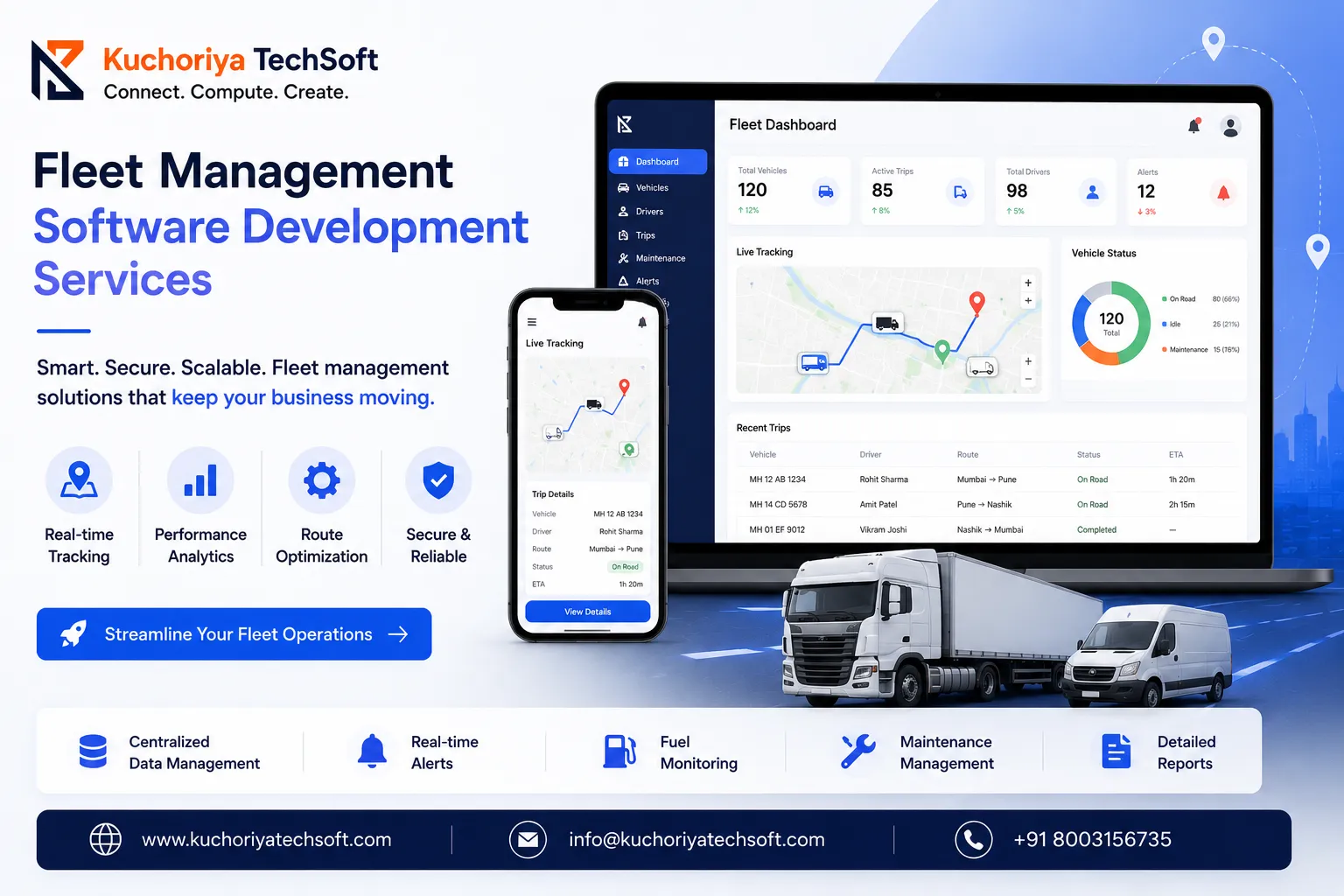

Fleet Management Software Development Company for Logistics
The logistics industry is becoming increasingly complex as businesses manage larger fleets, rising customer expectations, growing operational costs, and stricter compliance requirements. Traditional fleet management methods are no longer sufficient for organizations seeking efficiency, scalability, and real-time visibility. This has led to a growing demand for advanced fleet management software solutions that help businesses streamline operations and improve decision-making.
A Fleet Management Software Development Company plays a vital role in helping logistics providers build customized platforms tailored to their operational needs. These solutions enable organizations to monitor vehicles, optimize routes, track driver performance, manage maintenance schedules, and improve overall fleet productivity through a centralized digital system.
The Growing Need for Fleet Management Software
Modern logistics operations involve coordinating multiple moving parts simultaneously. Fleet managers must oversee vehicles, drivers, fuel consumption, deliveries, compliance requirements, and customer expectations.
Without a dedicated software platform, businesses often encounter challenges such as:
- Limited visibility into fleet operations
- Rising fuel costs
- Delivery delays
- Inefficient route planning
- Vehicle downtime
- Compliance risks
- Increased administrative workload
Fleet management software addresses these challenges by automating processes and providing real-time operational insights.
Key Features of Fleet Management Software
Real-Time Vehicle Tracking
GPS-enabled tracking allows businesses to monitor vehicle locations, delivery progress, and route performance in real time. This improves operational visibility and helps managers respond quickly to unexpected situations.
Route Optimization
Advanced route planning tools analyze traffic patterns, road conditions, and delivery schedules to identify the most efficient routes. This reduces travel time, lowers fuel costs, and improves delivery performance.
Driver Management
Fleet software tracks driver behavior, including speeding, harsh braking, excessive idling, and route compliance. These insights help improve safety and operational efficiency.
Maintenance Scheduling
Predictive maintenance features monitor vehicle health and generate alerts before issues become serious. This reduces downtime and extends vehicle lifespan.
Fuel Monitoring
Detailed fuel analytics help businesses identify inefficiencies, prevent fuel theft, and reduce overall operating expenses.
Benefits of Custom Fleet Management Software
Every logistics company has unique operational requirements. Custom software development provides flexibility that off-the-shelf solutions often cannot offer.
Benefits include:
- Personalized workflows
- Seamless integrations
- Greater scalability
- Enhanced security
- Advanced reporting
- Industry-specific functionality
Custom platforms allow businesses to align technology directly with their operational goals.
AI and Automation in Fleet Management
Artificial intelligence is transforming fleet operations by enabling smarter decision-making and automation. Modern software solutions can:
- Predict maintenance needs
- Forecast transportation demand
- Optimize routes automatically
- Improve dispatch efficiency
- Analyze driver performance
AI-powered analytics help organizations reduce costs while improving operational performance.
Conclusion
Fleet management software has become an essential tool for logistics companies seeking efficiency, visibility, and long-term growth. From vehicle tracking and route optimization to predictive maintenance and AI-driven insights, modern platforms help businesses streamline operations and improve customer satisfaction.
Organizations looking to gain a competitive advantage should invest in scalable and customized fleet management solutions that align with their operational requirements. A well-designed platform not only improves day-to-day fleet management but also supports future business expansion and digital transformation.






















Sign in to leave a comment.