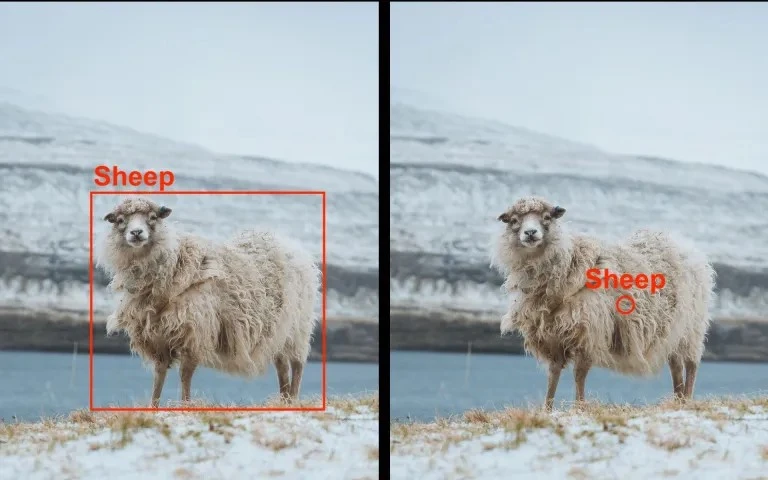

In today’s world, we are witnessing a proliferation of AI solutions. However, in many cases, these solutions fail to reach consumers due to the high hardware resource requirements needed to run these models. To scale our AI journey, we require solutions that are efficient, faster, and accurate enough to run on edge devices. This is where FOMO comes into the picture.
Object detection is a crucial aspect of computer vision that has been explored for many years. Deep learning and neural networks have revolutionized the field, enabling more precise and accurate results in object detection. Popular deep learning-based algorithms and model architectures like R-CNNs and their variants are prevalent in object detection. However, feature-based methods like Haar Cascades, SIFT, SURF, and HOG still play a significant role in certain applications. The strengths and weaknesses of these methods should be considered when selecting the best approach.
Object detection techniques have greatly benefited from Convolutional Neural Networks, but their usage requires specialized hardware and computational resources. tinyML has enabled deep learning on microcontrollers, making real-time multi-object detection possible on ... please click here to read more









Sign in to leave a comment.