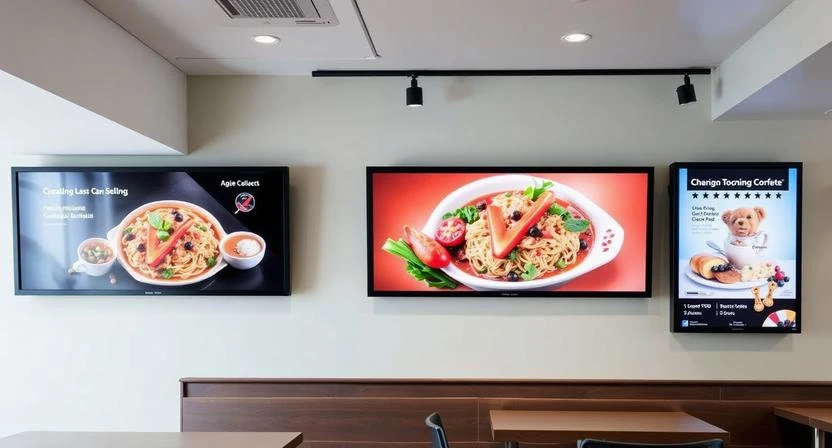

As far as food and beverage are concerned, your menu is not a list of items and prices, but a salesperson who sells silently. In mobile business enterprises such as food trucks and small establishments such as cafes, the food truck menu board or cafe menu board may be the centerpiece of the customer experience.
Food trucks and cafes do not have the benefit of drive-thrus that large quick-service restaurants have, and are instead dependent on establishing a visual connection in the moment. Customers typically make a choice in a few seconds on what to order. Whenever your menu board is not understandable, messy, or difficult to read, you run the risk of losing customers and slowing your line. Here is how to design food truck menu boards that are appealing and generate revenue.
The importance of your menu board to small food businesses
Space is important in the case of a food truck or a local cafe. You do not have the luxury of expansive digital screens and unlimited shelf space. Your menu board should convey your brand identity while also guiding customers through their selections quickly.
A well-designed board minimizes counter confusion. As soon as customers see what is offered, they place an order more quickly, which accelerates turnover during lunchtime. Moreover, the sight of a beautiful board can promote impulse purchases—like a specialty latte or a side of loaded fries.
Food Truck Menu Boards Small and resistant Design
Food trucks have special problems. They operate in all weather conditions, in sunshine and in the dark, and they must pack up and shift every day. Your food truck menu board should be durable and readable.
Give Readability a Second Priority
Food trucks usually have customers standing a few feet away, but the board must still be readable at the end of the line. Choose contrasting colors—dark writing on a light background is generally the safest. Avoid script fonts and use bold, clean sans-serif fonts that are easy to scan.
Weather-Resistant Materials
Food trucks are mobile, so your menu board will be exposed to the elements. For physical boards, consider materials such as aluminum composite or weatherproof vinyl banners. Alternatively, many food truck owners are now considering outdoor-rated digital screens that can handle heat and dust, and also make price updates easy.
Limit Your Offerings
One of the pitfalls new food trucks often commit is trying to do too much. A crowded menu board can confuse customers. Specialize in what you can do best—5–7 signature items. You can also mark your most profitable dishes and place them in the “golden zone” (center and top-right), where eyes naturally go first.
Cafe Menu Boards Establishing Environment and Making Sales
Cafes are all about ambiance. Your cafe menu board helps create the atmosphere of the space. Through the menu board, the aesthetic should match your vibe—whether it is a small bookstore cafe or a modern, sleek espresso bar.
The Resurgence of Handwritten Chalkboards
The chalkboard menu is still a staple of many cafes. It provides a handcrafted, natural, rough texture that appeals to coffee culture. If you are using chalkboards, invest in good chalk markers and maintain consistent lettering. However, remember that handwritten boards need regular upkeep to stay clean and clear.
Digital Displays to be Flexible and Fast
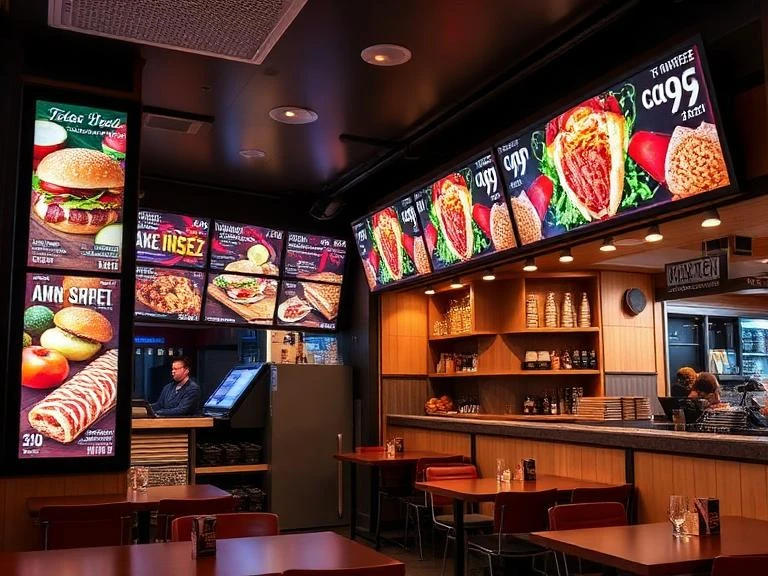
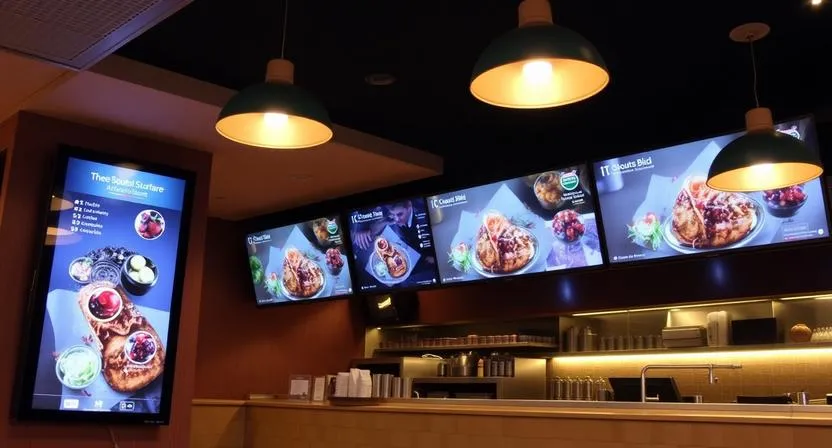
More cafes are going digital behind the counter. The flexibility of digital cafe menu boards is that they allow instant price changes, promote seasonal specials (such as pumpkin spice during the fall), and upsell pastries with high-definition photography. A digital screen can also make food and drinks look more vivid and attractive because of its brightness.
Organizing by Workflow
Cafe service usually follows a flow: ordering, serving drinks, then serving food. Arrange your menu board to reflect this workflow. Category labels help—list drinks (espresso, tea, blended) and then food items. This helps customers decide before they reach the register, speeding up ordering during the morning rush.
Design Concepts of the Two Ideas
Whether you are planning for a truck or a cafe, some rules are universal.
• Contrast: Use light on a dark board or the opposite. Avoid low-contrast colors such as yellow on white.
• Use Icons and Visuals: A small picture of a coffee cup or a taco can help non-native speakers or rushed customers identify categories quickly.
• Price Formatting: It is often better to avoid the dollar sign, or keep it small. Studies indicate customers may spend more when large dollar signs are removed because the payment feels less “painful.”
The Future of the Small Venue Menus
Most food trucks may start using solar-powered digital boards, and more cafes may use tablet-based menus at the counter as technology becomes more affordable. However, the main idea will not change: your food truck menu board or cafe menu board must communicate your brand story quickly and clearly. Your menu becomes one of your strongest marketing assets when it is easy to read, durable, and designed with care.
























Sign in to leave a comment.