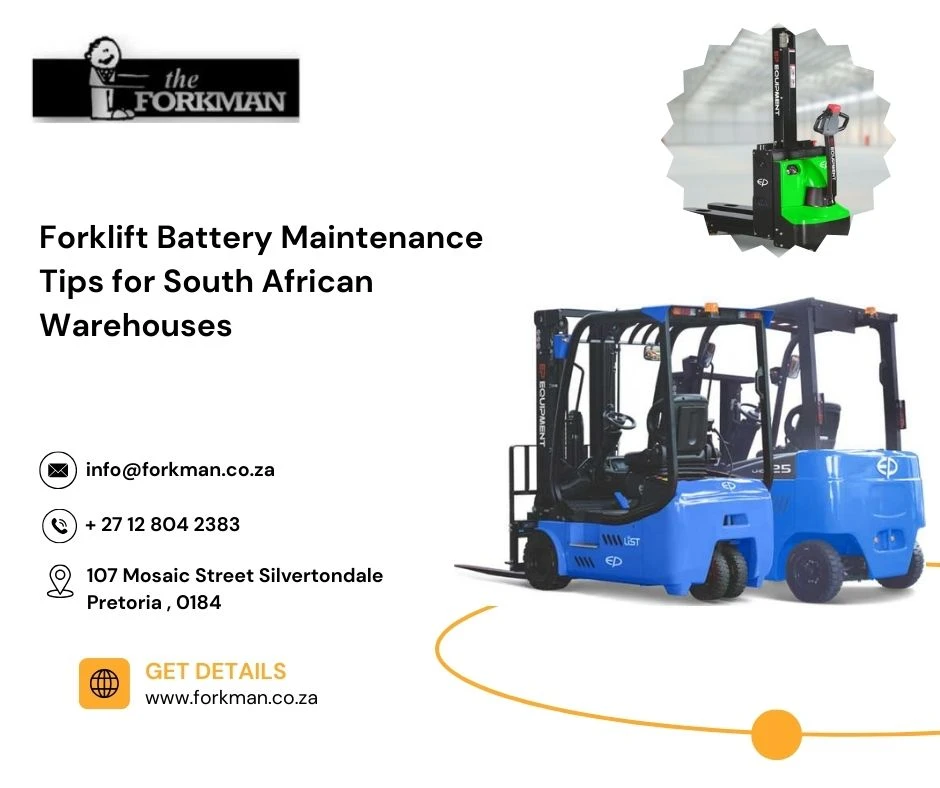

Forklift batteries play a very important role in the daily operations of South African warehouses. From moving heavy stock to keeping workflows smooth, electric forklifts depend fully on well-maintained batteries. When battery care is ignored, it can lead to breakdowns, high replacement costs, safety risks, and lost productivity. With rising energy costs and busy warehouse schedules, proper forklift battery maintenance is not just a technical task but a smart business decision. Understanding how to care for these batteries can help warehouses improve performance, extend battery life, and reduce long-term expenses.
Understanding Forklift Battery Types Used in South Africa
Most South African warehouses use either lead-acid forklift batteries or lithium-ion forklift batteries. Lead-acid batteries are still very common because they are reliable and cost-effective, but they require regular maintenance. These batteries use liquid electrolyte, which means water levels must be checked often to prevent damage. Lithium-ion batteries, on the other hand, are becoming more popular due to their low maintenance needs and faster charging times, although they usually cost more upfront.
Knowing which battery type is in use is the first step in proper forklift battery maintenance. Lead-acid batteries need daily care, while lithium-ion batteries mainly need correct charging habits and clean environments. Warehouses that clearly understand their battery systems can train staff correctly and avoid mistakes that shorten battery life.
Correct Charging Practices for Forklift Batteries
Charging habits have a major impact on forklift battery health. One of the most common mistakes in warehouses is opportunity charging, especially with lead-acid forklift batteries. These batteries should be charged only when they reach a low charge level, usually around twenty to thirty percent. Charging too often can cause overheating and reduce the battery’s overall lifespan.
Charging areas in South African warehouses should be clean, dry, and well-ventilated. Poor ventilation can cause heat buildup and gas accumulation, which can be dangerous. Chargers must also match the battery voltage and capacity to avoid overcharging or undercharging. Consistent charging routines help keep forklift batteries reliable and reduce unexpected downtime during busy shifts.
Daily and Weekly Battery Care in Warehouse Operations
Daily inspection is one of the easiest ways to protect forklift batteries. Operators should check for visible damage, loose connectors, corrosion, or leaks before using the forklift. Clean battery tops help prevent electrical resistance and reduce the risk of short circuits. Dust, dirt, and spilled liquid can slowly damage battery components if left unattended.
For lead-acid forklift batteries, water levels should be checked weekly and topped up only after charging, not before. Using the correct type of water is very important, as poor-quality water can harm battery cells. Warehouses that build battery checks into their daily routines often see fewer failures and better forklift performance over time.
Battery Safety and Storage in South African Warehouses
Safety is a key part of forklift battery maintenance. Batteries are heavy and contain chemicals that can be dangerous if handled incorrectly. Warehouse staff should be trained on safe lifting methods, proper use of protective equipment, and emergency procedures. Clear safety signs near charging stations can also help prevent accidents.
Storage conditions matter as well, especially during periods when forklifts are not in constant use. Forklift batteries should be stored in cool, dry areas away from direct sunlight. Extreme heat, which is common in many parts of South Africa, can reduce battery efficiency and speed up wear. Keeping batteries at the right temperature helps maintain stable performance and extends their working life.
Why Preventive Maintenance Saves Costs and Downtime
Preventive forklift battery maintenance helps warehouses avoid sudden breakdowns and expensive replacements. A well-maintained battery can last several years longer than a neglected one. This means fewer disruptions, better planning, and more reliable warehouse operations. Preventive care also improves energy efficiency, helping businesses control electricity costs.
Many South African warehouses operate on tight schedules, where even short delays can affect deliveries and customer satisfaction. Reliable forklift batteries ensure smooth material handling and reduce the stress on operators and managers. Maintenance is not just about protecting equipment, but also about supporting the people who use it every day.
In conclusion, Proper forklift battery maintenance is essential for keeping South African warehouses productive, safe, and cost-efficient. By following correct charging practices, understanding battery types, and focusing on daily care and safety, businesses can protect their investment and improve long-term performance. For expert guidance, quality solutions, and trusted support in forklift battery care, choose The Forkman in South Africa.
Sign in to leave a comment.