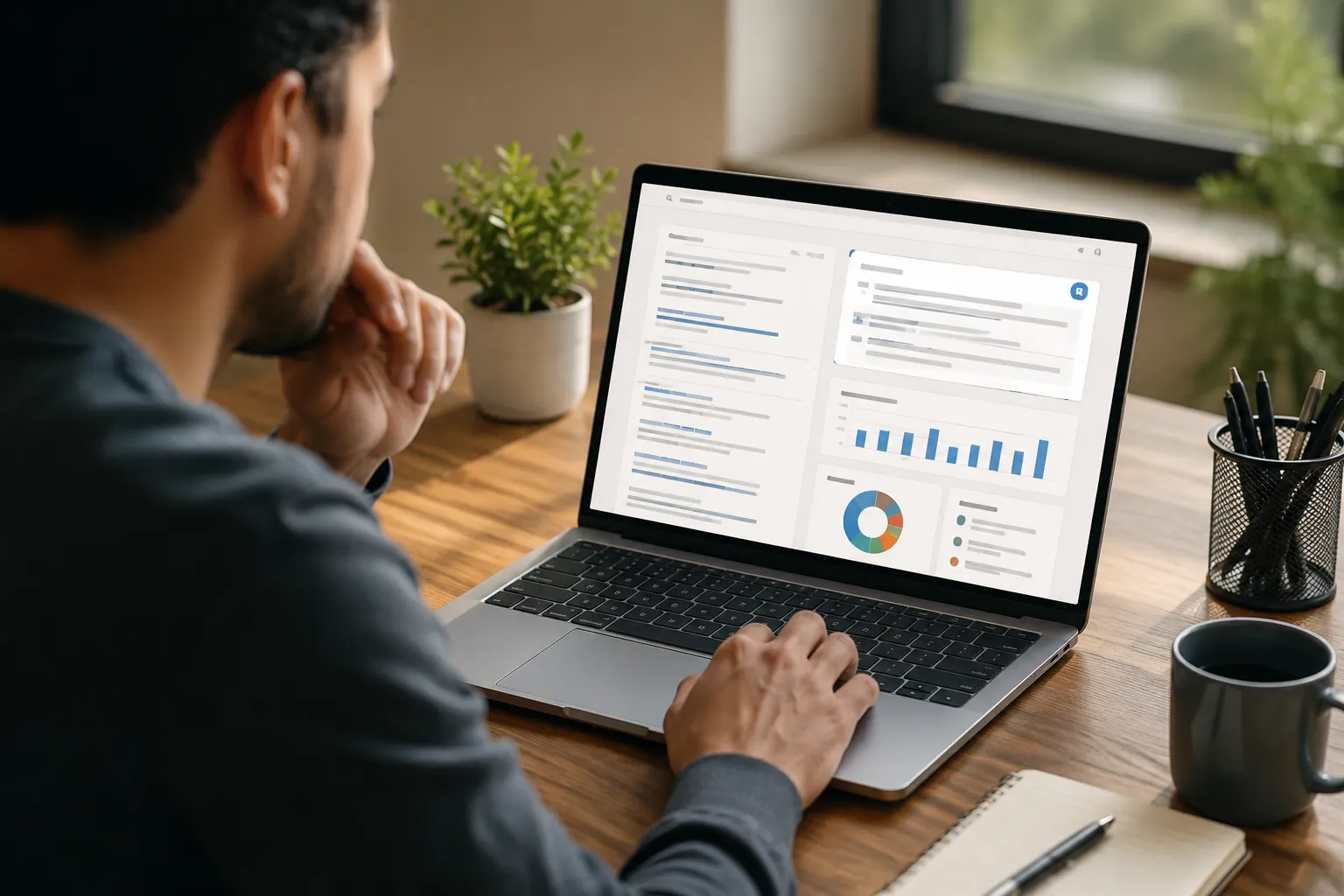

Most businesses are obsessed with clicks. More traffic, more impressions, more people landing on the page. And look, that's not wrong exactly. But a click doesn't mean much on its own. Someone showed up. That's it. They're not a customer yet, and honestly, they're not even close — and getting them to click is a very different thing than actually learning how to turn clicks into customers.
The real story is in everything that happens after.
More traffic isn't always the fix
When sales feel slow, the first instinct is usually "we need more visitors." Sometimes, sure, that's true.
But way more often than people expect, the traffic was already there. It just never made it past a certain point — the form, the checkout, the "book a call" button.
This happens more than people expect. A business goes in convinced they have a traffic problem, only to realize the real issue was never the number of visitors — it was what happened to them once they got there.
People decide fast. Faster than you'd think.
Someone lands on your page and within a couple of seconds, they've already half-decided whether they trust it. Does this look legit? Is this what the ad said it would be? Do I know what I'm supposed to do next?
If the answer to any of that is fuzzy, they're gone. Probably before they even finish reading your headline.
A clunky layout. A page that loads slow. A message that doesn't quite match what got them there in the first place. Any one of these quietly tanks conversions — and it doesn't matter how good the actual product is underneath it.
Friction kills more deals than bad ads ever will
Think about the last time you gave up halfway through filling out a form online. What made you stop?
Probably not that you stopped wanting the thing. Probably that it got annoying, or confusing, or took one step too many, at exactly the wrong moment.
That's friction. And fixing it is usually unglamorous — cut a form field, simplify a button, remove a step nobody needed in the first place. Boring work. But it moves the needle more than almost anything else you could spend time on.
Nobody buys from someone they don't trust yet
You're not handing over your card details to a website that feels sketchy, right? Neither is anyone else.
Reviews, clear pricing, real testimonials, a site that looks like an actual person built it with some care — none of it feels exciting, but all of it is quietly answering the one question every visitor is asking without saying it out loud: is this actually legit?
Skip that, and even your best offer, perfectly targeted, will just... underperform. Every time.
The click was never the hard part
Here's the thing worth sitting with. Getting a click is the easy bit. It's the opening move, and honestly, it's probably the least important part of the whole journey.
The businesses that actually turn clicks into customers are the ones paying attention to everything after — how the page feels, how much friction is in the way, whether trust was earned, whether anyone followed up.
Not just whichever ad got someone to show up in the first place.
The follow-up most people skip
Not everyone converts the first time they land on your page, and that's normal. Some people need a follow-up later. A reminder. One more piece of information before they're actually ready to say yes.
The businesses that stay in touch — without being annoying about it — end up converting a real chunk of people who would've otherwise just quietly disappeared.
So what actually drives conversions?
Honestly? Not the click. The click is cheap and easy to get.
What matters is everything that happens in the minutes, days, or weeks after — a smooth experience, less friction, real trust, and someone actually following up instead of letting the lead go cold. Businesses that treat that whole stretch as one connected system, built around a real lead generation strategy instead of just chasing more clicks, are the ones that end up winning.
























Sign in to leave a comment.