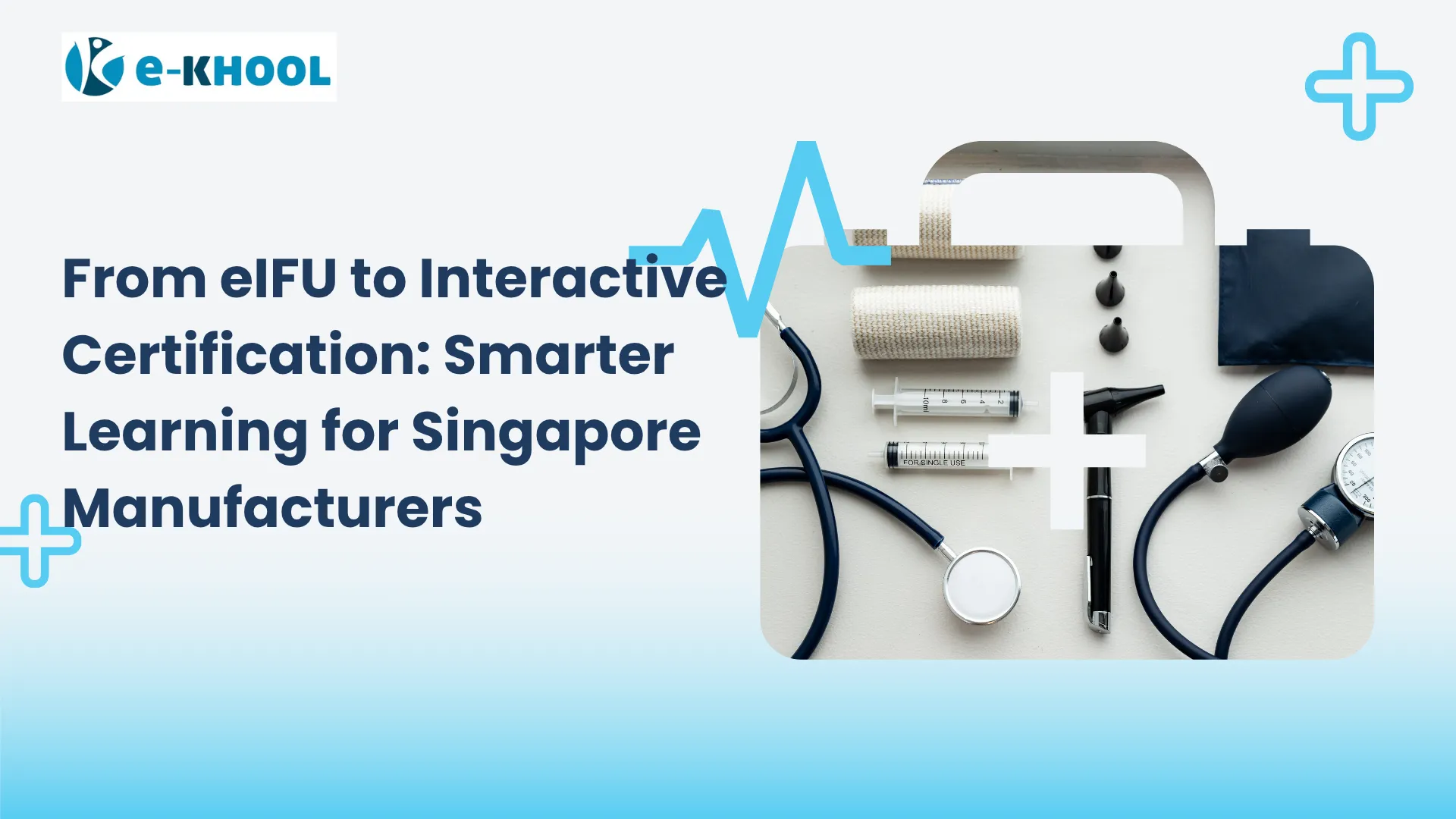

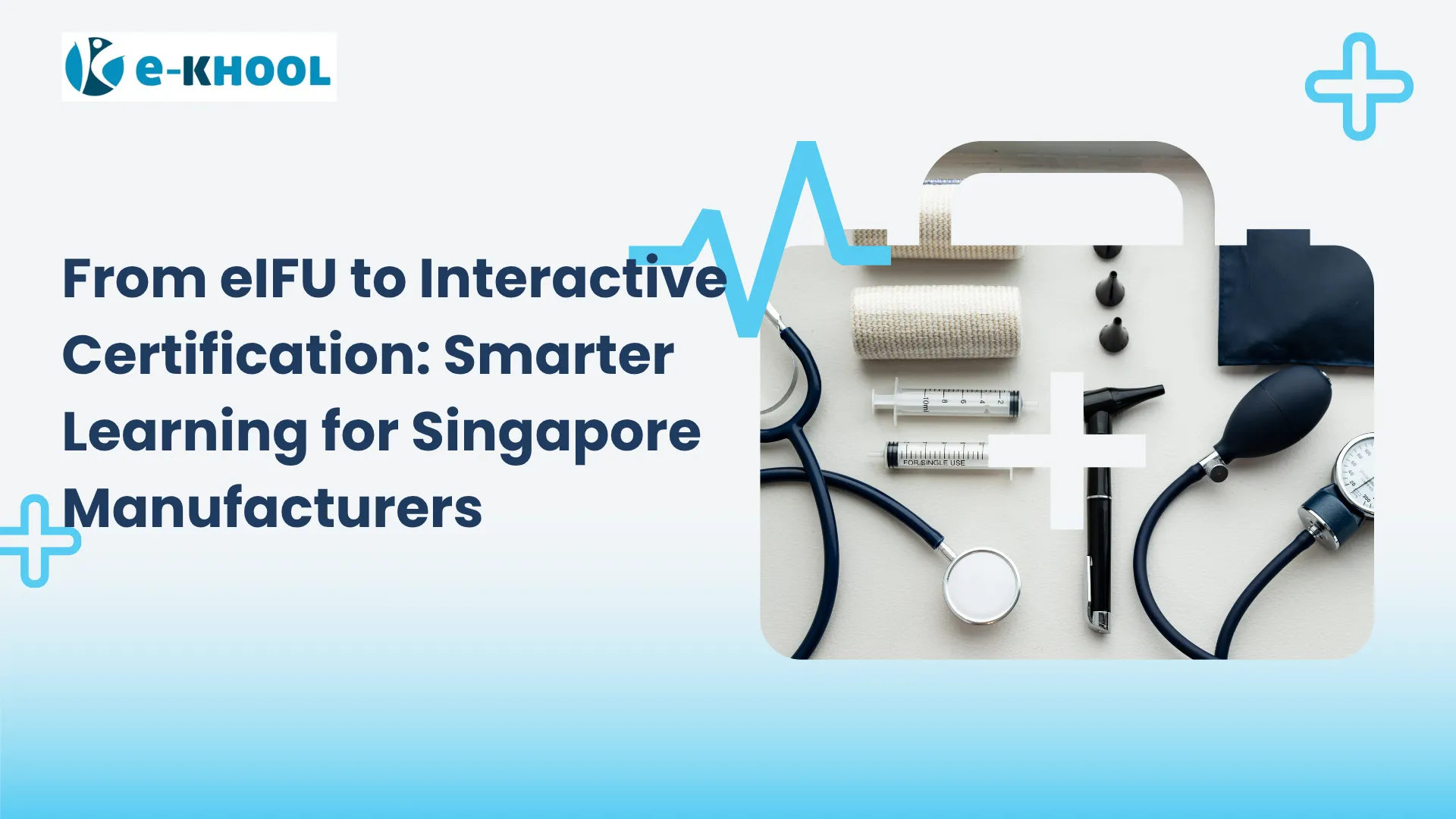
Singapore's medical device industry is recognized for its commitment to innovation, quality, and regulatory compliance. As manufacturers introduce increasingly sophisticated devices, ensuring that healthcare professionals, distributors, technicians, and service teams understand how to use them correctly has become more important than ever. While electronic Instructions for Use (eIFU) have transformed the way product information is delivered, many organizations are discovering that simply providing digital documentation is no longer enough. The next step is transforming static information into interactive learning experiences that verify knowledge and certify competency.
A modern Learning Management System (LMS) enables Singapore manufacturers to bridge this gap by converting eIFU content into structured digital learning programs with assessments, certifications, and compliance tracking.
The Evolution Beyond eIFU
Electronic Instructions for Use have replaced printed manuals for many medical devices, offering advantages such as instant updates, reduced printing costs, and easier accessibility. Healthcare professionals can quickly access the latest product documentation whenever required.
However, reading an eIFU does not necessarily ensure that users fully understand the device or can operate it safely in real-world clinical environments. Manufacturers need a way to measure learning outcomes rather than simply confirming document access.
This is where a Learning Management System transforms compliance into competency. Instead of asking users to read lengthy documents, organizations can deliver engaging digital courses that guide learners through product features, operating procedures, troubleshooting, maintenance requirements, and safety precautions.
Converting Documentation into Interactive Learning
Medical device manuals often contain valuable technical knowledge that can be repurposed into engaging learning modules. Rather than creating new training content from scratch, manufacturers can transform existing eIFU documents into multimedia learning experiences.
Using modern Learning Management Software, organizations can incorporate:
- Interactive lessons
- Instructional videos
- Device demonstrations
- Animated workflows
- Scenario-based learning
- Product simulations
- Knowledge quizzes
- Digital competency assessments
This approach improves learner engagement while making complex medical information easier to understand and retain.
Why Interactive Certification Matters
For regulated industries such as medical devices, demonstrating user competency is becoming just as important as providing access to documentation.
Interactive certification enables manufacturers to verify that healthcare professionals have successfully completed product training before operating medical equipment. Instead of relying solely on attendance records or document downloads, organizations can evaluate learner performance through assessments and practical knowledge checks.
Modern LMS platforms automatically issue digital certificates after learners successfully complete mandatory courses and assessments. These certificates can include completion dates, validity periods, learner information, and course details, making them valuable during internal audits and compliance reviews.
Supporting Regulatory Compliance
Singapore manufacturers operate within a highly regulated environment where proper product education contributes to patient safety and quality assurance.
A comprehensive learning management solution helps organizations maintain accurate training records by automatically tracking:
- Course completion
- Assessment scores
- Certification status
- Learning history
- User progress
- Refresher training schedules
These audit-ready reports simplify compliance management while reducing administrative effort for quality and regulatory teams.
Delivering Consistent Global Product Training
Many Singapore-based manufacturers distribute products across Asia-Pacific and global markets. Ensuring consistent product education across different countries can be challenging when relying on classroom training or printed manuals.
Cloud-based LMS software enables manufacturers to deliver standardized training regardless of location. Employees, distributors, healthcare providers, service engineers, and channel partners can access approved learning materials online whenever needed.
Organizations can also update training content instantly whenever product enhancements, software updates, or regulatory changes occur, ensuring every learner receives the latest information.
Personalized Learning for Different User Groups
Not every learner requires the same level of product knowledge. Surgeons, nurses, biomedical engineers, sales teams, technical support staff, and service technicians each have unique learning requirements.
A modern elearning platform allows manufacturers to create role-based learning paths that deliver relevant training to specific user groups. This personalized approach improves learning efficiency while avoiding unnecessary content for learners.
For example:
- Clinical users receive device operation and patient safety training.
- Service engineers complete maintenance and troubleshooting modules.
- Sales teams learn product features, benefits, and regulatory information.
- Distributors receive onboarding and product certification programs.
Mobile Learning Improves Accessibility
Healthcare professionals often have demanding schedules, making traditional classroom training difficult to coordinate.
An advanced online learning platform enables learners to complete courses using desktops, tablets, or smartphones. Mobile accessibility supports learning anytime and anywhere without disrupting clinical workflows or business operations.
Self-paced learning also encourages better knowledge retention by allowing learners to revisit training materials whenever necessary.
Building a Smarter Digital Learning Ecosystem
Today's manufacturers require more than document repositories—they need intelligent learning ecosystems that connect documentation, education, certification, and analytics within a single platform.
By integrating eIFU with digital learning, organizations can:
- Improve user competency
- Reduce training costs
- Accelerate product onboarding
- Increase learner engagement
- Standardize global training
- Strengthen compliance readiness
- Monitor certification status in real time
- Support continuous professional development
This integrated approach creates measurable learning outcomes while enhancing confidence among healthcare professionals using medical devices.
The Future of Medical Device Learning in Singapore
As digital transformation continues across Singapore's healthcare and life sciences sectors, manufacturers are moving beyond static documentation toward interactive education and competency-based certification.
Solutions like e-KHOOL Learning Management System empower medical device manufacturers to convert existing eIFU documents into engaging digital courses, interactive assessments, automated certifications, and comprehensive compliance reports. With cloud-based delivery, role-based learning, multilingual support, and detailed analytics, e-KHOOL helps organizations build a scalable and future-ready training ecosystem.
By evolving from eIFU to interactive certification, Singapore manufacturers can strengthen product adoption, improve regulatory readiness, and ensure healthcare professionals have the knowledge and confidence to use medical devices safely and effectively.


























Sign in to leave a comment.