
Not too long ago, getting a website built meant weeks of emails, mockups sent back with red pen notes, another round of mockups, and a launch date that kept sliding. Some of that still happens. But a lot of the early grind has quietly disappeared. Type out a rough idea now, and you can have a working layout on screen within minutes. What used to eat up the first two weeks of a project barely takes an afternoon.
That's changed what people expect when they hire a website development services. Nobody's impressed by speed on its own anymore; it's basically assumed.
What actually separates a good build from a mediocre one is the judgment behind it: whatever a developer decides to keep from an AI-generated draft, what gets scrapped, and how much thought goes into shaping a fast first pass into something that actually fits the business it's for.
Coding Now Starts With a Conversation
Ask a developer building sites today, and most will say a good chunk of their work starts with describing something in plain language rather than typing it from scratch. You explain the layout or the feature you want, the tool spits out a starting point, and from there it's on the human to fix what's wrong with it. Which, honestly, is usually plenty.
This hasn't made developers obsolete; it's shifted where their time goes. Less of the day gets spent writing boilerplate, more of it goes into catching edge cases, cleaning up structure, and making sure whatever got generated holds up once real people start clicking around.
Recent surveys of designers put AI tool usage somewhere north of 90 percent at this point. It's not a novelty anymore. It's just part of how the work gets done.
Sites That Look Different Depending on Who's Looking
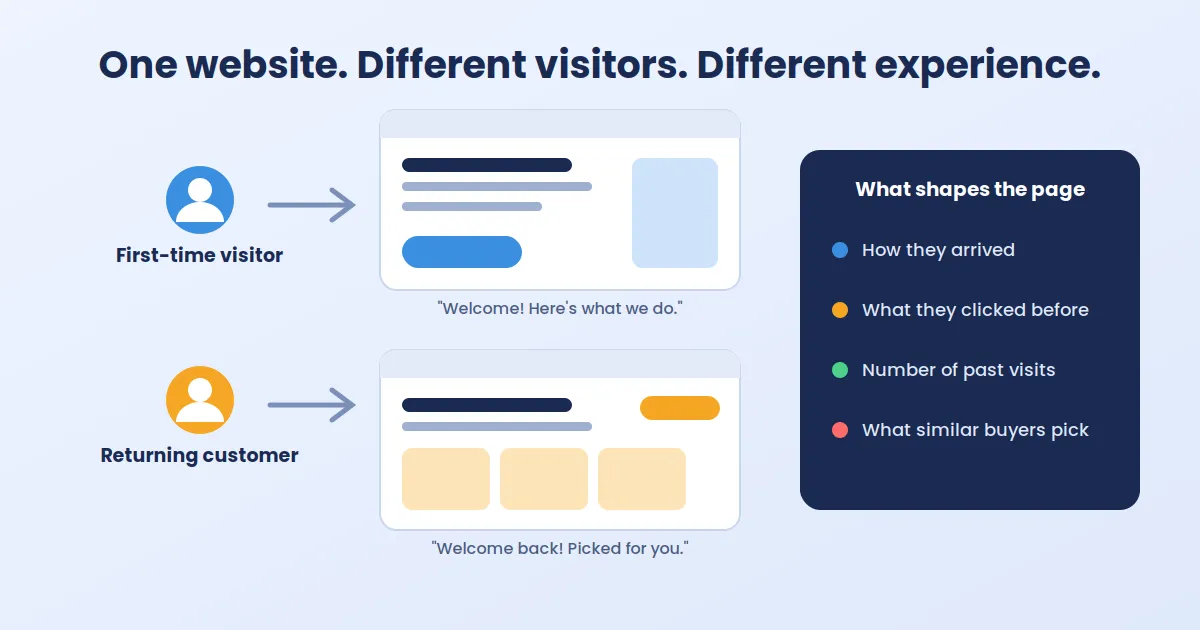
A page that shows the exact same thing to every visitor is starting to feel a little dated. AI now makes it straightforward to change what someone sees based on how they got there or what they clicked on before. Someone visiting for the third time might see a different message than someone landing on the site for the first time. A product page might quietly reshuffle itself depending on what people similar to that visitor tend to buy.
This kind of thing used to be reserved for companies with big budgets and dedicated data teams. That's not really true anymore. A decent web development service provider can build a version of this into a site from day one, no enterprise price tag required.
Faster Testing Doesn't Mean Less Oversight
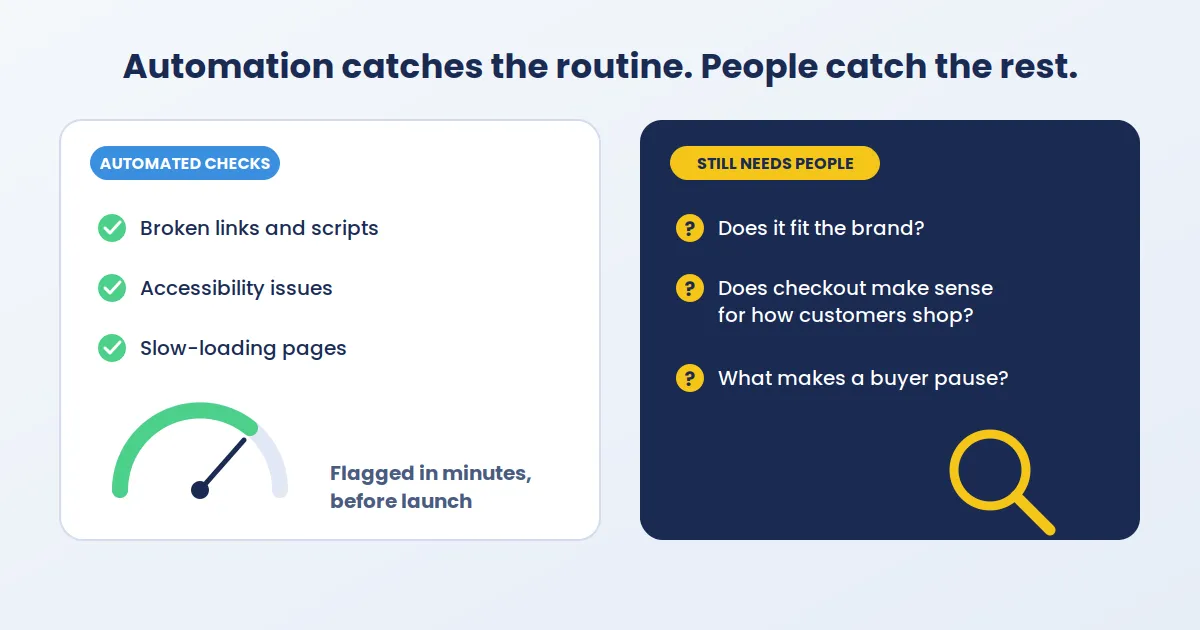
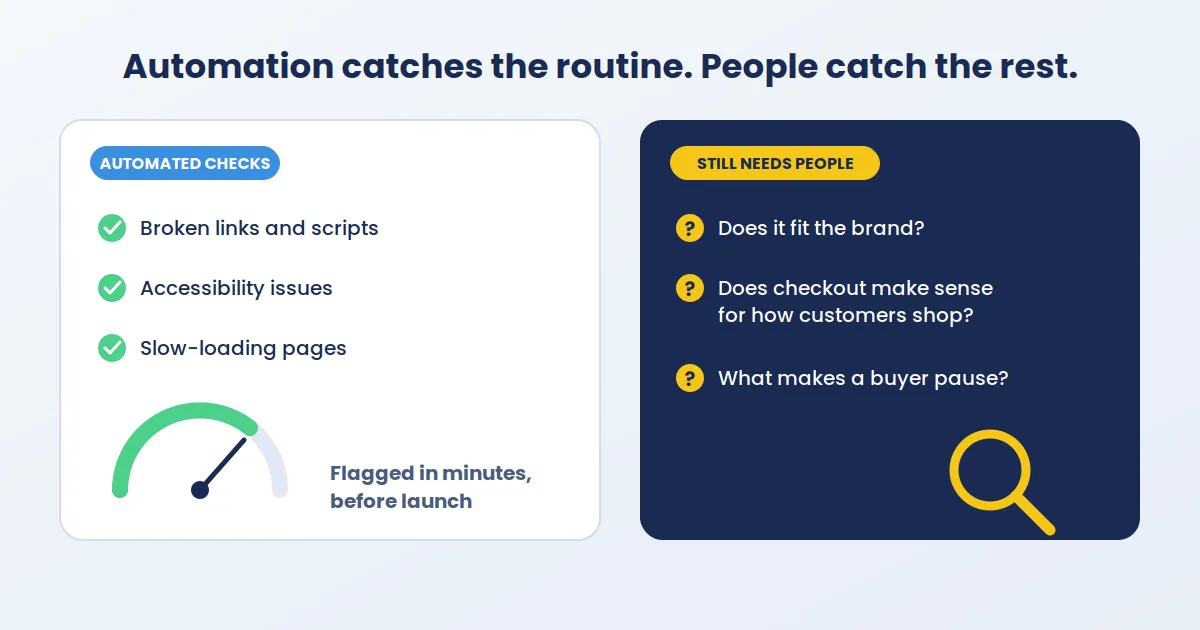
The back half of a build has changed too. A lot of bugs, accessibility problems, and slow-loading pages get caught automatically now, before anyone's even opened the site to check it by hand. That means fewer surprises right after launch, and fewer nights spent patching something that really should've been caught days earlier.
What's easy to miss, though, is that faster testing doesn't free you up to pay less attention; it just moves where your attention needs to go. AI is fine at flagging problems it's already seen a thousand times.
Ask it whether a layout fits your brand, or whether the checkout makes sense for how your customers shop, and it comes up short. That part's still on the people running the project.
So Why Pay Someone When AI Can Build a Site in Minutes?
Fair question, and worth asking honestly. If a prompt can spit out a working homepage, why hire anyone for website development company at all?
Because generating something was never really the hard part. Anyone can get a decent-looking template up in an afternoon now. The hard part is turning that template into a site that converts visitors, loads fast on a bad connection, holds up on a five-year-old phone, and doesn't buckle the day it gets real traffic instead of test traffic.
AI can throw together a homepage in minutes. What it can't do is know your customers, spot what your competitors are getting wrong, or figure out the one thing that makes someone pause right before they hit "buy." That kind of context just isn't something a machine has.
A good team leans on AI to move quicker, no doubt about that, but it's not a stand-in for actual strategy, for design instincts built up over years, or for the kind of testing that only comes from having shipped a lot of sites already, including a few that broke in ways nobody saw coming.
Where Is This Heading?
Sites keep getting less static and more responsive to whoever's looking at them. Builds keep getting faster, and expectations for performance keep climbing right along with that speed.
None of this removes the need for someone steering the process by hand. If anything, it raises the stakes, because the gap between a rushed AI draft and something well-built is becoming the main thing that separates a business people remember from one they scroll right past.
If you're trying to decide between building this in-house, hiring a freelancer, or bringing in a full team, we're happy to walk through what an AI-assisted build guided by actual humans could look like for what you're trying to do.

























Sign in to leave a comment.