
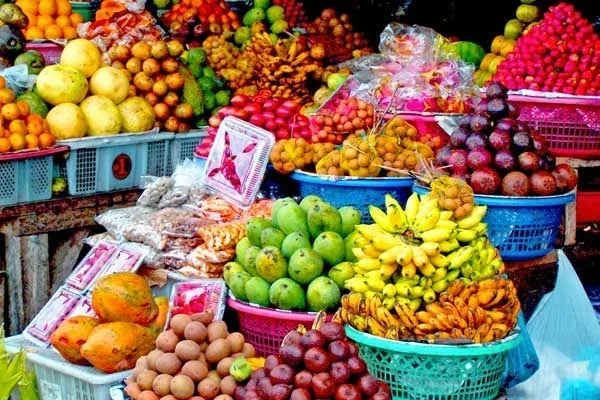
You can purchase fruits in Bali throughout the year, but each type has its own peak \'season.\' During this period, the fruit is more abundant, available in various types, juicier, and priced more affordably.
While not all fruits are grown in Bali, with some being imported from other islands or countries, this detail isn\'t particularly important for tourists.
Fruits can be bought in stores, markets, or from mobile carts where they are often pre-cut.
Whenever possible, it\'s better to buy whole fruits, as pre-sliced fruits may spoil quickly in the heat and lose their nutritional value, even when kept on ice. If whole fruits aren\'t available, try to purchase them from vendors who cut them in front of you.
At markets, it\'s acceptable to ask for a taste, especially if you\'re considering smaller fruits like bananas.
Where to buy fruits?
In markets, locals often sell seasonal, local fruits, although the selection might be limited.
You can also find fruits in large supermarkets, which sometimes offer a wider variety than markets. These supermarkets might stock imported fruits from other parts of Indonesia or abroad. Some recommended supermarkets include Frestive, Pepito, Grand Lucky, Hypermart, Hardy\'s, Bintang, and Delta Dewata.
Mango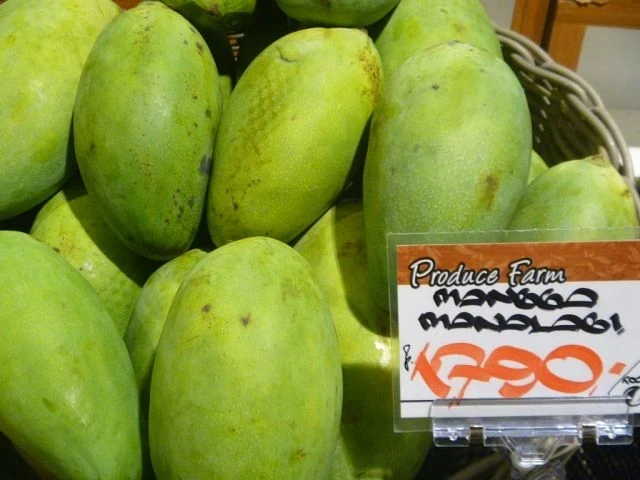
Local name: mangga
Season: October - February
General description and selection recommendations: Bali offers a variety of mangoes, most of which have green skins, though this doesn\'t affect their taste. During the peak season, from October to January, mangoes are particularly sweet and juicy. Outside this period, you can still find mangoes, but with fewer varieties, higher prices, and less juicy and aromatic fruits. Two of the best varieties to try in season are Manalagi and Harum Manis.
Mangoes can be peeled in two ways. One method is to remove the skin and eat the fruit whole or cut it into pieces. The other method involves cutting the mango in half, scoring the flesh horizontally and vertically to create small squares, then turning them outward to eat the cube-like pieces. Mangoes also make excellent jam and are great for facial masks.
White mango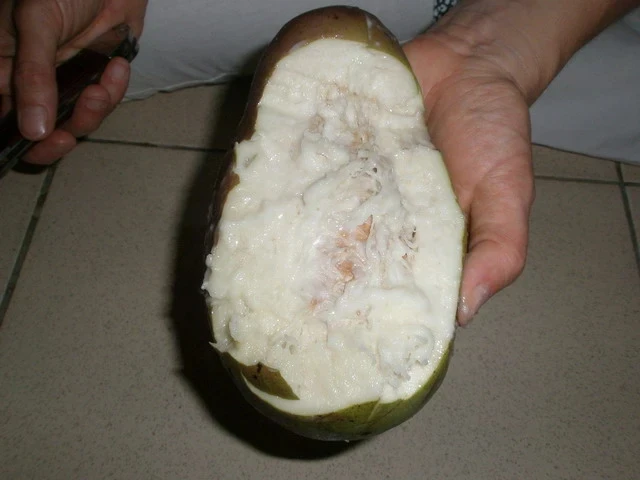
Local name: Wani Biji, known in English as White mango.
Season: December - March
General description and selection recommendations: This unique fruit is native to Bali and doesn\'t grow elsewhere. It has a moderately sweet taste that may be an acquired preference for some, but it’s definitely worth a try! When ripe and chilled, it can be very tasty with a pleasant and intriguing aroma. Typically, it\'s not peeled; instead, it\'s cut open and eaten directly. Selecting it is similar to choosing a mango – it should feel slightly soft when ripe.
Pineapple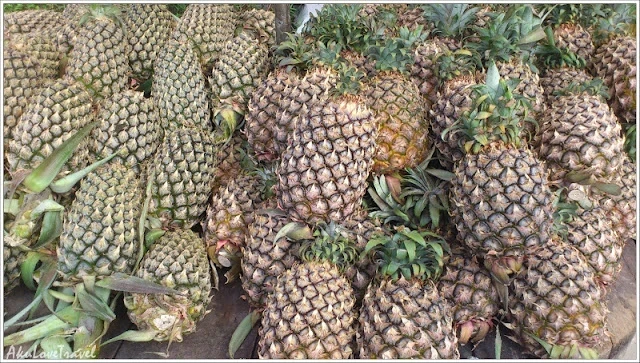
Local name: nanas
Season: year-round
General description and selection recommendations: Like mangoes, yellow pineapples are juicier and sweeter, while green ones are more acidic and better for cooking. Before buying, it\'s a good idea to sniff the fruit—a ripe pineapple will have a noticeable fragrance even through the skin. The easiest way to peel a pineapple is to first cut off both ends. Then, with the base standing upright, slice off the skin in vertical strips while moving in a circular motion. Next, cut the pineapple lengthwise into four segments, remove the tough core from each piece, and slice the remaining fruit into pieces.
Banana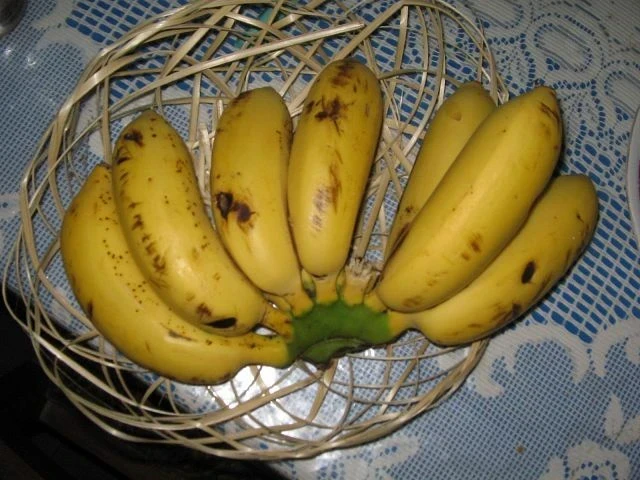
Local name: pisang
Season: year-round
Varieties: Bali offers a wide range of banana varieties that differ in length, shape, size, and, of course, taste.
General description and selection recommendations: The island has numerous types of bananas, each with its unique flavor. My personal favorite is the pisang susu (milk bananas)—small, chubby, and round, they are deliciously sweet. Green bananas can also be quite tasty; don\'t assume that green means unripe. However, they can be firm and are often used by locals for cooking. You can find good bananas on Bali almost year-round.
Rambutan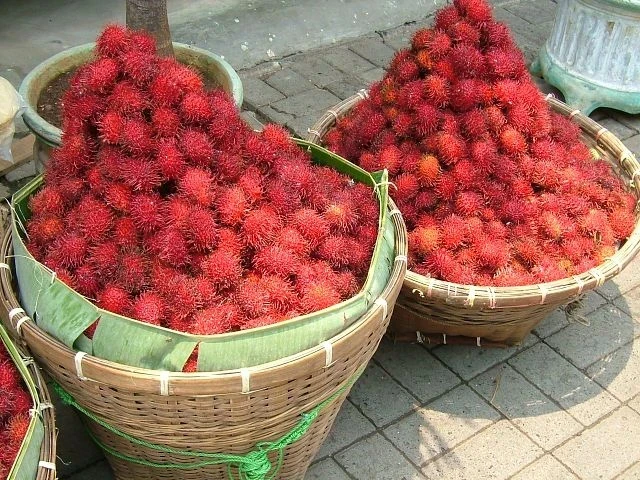
Rambutans are very affordable during their season: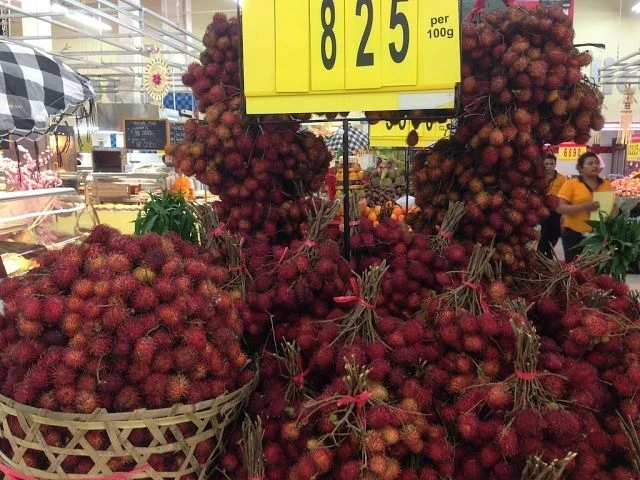
Local name: Manggis
Season: May-October
General description and selection recommendations: Mangosteen is celebrated for its sweet and tangy flavor. The fruit has a thick, purple rind, and inside, the edible flesh is white and juicy. To pick a ripe mangosteen, choose fruits with firm, unblemished skin and a green calyx at the stem end. Gently press the skin; it should give slightly when the fruit is ripe. You can open it by pressing on the top or by making a shallow cut around the middle with a knife. The fruit is usually divided into segments, similar to garlic cloves, and the flesh can be easily scooped out with a spoon. Often called the "queen of fruits," mangosteen is highly prized for its delicious taste.
Mangosteen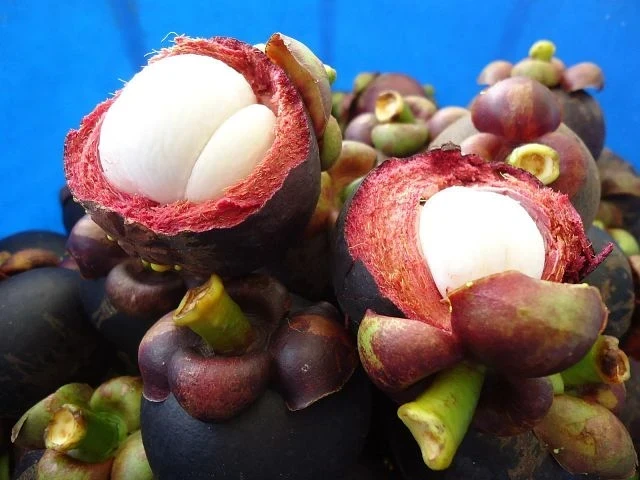
Local name: Manggis
Season: May-October
General description and selection recommendations: Mangosteen is celebrated for its sweet and tangy flavor. The fruit has a thick, purple rind, and inside, the edible flesh is white and juicy. To pick a ripe mangosteen, choose fruits with firm, unblemished skin and a green calyx at the stem end. Gently press the skin; it should give slightly when the fruit is ripe. You can open it by pressing on the top or by making a shallow cut around the middle with a knife. The fruit is usually divided into segments, similar to garlic cloves, and the flesh can be easily scooped out with a spoon. Often called the "queen of fruits," mangosteen is highly prized for its delicious taste.
Longan
Local name: Lengkeng
Season: June - September
General description and selection recommendations: Lengkeng, also known as Longan, are small, round fruits with sandy-brown skin. Though they might not seem appealing at first glance, the fruit inside is juicy and sweet, though not overly so, making it a refreshing snack. Lengkeng fruits are easy to peel, and the flesh separates easily from the seed. However, if stored too long, the flesh can dry out, making peeling more difficult. Inside, you\'ll find a firm, smooth seed. To enjoy Lengkeng, simply peel the fruit, eat the sweet, translucent flesh, and discard the seed.
Papaya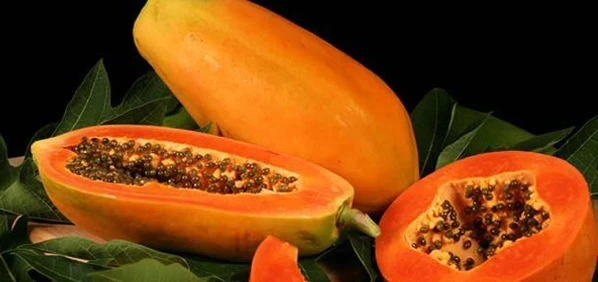
Local name: Pepaya
Season: Year-round
General description and selection recommendations: Papaya is a large, elongated fruit, usually with orange skin when ripe, though it can sometimes be slightly green. The flesh inside is orange, soft, and juicy, with a mild, sweet flavor that is somewhat similar to carrots. Papaya is known for its health benefits, especially for the stomach, and it\'s often recommended to start the day with a few pieces for preventive care. While papaya is available year-round in Bali, it doesn\'t have a continuous season. During its peak season, the fruit is ripe and very affordable, but outside of that, it tends to be green and less flavorful.
Sirsak
Local name: Sirsak
Season: June - September
General description and selection recommendations: Also known as the custard apple tree, Sirsak is commonly used in ice cream, desserts, salads, and shakes, and is also enjoyed fresh. The fruits are usually harvested while still green and unripe since ripe fruits tend to split open when they fall to the ground. After harvesting, they are kept in a warm place to ripen and soften.
The flesh can be eaten with a spoon or cut into cubes and eaten with a fork, similar to how you would eat papaya. Sirsak is rich in vitamins and minerals, beneficial for gut health, normalizing liver function, regulating stomach acidity, and helping to eliminate excess uric acid from the body. It is particularly recommended for those with conditions like arthritis and rheumatism. Sirsak is also packed with B and C vitamins.
Some believe that sirsak may even assist in cancer treatment. In Bali, you can also find dried sirsak available in packets.
Star fruit, carambola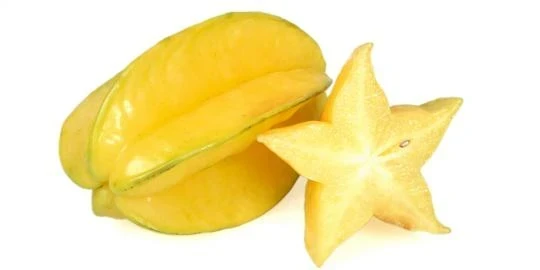
Local name: Belimbing
General description and selection recommendations: In my experience, the fruit\'s appearance and aroma are more impressive than its taste. It has a sour-sweet flavor and is very juicy, making it a popular garnish for main dishes. Interestingly, it’s not a fruit you might crave often.
Jackfruit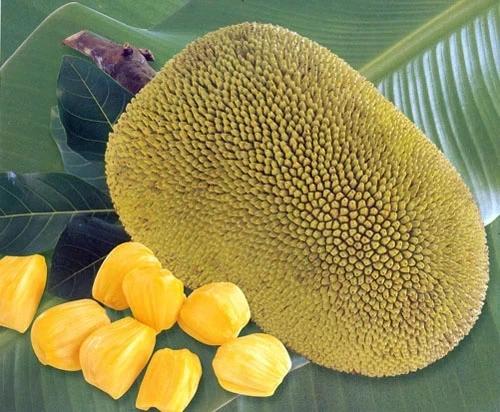
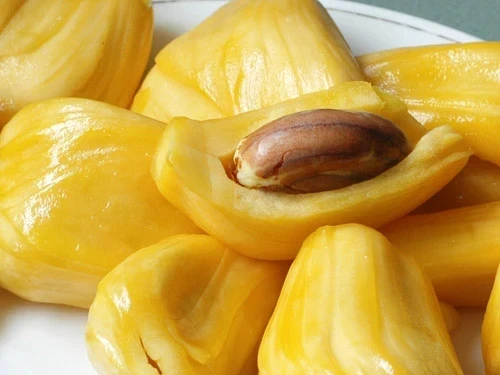
Local name: Nangka
Season: April - September
General description and selection recommendations: Jackfruit, also known as breadfruit, can grow up to 40 cm in diameter. It looks similar to durian but is less bumpy. The fruit is cut open, and bright yellow segments are extracted from the core. Jackfruit is typically sold pre-prepared by weight. The flesh is firm, fragrant, and somewhat sticky, with a bubblegum-like aroma. It\'s quite filling and can be challenging to prepare at home due to its stickiness. To make it easier, use oil on your hands and utensils or wear gloves while peeling.
Durian
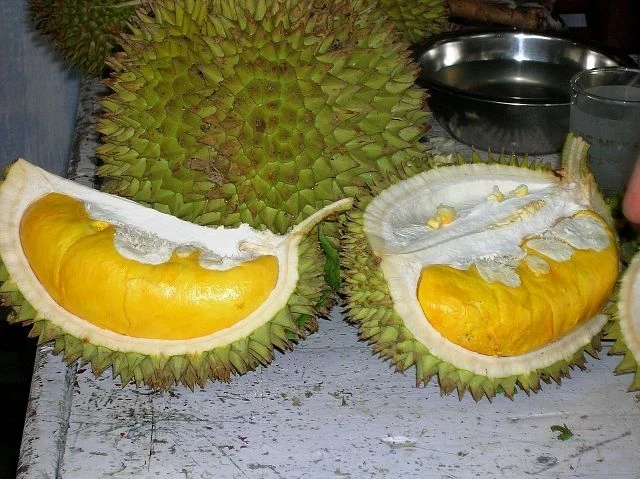
Local name: Durian
Season: December-March
Varieties: Bali grows various durian varieties, with "Bangkok" being one of the best and most delicious.
General description and selection recommendations: Durian is a remarkable fruit known for its strong odor, often described as unpleasant, but its taste is considered heavenly. It\'s one of the most exotic fruits that tourists feel they must try. The fruit\'s appearance is similar to breadfruit but smaller. When opened, it reveals small, sausage-like segments ranging from 8-15 cm long.
People generally fall into two groups: those who love it and those who dislike it. The aftertaste of durian can linger for a while. Due to its strong smell, bringing durian into hotels is often prohibited as it can permeate rooms for several days.
Locals commonly eat durian on the street, setting up small tables next to their vehicles for customers to enjoy the fruit on-site. Durian has a unique, somewhat oily texture and is very rich. It can raise body temperature, so it\'s advised to eat a couple of rambutans afterward to help cool down. Combining durian with alcohol is not recommended.
Pomelo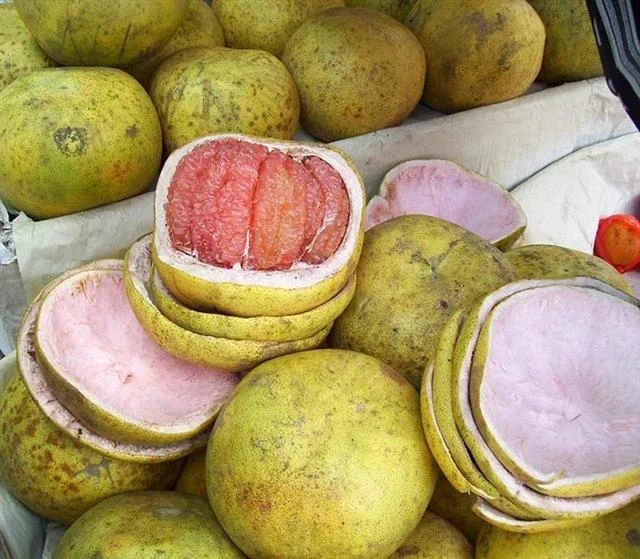
Local name: Jeruk Pomelo
General description and selection recommendations: Pomelo is a large citrus fruit resembling a grapefruit but is sweeter and lacks the bitterness typical of grapefruit. Its flesh is tender, juicy, and aromatic. Pomelo is also rich in vitamins A and C.
More about fruits and things in Bali you can find here: https://bali.live/









Sign in to leave a comment.