
In this article, I continue to tell you about the fruits that are available in Bali. Before reading this article, I recommend you to read the first part of this article.
Dragon fruit
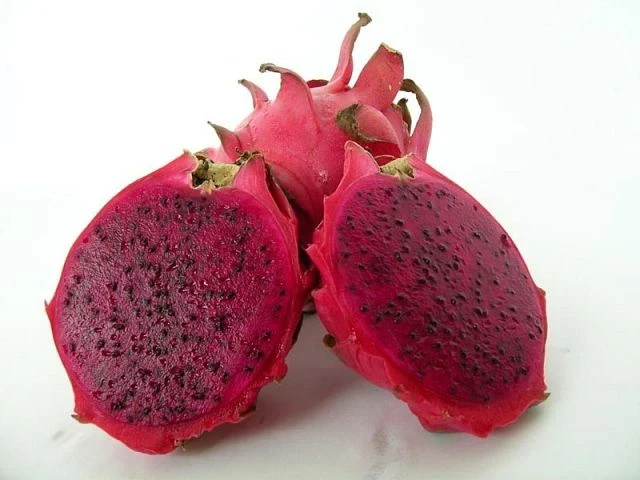
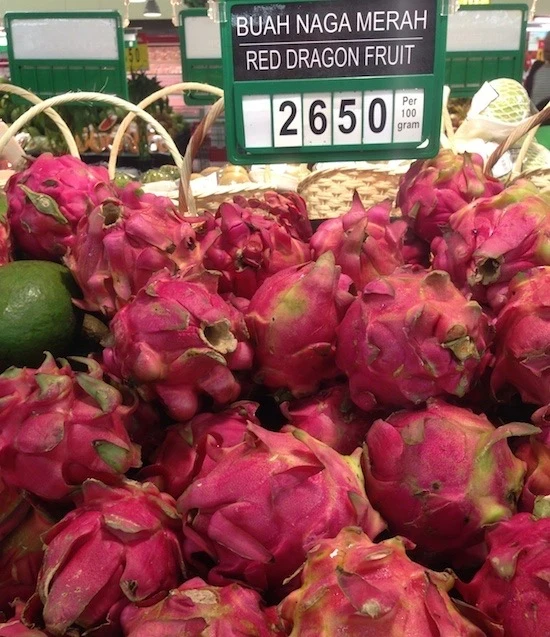
Local name: Buah Naga
Season: May-October
Varieties: Dragon fruits come in white and bright purple flesh. The purple-fleshed varieties are generally sweeter and more aromatic.
General description and selection tips: Bright pink dragon fruits are hard to miss at the market. You can get an idea of the fruit\'s interior by looking at the external scales. Purple dragon fruits usually have smaller and more closely spaced scales. I personally prefer the purple ones for their kiwi-like flavor, while the white ones are less aromatic and sweet. However, the white dragon fruits are visually appealing and often used in fruit juices to create a striking drink!
Watermelon
Local name: Semangka
Season: All year round
Varieties: Red and yellow
General description and selection tips: Watermelons are widely available on Bali throughout the year and are generally affordable. The yellow variety, often pricier, tends to be sweeter than the red. However, they\'re not as sweet as Astrakhan watermelons. Most watermelons on the island are seedless.
Coconut
Coconuts in Bali are typically priced between 7,000-10,000 rupiahs in stores.
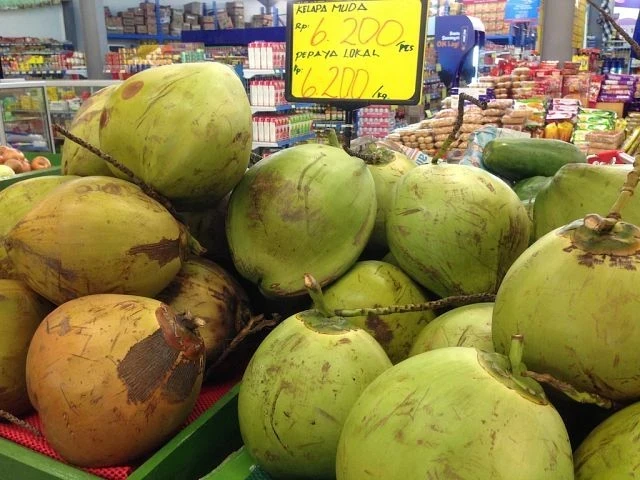
General description and selection tips: Leci is an aromatic and flavorful fruit with a small, hard pit inside and translucent white flesh. It is often used in desserts or beverages. Compared to other fruits, leci tends to be more expensive.
Snakefruit
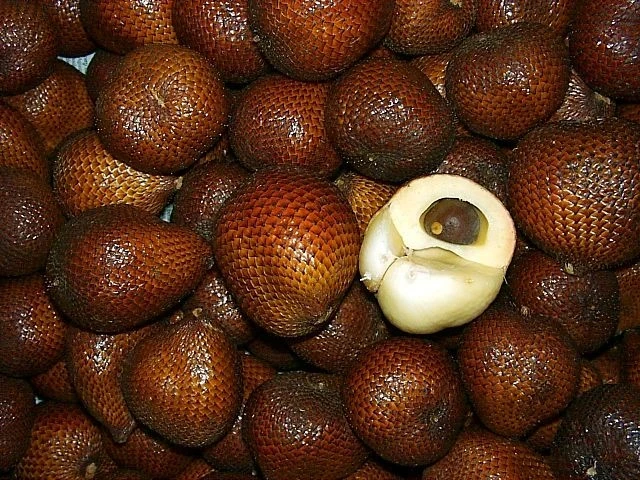
Local name: Salak
Season: Year-round
General description and selection tips: Salak, commonly known as "snake fruit" due to its slightly prickly skin resembling snake scales, has a sweet and sour taste with a unique aroma. The flavor can vary depending on the variety, with some resembling strawberries or carrots, though only faintly. Inside, you\'ll find a hard pit surrounded by beige flesh that consists of one or several segments. Salak is great for making compote. The tree itself is very prickly, with the fruit clusters growing close to the ground, making harvesting a challenge due to the surrounding thorny branches.
There are several varieties of salak on Bali. The sweetest is "salak gula," with a flavor somewhat like strawberries. "Salak Bali" and plain "salak" are more tart, sometimes even too tart, and can resemble carrots or less sweet apples.
Guava
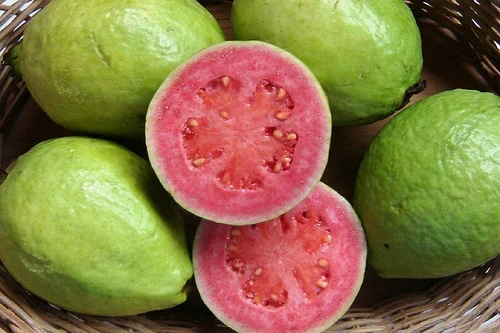
Local name: Jambu biji
General description and selection tips: Guavas resemble green apples with a slightly uneven surface. It\'s best to choose fruits that are slightly soft to the touch, indicating they are riper. Inside, they contain numerous small, hard seeds, which can be a bit off-putting. However, riper guavas have more aromatic flesh and fewer seeds, so it\'s important to be selective when choosing and chew carefully. The taste of a ripe guava is sweet, with a flavor reminiscent of pineapple and strawberry.
Bright green guavas tend to be sweeter but have more seeds. They are often used to make delicious freshly squeezed juice, which is my preferred way to enjoy them.
Passion fruit
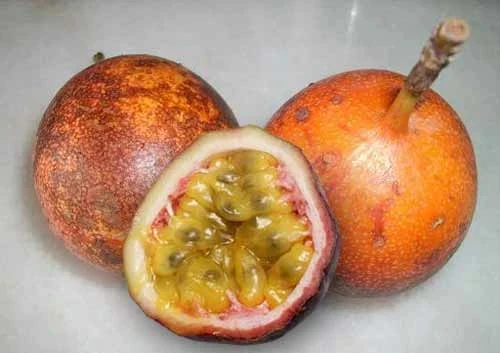
Local name: Markisa
Season: January - April
General description and selection tips: Markisa, or passion fruit, is a round, yellow fruit about the size of a lemon, with a hard skin. When unripe, the skin is tough to cut through, but once opened, the fruit releases a captivating aroma, similar to the scent found in packaged tropical juices. The flesh has a flavor somewhat reminiscent of sea buckthorn. Unripe passion fruit has a sweet-tart or sour taste, while ripe ones are softer, with the skin yielding easily to pressure and breaking apart with your fingers. Ripe passion fruit can be very sweet, and the seeds are edible, offering a pleasant crunch. Passion fruit often grows abundantly near homes, sometimes covering the house with its vines, and tends to be relatively expensive.
Lime
Local name: Jeruk Nipis
Season: All year round
General description and selection tips: Jeruk Nipis, or lime, is smaller than a lemon, about the size of a small plum, round, and green. It has a slightly bitter taste and is commonly added to a wide variety of dishes and used in sauces. Essentially, it serves as an Asian alternative to lemon.
Avocado
A reasonable price for avocados during the season in Bali: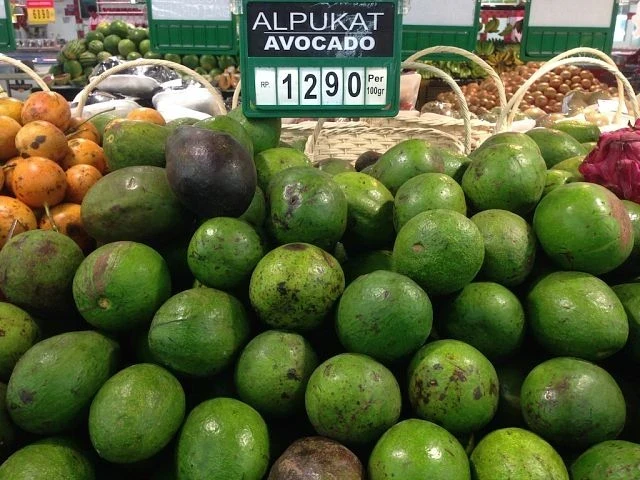
Local name: Alpukat
General description and selection tips: Ripe avocados are soft, pear-shaped fruits with green skin and light green flesh. Inside, there\'s a large, soft pit that resembles a nut rather than a stone. While the taste of avocado is hard to describe as delicious, it is quite fatty and very filling. The fat in avocados is easily digestible due to the high content of unsaturated fatty acids. Avocados are also rich in minerals, trace elements, and vitamins.
Out of season, avocados in Bali can be firm and expensive, but during the season, they are usually ripe and soft. Even if slightly unripe, avocados can be stored at home for a few days until they ripen.
Tamarillo
Local name: Terong Belanda (Dutch Eggplant)
Season: May - September
General description and selection tips: Terong Belanda is a sweet and sour fruit with a dark red color and an intriguing taste. It\'s easy to eat by cutting it open and scooping out the flesh with a spoon, though the skin is usually not consumed.
In Bali, local strawberries and grapes are available, but they don\'t compare to the ones back home and might be disappointing. Only during peak season do strawberries become somewhat palatable.
Seasons for Fruits in Bali:
While it\'s often thought that the peak fruit season is during winter, the reality is that it depends on the weather and rainfall, making the concept of a "season" quite flexible, with fruits sometimes available out of season.
- Passion Fruit / Markisa: January - April
- Jackfruit / Nangka: April - September
- Tamarillo / Terong Belanda: May - September
- Mangosteen / Manggis: May - July
- Dragon Fruit / Buah Naga: May - October
- Rambutan: May - October
- Longan / Lengkeng: June - September
- Soursop / Sirsak: June - September
- Mango / Mangga: October - February
- White Mango / Wani Mangga: December - March
- Durian: December - March
- Papaya / Pepaya, Red and Yellow Watermelon / Semangka Merah / Kuning, Bananas / Pisang (the tastiest varieties are Milk Bananas / Susu and Green Bananas / Ambon-Hijau), Snake Fruit / Salak: Available year-round!
More about fruits and things in Bali you can find here: https://bali.live/









Sign in to leave a comment.