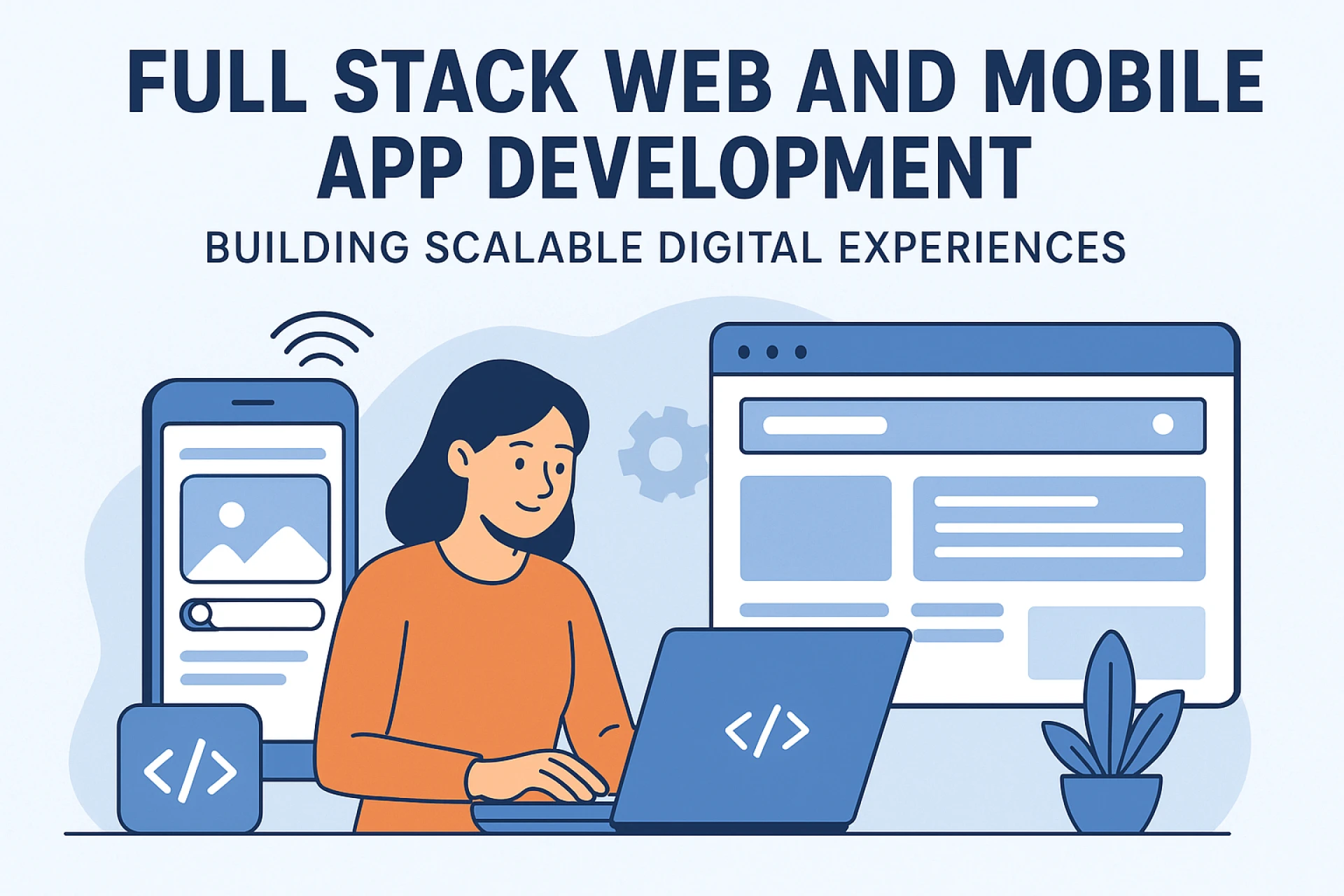

full stack web and mobile app development is redefining how businesses build, scale, and optimize their online presence. From startups to large enterprises, every company needs robust, user friendly applications that deliver seamless experiences across devices.
The integration of web and mobile app development allows brands to reach audiences wherever they are on desktops, tablets, or smartphones ensuring consistent performance and design continuity.
What Is Full Stack Development?
Full stack development refers to the process of handling both the frontend (client-side) and backend (server-side) aspects of an application. A full stack developer is skilled in multiple technologies including databases, APIs, frameworks, and UI/UX design allowing them to build complete systems from start to finish.
Modern businesses favor full stack teams because they can manage the entire development lifecycle from concept to deployment with efficiency and flexibility.
Why Businesses Choose Full Stack Development
1. Unified Development Approach
With full stack expertise, developers handle both ends of an application. This unified approach speeds up communication, reduces bottlenecks, and ensures consistent design and functionality across all platforms.
2. Cost Effective Solutions
Hiring one full stack developer or an integrated team costs less than managing separate front- and backend specialists. This makes it ideal for startups and growing businesses.
3. Scalable Architecture
Full stack systems are built to adapt as your business grows. Developers can easily integrate new features, APIs, or technologies without rebuilding from scratch.
4. Enhanced User Experience
By focusing on both design and functionality, developers ensure that the application looks great and performs flawlessly a must for retaining customers and boosting conversions.
Core Technologies in Full Stack Web and Mobile App Development
Full stack developers use a combination of modern tools and frameworks to deliver high-quality solutions:
- Frontend: HTML, CSS, JavaScript, React, Vue.js, Angular
- Backend: Node.js, Python (Django/Flask), Ruby on Rails, Java, PHP
- Databases: MySQL, PostgreSQL, MongoDB, Firebase
- Mobile Frameworks: Flutter, React Native, Swift, Kotlin
- Cloud & DevOps: AWS, Azure, Google Cloud, Docker, Kubernetes
By combining these technologies, developers can create powerful, cross-platform apps that enhance accessibility and efficiency.
The Power of Mobile First Development
As mobile usage dominates digital engagement, mobile app development has become a critical component of any tech strategy. Full stack developers optimize apps for performance, responsiveness, and compatibility ensuring flawless user experiences on iOS and Android alike.
This mobile-first mindset helps businesses build loyalty by providing apps that are intuitive, responsive, and visually engaging.
Benefits of Cross Platform Development
Cross-platform development frameworks like Flutter and React Native allow developers to build apps that work seamlessly on multiple platforms from a single codebase. The advantages include:
- Faster development cycles
- Lower maintenance costs
- Unified UI/UX design
- Quicker updates and feature rollouts
These benefits make full stack web and mobile app development a powerful approach for modern enterprises aiming for faster go-to-market strategies.
Skills Every Full Stack Developer Should Have
A successful full stack developer blends technical knowledge with problem-solving and creativity. Key skills include:
- Proficiency in frontend and backend programming
- Understanding of API integration and database design
- Familiarity with DevOps and cloud deployment
- Strong command over responsive and adaptive design principles
- Version control using Git or similar tools
These versatile skills empower developers to take ownership of entire projects and deliver end-to end digital solutions.
Full Stack Development Lifecycle
The process of creating full stack applications involves several stages:
- Planning & Strategy: Understanding client goals and defining technical requirements.
- UI/UX Design: Crafting user centric interfaces with wireframes and prototypes.
- Frontend & Backend Development: Building interactive interfaces and robust server logic.
- Integration & Testing: Ensuring seamless performance across devices and browsers.
- Deployment & Maintenance: Launching the app and providing continuous optimization.
This structured workflow guarantees reliability, scalability, and long term maintainability.
Security and Performance Optimization
Security is at the heart of every digital product. Full stack developers integrate secure APIs, encrypt sensitive data, and follow best practices for authentication and access control.
Performance optimization through caching, load balancing, and code optimization ensures that applications run smoothly even under heavy user loads.
Future of Full Stack Web and Mobile App Development
The future of full stack development lies in automation, AI integration, and cloud-native applications. Businesses are adopting microservices, serverless architecture, and advanced APIs to achieve flexibility and faster scalability.
Developers who continuously learn new frameworks and embrace innovative tools will remain at the forefront of this evolving industry.
As demand grows, full stack development solutions will continue empowering organizations to launch smart, scalable, and user-driven digital experiences.
 Conclusion
The demand for full stack web and mobile app development continues to rise as businesses embrace digital transformation. This approach unites creativity, technology, and strategy to build seamless, scalable, and secure applications for users across every platform.
For companies aiming to innovate and stay competitive, embracing full stack development solutions is the key to creating future-ready digital ecosystems that drive engagement, efficiency, and growth.






















Sign in to leave a comment.