Market Overview
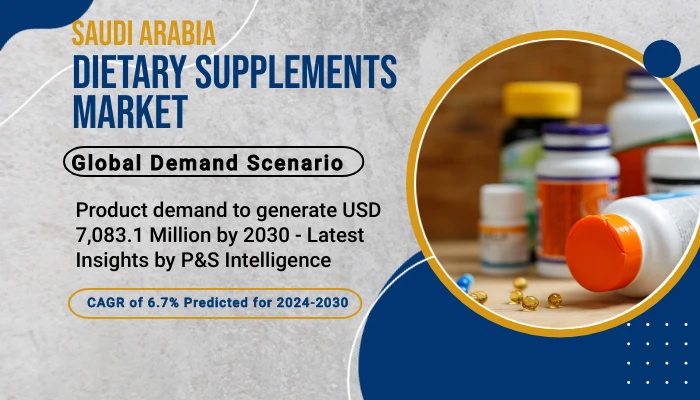
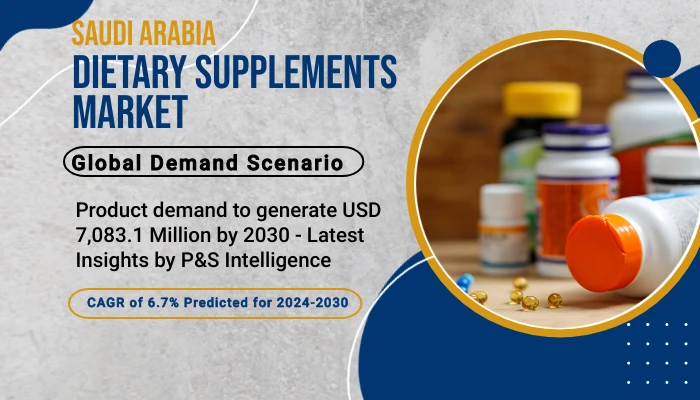
The Saudi Arabia dietary supplements market is projected to grow from USD 4,805.1 million in 2024 to USD 7,083.1 million by 2030, registering a 6.7% CAGR during 2024–2030.
This growth reflects rising health awareness, increasing healthcare costs, shifting consumer lifestyles, and widespread internet adoption.
Download free Report Sample Now
Market Segmentation
Product Type
- Combination dietary supplements are the largest category (~35% share in 2024), popular for addressing multiple health needs.
- Protein supplements are the fastest-growing segment, driven by fitness and weight-management trends.
- Categories include vitamins, herbal supplements, fish oil/omega-3s, and others.
Form
- Tablets dominate (45%) due to convenience, shelf life, and affordability.
- Powders lead growth, favored for customizable dosing and fitness usage.
- Other popular formats: capsules, soft gels, and liquids.
Distribution Channel
- Pharmacies and drugstores are the top channel, supported by consumer trust.
- Online retail is the fastest-growing channel (7.0% CAGR), spurred by digital access and convenience.
- Other channels: supermarkets, hypermarkets, and specialty stores.
Application
- Energy & weight management is the leading and fastest-expanding use case due to rising fitness focus.
- Additional categories: immunity, general health, bone & joint health, and others.
End-User
- Adults are both the largest and fastest-growing demographic, driven by busy lifestyles and chronic health concerns.
- Others include geriatrics, pregnant women, children, and infants.
Regional Insights
- Al-Riyadh Province leads in both size (~50% share) and growth rate (~7.3% CAGR), driven by urbanization, income, and health awareness.
- Other regions covered: Makkah, Eastern, Al-Madinah, Qaseem, Aseer, Tabouk, Jazan, Najran, Al-Baha, Al-Jouf, Northern Border.
Growth Drivers
- Health-awareness and preventive care: Rising concern about lifestyle diseases like obesity and diabetes boosts supplement usage.
- Natural and organic shift: Consumers prefer products free from synthetic additives.
- Rising healthcare costs: Supplements are seen as affordable preventive healthcare solutions.
- E-commerce growth: Faster online access and improved logistics support market expansion.
Key Trends
- Combination formulas continue to dominate, targeting multiple health outcomes.
- Protein and powder formats align with fitness and energy-driven demands.
- Tablets lead, but powders are becoming more favored.
- Online channels are gaining share thanks to convenience and broader reach.
Challenges
- Fragmented market with numerous international and local brands.
- Regulatory oversight: Strict SFDA guidelines on ingredients, labeling, and claims affect product development .
- Consumer education: Distinguishing scientific evidence behind supplements is essential .
Competitive Landscape
Major players include international and domestic brands such as Pfizer, Abbott, Bayer, Amway, Nestlé, Herbalife, Glanbia, Vitabalans, and others.
Strategic Outlook
- Boost powder and protein lines to cater to fitness-focused consumers.
- Expand e-commerce platforms, with emphasis on DTC and mobile integration.
- Target Al‑Riyadh and replicate success in fast-growing regions.
- Market natural and weight‑management products, emphasizing wellness benefits.
Conclusion
The Saudi Arabia dietary supplements market is set to grow from USD 4.81 billion in 2024 to USD 7.08 billion by 2030, at a 6.7% CAGR. Growth is driven by rising health awareness, digital access, and demand for functional nutrition. Brands that innovate product formats, expand online reach, and target regional hubs are positioned to thrive.



























Sign in to leave a comment.