
The business world is changing faster than ever. Companies that once relied on traditional systems, manual processes, and slow decision-making are now facing a new reality—customers expect speed, personalization, and seamless digital experiences. At the same time, businesses need smarter operations, stronger security, and the flexibility to adapt quickly in a competitive market.
This is where technologies like the Internet of Things (IoT), Artificial Intelligence (AI), and mobile applications are making a real difference.
These are no longer just trending buzzwords. They have become essential tools for businesses that want to stay relevant and grow sustainably. From smart factories and connected healthcare systems to intelligent retail platforms and automated logistics, these technologies are helping organizations work faster, make better decisions, and deliver stronger customer experiences.
The most successful businesses today are not simply using technology—they are building their future around it.
Why Modern Enterprises Need a Digital-First Approach
Running a business today is very different from what it was even five years ago. Markets are more competitive, customer expectations are higher, and data is driving nearly every important decision.
Businesses can no longer afford to wait days or weeks for reports, approvals, or operational updates. Leaders need real-time visibility. Teams need faster collaboration. Customers expect instant service.
A digital-first approach helps solve these challenges by replacing outdated systems with connected, intelligent solutions. Instead of reacting to problems after they happen, companies can predict issues, automate responses, and improve performance continuously.
This is exactly why IoT, AI, and mobile apps have become such powerful business tools.
IoT: Connecting the Physical and Digital World
The Internet of Things allows physical devices to connect, collect data, and communicate with systems in real time. These devices can include machinery, vehicles, sensors, wearable devices, medical equipment, appliances, and even entire production lines.
The value of IoT is simple—it gives businesses visibility they never had before.
For example, in manufacturing, sensors can monitor machine performance and detect issues before a breakdown happens. In logistics, GPS-enabled tracking helps companies monitor fleet movement and delivery efficiency. In healthcare, connected devices can track patient vitals remotely and alert doctors when something needs attention.
Retail businesses also use IoT to manage smart shelves, inventory tracking, and customer behavior analysis inside stores.
This shift from manual observation to real-time monitoring improves productivity, reduces downtime, and supports faster decision-making.
As more businesses move toward connected operations, the demand for professional iot app development service continues to increase, especially for companies that need custom solutions for monitoring, automation, and device integration.
IoT is not just about connected devices—it is about building smarter business ecosystems.
AI: Making Business Decisions Smarter
While IoT collects data, Artificial Intelligence helps businesses understand what that data actually means.
AI works by analyzing patterns, predicting outcomes, and helping organizations make faster and more accurate decisions. It removes guesswork and improves efficiency across departments.
For example, AI can predict customer buying behavior, detect financial fraud, optimize staffing schedules, improve marketing performance, and automate customer support through chatbots.
In healthcare, AI helps doctors analyze medical reports faster. In banking, it improves fraud detection and customer personalization. In supply chain management, AI can forecast disruptions and recommend better planning strategies.
One of the biggest benefits of AI is automation.
Many businesses still spend too much time on repetitive tasks like manual reporting, approvals, customer follow-ups, and data entry. AI reduces this burden, allowing employees to focus on strategy, innovation, and higher-value work.
This not only improves productivity but also creates a better work environment where teams can contribute more meaningfully.
The companies that use AI well are often the ones that move faster and compete stronger.
Mobile Apps: Keeping Business Within Reach
No matter how advanced a system is, it must be easy to access and use. This is where mobile applications play a critical role.
Mobile apps connect businesses directly with customers, employees, and decision-makers. They create convenience, speed, and stronger engagement by allowing users to interact with services anytime and anywhere.
For customers, mobile apps improve the overall experience through faster transactions, personalized recommendations, easy support access, and real-time communication.
For businesses, enterprise mobile apps support internal operations like team collaboration, task approvals, field service management, reporting, customer relationship management, and remote monitoring.
Imagine a warehouse manager checking inventory updates from a mobile dashboard. A doctor reviewing patient alerts remotely. A delivery driver updating route progress instantly. A customer placing an order with just a few taps.
These everyday actions create massive improvements in efficiency.
This is why businesses increasingly invest in high-quality mobile app development service to build reliable, user-friendly platforms that support both customer engagement and internal productivity.
Mobile apps are no longer optional—they are expected.
Why Combining IoT, AI, and Mobile Apps Creates Real Transformation
Each of these technologies is powerful on its own, but their true value appears when they work together.
Think of a transportation company managing a delivery fleet.
IoT sensors track vehicle location, engine health, fuel usage, and driver performance. AI analyzes this data to predict maintenance needs and optimize delivery routes. Mobile apps allow drivers to receive live updates and managers to monitor everything in real time.
This creates a connected system where decisions happen faster, problems are solved earlier, and operations become more efficient.
The same model applies across industries.
In healthcare, wearable devices collect patient data, AI identifies health risks, and mobile apps help doctors and patients stay connected.
In retail, smart inventory systems track product movement, AI predicts buying trends, and mobile apps improve the customer shopping journey.
In manufacturing, connected machines report performance, AI predicts equipment failures, and mobile dashboards allow plant managers to act instantly.
This is what future-ready business looks like—not isolated tools, but fully connected systems working together.
Common Challenges in Digital Transformation
While the benefits are clear, implementing these technologies is not always simple.
Businesses often face challenges that require careful planning and the right expertise.
Security and Data Protection
Connected systems handle large amounts of sensitive information. Whether it is customer data, financial records, or operational insights, security must be a top priority.
Businesses need strong cybersecurity strategies, secure cloud infrastructure, and clear access controls to protect their digital operations.
Trust is difficult to rebuild once lost.
Legacy Systems and Old Infrastructure
Many companies still rely on older systems that were not designed for modern integration. Replacing or upgrading these systems can be expensive and complex.
This is why many organizations choose a phased transformation approach instead of a complete replacement all at once.
Smart planning reduces risk.
Lack of Technical Expertise
Technology alone does not guarantee success. Businesses need the right people—developers, engineers, analysts, and consultants who understand both the technical side and the business impact.
Without the right strategy and execution, digital transformation can quickly become costly and ineffective.
Employee Adoption
Even the best systems fail if people do not use them properly.
Training, communication, and leadership support are essential for helping teams adapt to new tools and workflows. Successful transformation is as much about people as it is about technology.
Industry Impact Across Different Sectors
Almost every industry is being reshaped by these technologies.
Manufacturing
Factories use IoT sensors and AI-powered maintenance systems to reduce downtime, improve production quality, and optimize supply chains.
Healthcare
Remote patient monitoring, digital health apps, and AI-assisted diagnostics improve patient care while reducing operational pressure.
Retail
Smart inventory systems, personalized customer experiences, and mobile commerce platforms help retailers stay competitive and improve loyalty.
Finance
AI strengthens fraud prevention, while mobile banking apps improve customer convenience and service accessibility.
Logistics
Real-time tracking, warehouse automation, and route optimization improve delivery speed and supply chain visibility.
No industry is untouched by digital transformation.
Building a Smarter Business Strategy
The biggest mistake businesses make is adopting technology without a clear purpose.
Digital transformation should always begin with business goals—not with trends.
Instead of asking, “What technology should we use?” companies should ask:
What problems are slowing us down?
Where are customers experiencing friction?
Which processes waste the most time?
What areas need better visibility and faster decisions?
Technology should solve real problems and create measurable results.
It is also important to think long-term. Businesses should choose scalable solutions that can grow with them, not temporary fixes that create future limitations.
Starting with focused, high-impact projects often leads to better outcomes than trying to transform everything at once.
Leadership Drives Transformation
Technology decisions should not be left only to IT teams.
Business leaders play the most important role in digital transformation because they define the vision, investment priorities, and company culture.
Organizations that succeed are usually led by people who see technology as a business strategy—not just a technical upgrade.
They invest in innovation, support change, and understand that future growth depends on smarter systems and stronger adaptability.
Transformation starts at the top.
Final Thoughts
Future-ready enterprises are not built overnight. They are created through smart decisions, strategic technology adoption, and a willingness to evolve with changing market demands.
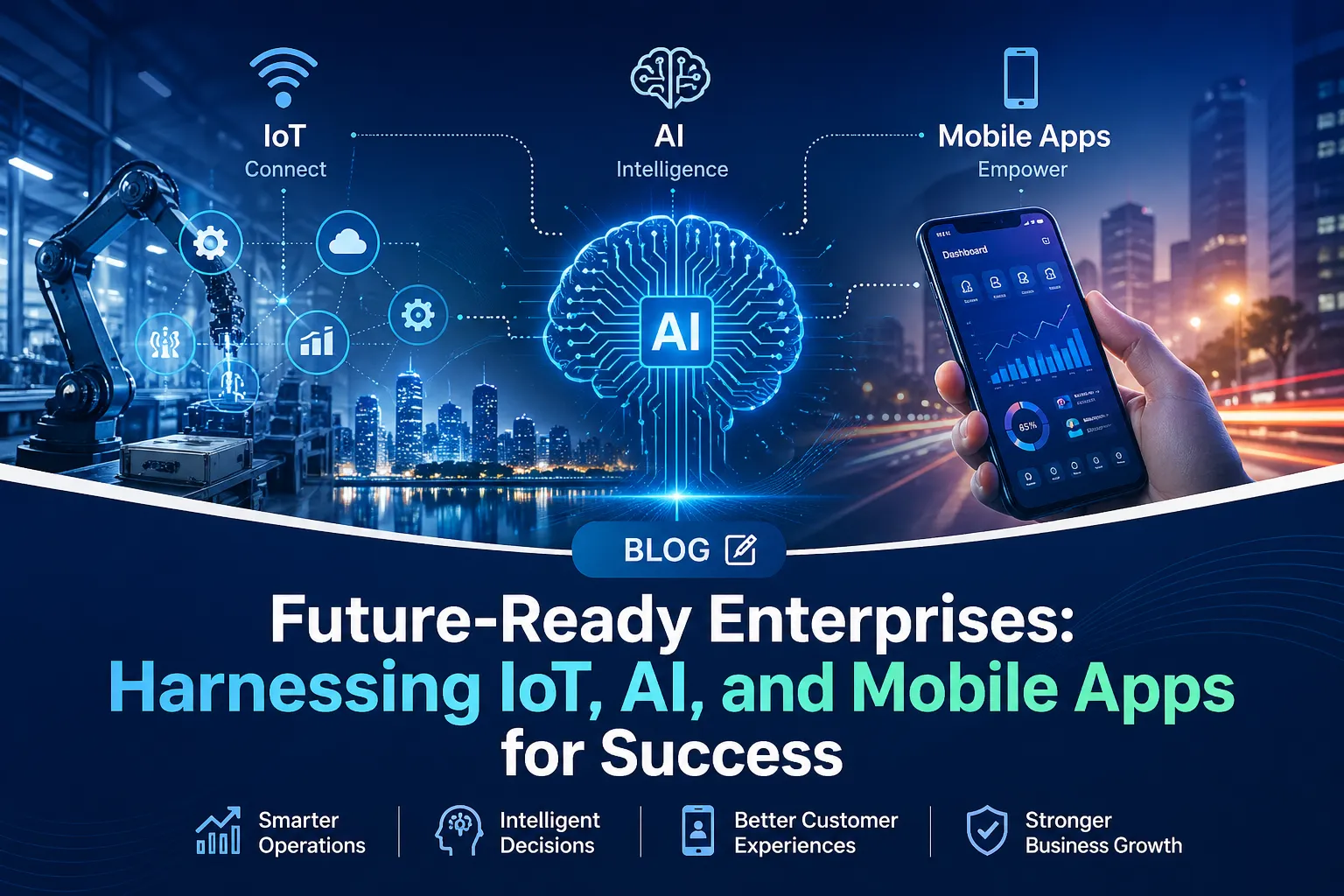
IoT brings real-time visibility. AI delivers intelligence and automation. Mobile apps create accessibility and stronger user engagement.
Together, they form the foundation of modern business success.
Companies that embrace these technologies are not simply improving efficiency—they are building resilience, increasing innovation, and creating better customer experiences that drive long-term growth.
The future belongs to businesses that are connected, intelligent, and ready to adapt.
Success is no longer about keeping up. It is about staying ahead.





























Sign in to leave a comment.